Spotlight on Queer Aging
Without our queer elders, we would not be here today. Current LGBTQ+ seniors fought for and bore witness to dramatic changes in queer rights, coming of age when homosexuality was considered a crime in the United States, all the way to same-sex marriage being legalized in 2015. Innumerable other small and large changes took place throughout their lives, and those who were able to age have encountered new challenges and hardships with growing older. In a society that already stigmatizes and obscures aging, queer elders face compounded barriers. When seeking senior housing, 48% of all LGBTQ+ couples experience adverse treatment and 34% of all LGBTQ+ older adults fear having to re-closet themselves. Nearly 60% of LGBTQ+ older adults report feeling a lack of companionship. With society’s preoccupation with youth, queer elders are often rendered invisible. That is where this spotlight comes in.
One step towards fixing this imbalance is through education. This guide provides an introduction to queer aging through a wide array of queer seniors' experiences, from memoirs and poetry to research articles and films. Each section has been compiled to highlight underrepresented and minoritized voices of LGBTQ+ older adults. To aid in that representation, there is also a tab with a collection of archives solely dedicated to documenting and sharing the voices and stories of queer elders for years to come.
Another path to remedy this disparity is through reorienting our perception of aging. If certain milestones weren’t expected of aging, and the stigma surrounding aging didn’t exist, the world would be a much different place. By queering the concept of aging, we are able to confront all of society’s expectations of a worthwhile person. That idea is further developed in the final tab of this guide, with resources from leading minds on the topic.
Video: Senior Prom: LGBTQ+ Seniors Get the Prom of Their Dreams PBS Voices (2021).
Local, National & International Queer Elder Resources
Video: Ma-Nee Chacaby talks about Two Spirit identities OurStories eTextbook (2018).
-
 A Two-Spirit Journey
by
ISBN: 9780887558122Publication Date: 2016-04-22From her early, often harrowing memories of life and abuse in a remote Ojibwa community, Ma-Nee Chacaby's extraordinary story is one of enduring and ultimately overcoming the social and economic legacies of colonialism. As a child, Chacaby learned spiritual and cultural traditions from her Cree grandmother and trapping, hunting, and bush survival skills from her Ojibwa stepfather. She also suffered physical and sexual violence, and in her teen years became an alcoholic herself. At twenty, Chacaby took her children and, fleeing an abusive marriage, moved to Thunder Bay. Despite the abuse, racism, and indifference she often found there, Chacaby marshalled the strength and supports to help herself and others. Over the following decades, she achieved sobriety, trained and worked as an alcoholism counsellor, raised her children and fostered many others, learned to live with visual impairment, and came out as a lesbian. In 2013, Chacaby led the first gay pride parade in Thunder Bay. Ma-Nee Chacaby has emerged from hardship grounded in faith, compassion, and humour. Her memoir provides unprecedented insights into the challenges still faced by many Indigenous people.
A Two-Spirit Journey
by
ISBN: 9780887558122Publication Date: 2016-04-22From her early, often harrowing memories of life and abuse in a remote Ojibwa community, Ma-Nee Chacaby's extraordinary story is one of enduring and ultimately overcoming the social and economic legacies of colonialism. As a child, Chacaby learned spiritual and cultural traditions from her Cree grandmother and trapping, hunting, and bush survival skills from her Ojibwa stepfather. She also suffered physical and sexual violence, and in her teen years became an alcoholic herself. At twenty, Chacaby took her children and, fleeing an abusive marriage, moved to Thunder Bay. Despite the abuse, racism, and indifference she often found there, Chacaby marshalled the strength and supports to help herself and others. Over the following decades, she achieved sobriety, trained and worked as an alcoholism counsellor, raised her children and fostered many others, learned to live with visual impairment, and came out as a lesbian. In 2013, Chacaby led the first gay pride parade in Thunder Bay. Ma-Nee Chacaby has emerged from hardship grounded in faith, compassion, and humour. Her memoir provides unprecedented insights into the challenges still faced by many Indigenous people. -
 Native Country of the Heart: A Memoir
by
ISBN: 9781250251176Publication Date: 2020-04-07Native Country of the Heart: A Memoir is, at its core, a mother-daughter story. The mother, Elvira, was hired out as a child, along with her siblings, by their own father to pick cotton in California's Imperial Valley. The daughter, Cherríe Moraga, is a brilliant, pioneering, queer Latina feminist. The story of these two women, and of their people, is woven together in an intimate memoir of critical reflection and deep personal revelation. As Moraga charts her mother's journey—from impressionable young girl to battle-tested matriarch to, later on, an old woman suffering under the yoke of Alzheimer's—she traces her own self-discovery of her gender-queer body and Lesbian identity, as well as her passion for activism and the history of her pueblo.
Native Country of the Heart: A Memoir
by
ISBN: 9781250251176Publication Date: 2020-04-07Native Country of the Heart: A Memoir is, at its core, a mother-daughter story. The mother, Elvira, was hired out as a child, along with her siblings, by their own father to pick cotton in California's Imperial Valley. The daughter, Cherríe Moraga, is a brilliant, pioneering, queer Latina feminist. The story of these two women, and of their people, is woven together in an intimate memoir of critical reflection and deep personal revelation. As Moraga charts her mother's journey—from impressionable young girl to battle-tested matriarch to, later on, an old woman suffering under the yoke of Alzheimer's—she traces her own self-discovery of her gender-queer body and Lesbian identity, as well as her passion for activism and the history of her pueblo. -
 Miss Major Speaks: Conversations with a Black Trans Revolutionary
by
ISBN: 1839763345Publication Date: 2023-05-16Miss Major Griffin-Gracy is a veteran of the infamous Stonewall Riots, a former sex worker, and a transgender elder and activist who has survived Bellevue psychiatric hospital, Attica Prison, the HIV/AIDS crisis and a world that white supremacy has built. Miss Major Speaks is both document of her brilliant life-told with intimacy, warmth and an undeniable levity-and a roadmap for the challenges black, brown, queer and trans youth will face on the path to liberation today. Her incredible story of a life lived and a world survived becomes a conduit for larger questions about the riddle of collective liberation. Miss Major offers something that cannot be found elsewhere: an affirmation that our vision for freedom can and must be more expansive than those on offer by mainstream institutions.
Miss Major Speaks: Conversations with a Black Trans Revolutionary
by
ISBN: 1839763345Publication Date: 2023-05-16Miss Major Griffin-Gracy is a veteran of the infamous Stonewall Riots, a former sex worker, and a transgender elder and activist who has survived Bellevue psychiatric hospital, Attica Prison, the HIV/AIDS crisis and a world that white supremacy has built. Miss Major Speaks is both document of her brilliant life-told with intimacy, warmth and an undeniable levity-and a roadmap for the challenges black, brown, queer and trans youth will face on the path to liberation today. Her incredible story of a life lived and a world survived becomes a conduit for larger questions about the riddle of collective liberation. Miss Major offers something that cannot be found elsewhere: an affirmation that our vision for freedom can and must be more expansive than those on offer by mainstream institutions. -
 The Old Gays Guide to the Good Life
by
ISBN: 9780063333604Publication Date: 2023-11-28From America's most beloved foursome--the TikTok sensation @oldgays--a book of unexpected aspirational advice and inspirational stories drawn from their decades of living, from pre-Stonewall to the rise of the LGBTQ+ movement to gay marriage and beyond. Ranging in age from sixty-seven to eighty, Mick, Jessay, Robert, and Bill are the real-life Golden Girls of the social media era, a quartet of old gays whose hard-won confidence and awesome authenticity have taken the culture by storm. They are America's queens--and, more important, they are survivors whose lives have been transformed by sweeping cultural change. In this fabulously fun and entertaining book, they share their stories--humorous, heartbreaking, shocking, and profound tales that only older gay men can tell.
The Old Gays Guide to the Good Life
by
ISBN: 9780063333604Publication Date: 2023-11-28From America's most beloved foursome--the TikTok sensation @oldgays--a book of unexpected aspirational advice and inspirational stories drawn from their decades of living, from pre-Stonewall to the rise of the LGBTQ+ movement to gay marriage and beyond. Ranging in age from sixty-seven to eighty, Mick, Jessay, Robert, and Bill are the real-life Golden Girls of the social media era, a quartet of old gays whose hard-won confidence and awesome authenticity have taken the culture by storm. They are America's queens--and, more important, they are survivors whose lives have been transformed by sweeping cultural change. In this fabulously fun and entertaining book, they share their stories--humorous, heartbreaking, shocking, and profound tales that only older gay men can tell. -
 So many stars : an oral history of trans, nonbinary, genderqueer, and two-spirit people of color
by
ISBN: 9781643756875Publication Date: 2025-05-13So Many Stars knits together the voices of trans, nonbinary, genderqueer, and two-spirit elders of color as they share authentic, intimate accounts of how they created space for themselves and their communities in the world. This singular project collects the testimonies of twenty elders, each a glimmering thread in a luminous tapestry, preserving their words for future generations--who can more fully exist in the world today because of these very trailblazers. The anecdotes in these pages are riveting, joyful, heartbreaking, full of personality and wisdom, and artfully woven together into one immersive narrative. In De Robertis’s words, So Many Stars shares “behind-the-scenes tales of what it meant—and still means—to create an authentic life, against the odds.”
So many stars : an oral history of trans, nonbinary, genderqueer, and two-spirit people of color
by
ISBN: 9781643756875Publication Date: 2025-05-13So Many Stars knits together the voices of trans, nonbinary, genderqueer, and two-spirit elders of color as they share authentic, intimate accounts of how they created space for themselves and their communities in the world. This singular project collects the testimonies of twenty elders, each a glimmering thread in a luminous tapestry, preserving their words for future generations--who can more fully exist in the world today because of these very trailblazers. The anecdotes in these pages are riveting, joyful, heartbreaking, full of personality and wisdom, and artfully woven together into one immersive narrative. In De Robertis’s words, So Many Stars shares “behind-the-scenes tales of what it meant—and still means—to create an authentic life, against the odds.”


Video: My Life is Poetry 2020 Reading Steven Reigns (2020).
Video: Where We Stand: Poetry by Lesbians Over 60 The DC LGBTQ Community Center (2023).
-
 Scattered Snows, to the North
by
ISBN: 9780374612412Publication Date: 2024-08-06Carl Phillips's Scattered Snows, to the North is a collection about distortion and revelation, about knowing and the unreliability of a knowing that's based on human memory. If the poet's last few books have concerned themselves with power, this one focuses on vulnerability: the usefulness of embracing it and of releasing ourselves from the need to understand our past. If we remember a thing, did it happen? If we believe it didn't, does that make our belief true? In Scattered Snows, to the North, Phillips looks though the window of the past in order to understand the essential sameness of the human condition.
Scattered Snows, to the North
by
ISBN: 9780374612412Publication Date: 2024-08-06Carl Phillips's Scattered Snows, to the North is a collection about distortion and revelation, about knowing and the unreliability of a knowing that's based on human memory. If the poet's last few books have concerned themselves with power, this one focuses on vulnerability: the usefulness of embracing it and of releasing ourselves from the need to understand our past. If we remember a thing, did it happen? If we believe it didn't, does that make our belief true? In Scattered Snows, to the North, Phillips looks though the window of the past in order to understand the essential sameness of the human condition. -
 Dances of Time and Tenderness
by
ISBN: 9781643622347Publication Date: 2024-06-04A cycle of stories linking queer memory, activism, death, and art in a transpoetic history of desire and touch. Dances of Time and Tenderness is a bold, sensual cycle of transpoetic stories that blend memory and movement in an innovative choreo-text of rage, sweetness and sorrow. A dance hall where the dead and the living meet, the tales take us from the dungeons of 1990s San Francisco to the goldsmith's forges of the earliest cities, tracing a transgenderational lineage of queer carnality. Not a memoir, but a collective memory, Julian Carter invites us to join artists and AIDS activists, sailors and skeletons, to fulfill the trans promise: "what we do with our bodies changes worlds."
Dances of Time and Tenderness
by
ISBN: 9781643622347Publication Date: 2024-06-04A cycle of stories linking queer memory, activism, death, and art in a transpoetic history of desire and touch. Dances of Time and Tenderness is a bold, sensual cycle of transpoetic stories that blend memory and movement in an innovative choreo-text of rage, sweetness and sorrow. A dance hall where the dead and the living meet, the tales take us from the dungeons of 1990s San Francisco to the goldsmith's forges of the earliest cities, tracing a transgenderational lineage of queer carnality. Not a memoir, but a collective memory, Julian Carter invites us to join artists and AIDS activists, sailors and skeletons, to fulfill the trans promise: "what we do with our bodies changes worlds."


-
 My Real Children
by
ISBN: 9780765332653Publication Date: 2014-05-20It's 2015, and Patricia Cowan is very old. "Confused today," read the notes clipped to the end of her bed. She forgets things she should know-what year it is, major events in the lives of her children. But she remembers things that don't seem possible. She remembers marrying Mark and having four children. And she remembers not marrying Mark and raising three children with Bee instead. Her childhood, her years at Oxford during the Second World War-those were solid things. But after that, did she marry Mark or not? Had she been a housewife who escaped a terrible marriage after her children were grown, or a successful travel writer with homes in Britain and Italy? Two lives, two worlds, two versions of modern history; each with their loves and losses, their sorrows and triumphs. Jo Walton's My Real Children is the tale of both of Patricia Cowan's lives...and of how every life means the entire world.
My Real Children
by
ISBN: 9780765332653Publication Date: 2014-05-20It's 2015, and Patricia Cowan is very old. "Confused today," read the notes clipped to the end of her bed. She forgets things she should know-what year it is, major events in the lives of her children. But she remembers things that don't seem possible. She remembers marrying Mark and having four children. And she remembers not marrying Mark and raising three children with Bee instead. Her childhood, her years at Oxford during the Second World War-those were solid things. But after that, did she marry Mark or not? Had she been a housewife who escaped a terrible marriage after her children were grown, or a successful travel writer with homes in Britain and Italy? Two lives, two worlds, two versions of modern history; each with their loves and losses, their sorrows and triumphs. Jo Walton's My Real Children is the tale of both of Patricia Cowan's lives...and of how every life means the entire world. -
 Cantoras
by
ISBN: 9780525521693Publication Date: 2019-09-03A revolutionary new novel about five wildly different women who, in the midst of the Uruguayan dictatorship, find one another as lovers, friends, and ultimately, family. In 1977 Uruguay, a military government crushed political dissent with ruthless force. In this environment, where the everyday rights of people are under attack, homosexuality is a dangerous transgression to be punished. And yet Romina, Flaca, Anita "La Venus," Paz, and Malena--five cantoras, women who "sing"--somehow, miraculously, find one another. A genre-defining novel and De Robertis's masterpiece, Cantoras is a breathtaking portrait of queer love, community, forgotten history, and the strength of the human spirit. At once timeless and groundbreaking, Cantoras is a tale about the fire in all our souls and those who make it burn.
Cantoras
by
ISBN: 9780525521693Publication Date: 2019-09-03A revolutionary new novel about five wildly different women who, in the midst of the Uruguayan dictatorship, find one another as lovers, friends, and ultimately, family. In 1977 Uruguay, a military government crushed political dissent with ruthless force. In this environment, where the everyday rights of people are under attack, homosexuality is a dangerous transgression to be punished. And yet Romina, Flaca, Anita "La Venus," Paz, and Malena--five cantoras, women who "sing"--somehow, miraculously, find one another. A genre-defining novel and De Robertis's masterpiece, Cantoras is a breathtaking portrait of queer love, community, forgotten history, and the strength of the human spirit. At once timeless and groundbreaking, Cantoras is a tale about the fire in all our souls and those who make it burn. -
 Fishwives
by
ISBN: 9781612941899Publication Date: 2021-02-09Eighty-nine-year-old Regina and ninety-year-old Jackie met in 1955, an era when women were rounded up and jailed simply for dancing together or dressing like a man. On a cold winter day they manage to get themselves out of the house with the help of TJ and Ramon, two young men from their working-class neighborhood in Western Massachusetts. They tie their long-dead Christmas tree to the top of their car and, using a screwdriver in place of a broken gearshift, slowly make the drive to the dump. This is also the day when everything changes. During the course of their adventure, memories are triggered, leading the reader across a lifetime through the eyes of two old women behaving badly.
Fishwives
by
ISBN: 9781612941899Publication Date: 2021-02-09Eighty-nine-year-old Regina and ninety-year-old Jackie met in 1955, an era when women were rounded up and jailed simply for dancing together or dressing like a man. On a cold winter day they manage to get themselves out of the house with the help of TJ and Ramon, two young men from their working-class neighborhood in Western Massachusetts. They tie their long-dead Christmas tree to the top of their car and, using a screwdriver in place of a broken gearshift, slowly make the drive to the dump. This is also the day when everything changes. During the course of their adventure, memories are triggered, leading the reader across a lifetime through the eyes of two old women behaving badly. -
 Light from Uncommon Stars
by
ISBN: 9781250789068Publication Date: 2021-09-28Shizuka Satomi made a deal with the devil: to escape damnation, she must entice seven other violin prodigies to trade their souls for success. She has already delivered six. When Katrina Nguyen, a young transgender runaway, catches Shizuka's ear with her wild talent, Shizuka can almost feel the curse lifting. She's found her final candidate. But in a donut shop off a bustling highway in the San Gabriel Valley, Shizuka meets Lan Tran, retired starship captain, interstellar refugee, and mother of four. Shizuka doesn't have time for crushes or coffee dates, what with her very soul on the line, but Lan's kind smile and eyes like stars might just redefine a soul's worth. As the lives of these three women become entangled by chance and fate, a story of magic, identity, curses, and hope begins, and a family worth crossing the universe for is found.
Light from Uncommon Stars
by
ISBN: 9781250789068Publication Date: 2021-09-28Shizuka Satomi made a deal with the devil: to escape damnation, she must entice seven other violin prodigies to trade their souls for success. She has already delivered six. When Katrina Nguyen, a young transgender runaway, catches Shizuka's ear with her wild talent, Shizuka can almost feel the curse lifting. She's found her final candidate. But in a donut shop off a bustling highway in the San Gabriel Valley, Shizuka meets Lan Tran, retired starship captain, interstellar refugee, and mother of four. Shizuka doesn't have time for crushes or coffee dates, what with her very soul on the line, but Lan's kind smile and eyes like stars might just redefine a soul's worth. As the lives of these three women become entangled by chance and fate, a story of magic, identity, curses, and hope begins, and a family worth crossing the universe for is found. -
 The Secret Life of Albert Entwistle
by
ISBN: 9781496737755Publication Date: 2022-05-31Three months before his sixty-fifth birthday, Albert receives a letter from the Royal Mail thanking him for decades of service and stating that he is being forced into retirement. At once, Albert’s simple life unravels. Without the work that fills his days, what will he do? He has no friends, family, or hobbies—just a past he never speaks of, and a lost love that fills him with regret. And so, rather than continue his lonely existence, Albert forms a brave plan to start truly living, to be honest about who he is . . . and to find George, the man with whom he spent one perfect spring and summer long ago.
The Secret Life of Albert Entwistle
by
ISBN: 9781496737755Publication Date: 2022-05-31Three months before his sixty-fifth birthday, Albert receives a letter from the Royal Mail thanking him for decades of service and stating that he is being forced into retirement. At once, Albert’s simple life unravels. Without the work that fills his days, what will he do? He has no friends, family, or hobbies—just a past he never speaks of, and a lost love that fills him with regret. And so, rather than continue his lonely existence, Albert forms a brave plan to start truly living, to be honest about who he is . . . and to find George, the man with whom he spent one perfect spring and summer long ago.


Graphic Novels
-
 Bingo Love
by
ISBN: 9781534307506Publication Date: 2018-02-20When Hazel Johnson and Mari McCray met at church bingo in 1963, it was love at first sight. Forced apart by their families and society, Hazel and Mari both married young men and had families. Decades later, now in their mid-'60s, Hazel and Mari reunite again at a church bingo hall. Realizing their love for each other is still alive, what these grandmothers do next takes absolute strength and courage. Bingo Love is a touching story of love, family, and resiliency that spans over 60 years.
Bingo Love
by
ISBN: 9781534307506Publication Date: 2018-02-20When Hazel Johnson and Mari McCray met at church bingo in 1963, it was love at first sight. Forced apart by their families and society, Hazel and Mari both married young men and had families. Decades later, now in their mid-'60s, Hazel and Mari reunite again at a church bingo hall. Realizing their love for each other is still alive, what these grandmothers do next takes absolute strength and courage. Bingo Love is a touching story of love, family, and resiliency that spans over 60 years. -
 Snapdragon
by
ISBN: 9781250171115Publication Date: 2020-02-04Snap's town had a witch. At least, that's how the rumor goes. But in reality, Jacks is just a crocks-wearing, internet-savvy old lady who sells roadkill skeletons online--after doing a little ritual to put their spirits to rest. It's creepy, sure, but Snap thinks it's kind of cool, too. They make a deal: Jacks will teach Snap how to take care of the baby opossums that Snap rescued, and Snap will help Jacks with her work. But as Snap starts to get to know Jacks, she realizes that Jacks may in fact have real magic--and a connection with Snap's family's past.
Snapdragon
by
ISBN: 9781250171115Publication Date: 2020-02-04Snap's town had a witch. At least, that's how the rumor goes. But in reality, Jacks is just a crocks-wearing, internet-savvy old lady who sells roadkill skeletons online--after doing a little ritual to put their spirits to rest. It's creepy, sure, but Snap thinks it's kind of cool, too. They make a deal: Jacks will teach Snap how to take care of the baby opossums that Snap rescued, and Snap will help Jacks with her work. But as Snap starts to get to know Jacks, she realizes that Jacks may in fact have real magic--and a connection with Snap's family's past. -
 Shadow Life
by
ISBN: 9781626723566Publication Date: 2021-03-30When Kumiko's well-meaning adult daughters place her in an assisted living home, the seventy-six-year-old widow gives it a try, but it's not where she wants to be. She goes on the lam and finds a cozy bachelor apartment, keeping the location secret even while communicating online with her eldest daughter. Kumiko revels in the small, daily pleasures: decorating as she pleases, eating what she wants, and swimming in the community pool. But something has followed her from her former residence--Death's shadow. Kumiko's sweet life is shattered when Death's shadow swoops in to collect her. With her quick mind and sense of humor, Kumiko, with the help of friends new and old, is prepared for the fight of her life. But how long can an old woman thwart fate?
Shadow Life
by
ISBN: 9781626723566Publication Date: 2021-03-30When Kumiko's well-meaning adult daughters place her in an assisted living home, the seventy-six-year-old widow gives it a try, but it's not where she wants to be. She goes on the lam and finds a cozy bachelor apartment, keeping the location secret even while communicating online with her eldest daughter. Kumiko revels in the small, daily pleasures: decorating as she pleases, eating what she wants, and swimming in the community pool. But something has followed her from her former residence--Death's shadow. Kumiko's sweet life is shattered when Death's shadow swoops in to collect her. With her quick mind and sense of humor, Kumiko, with the help of friends new and old, is prepared for the fight of her life. But how long can an old woman thwart fate?


Books
-
 Middle-Aged Gay Men, Ageing and Ageism
by
ISBN: 9781137435231Publication Date: 2015-09-29Is midlife for gay men the start of a slide towards the rejection, exclusion and misery associated with the spectre of the lonely old queen? Whilst exclusion is possible as gay men age, Middle Aged Gay Men, Ageing and Ageism offers a more nuanced view of gay ageing, using sociological tools to advance understanding beyond stereotypes.
Middle-Aged Gay Men, Ageing and Ageism
by
ISBN: 9781137435231Publication Date: 2015-09-29Is midlife for gay men the start of a slide towards the rejection, exclusion and misery associated with the spectre of the lonely old queen? Whilst exclusion is possible as gay men age, Middle Aged Gay Men, Ageing and Ageism offers a more nuanced view of gay ageing, using sociological tools to advance understanding beyond stereotypes. -
 Queer Aging: the gayby boomers and a new frontier for gerontology
by
ISBN: 9780190276348Publication Date: 2016-08-15As the first generation of gay men enters its autumn years, these men's responses to the physical and emotional tolls of aging promise to be as revolutionary as their advances in AIDS and civil rights activism. Older gay men's approaches to friendship, caregiving, romantic and sexual relationships, illness, and bereavement is upending conventional wisdom regarding the aging process, LGBTQ communities, and the entire field of gerontology. Queer Aging comprises scholar Jesus Ramirez-Valles's probing conversations with 11 racially and economically diverse representatives of this pioneering generation of gay men - the gayby boomers. Spanning sociology, history, cultural studies, and social work, Queer Aging will be a vital resource for students as well as health professionals who serve the gay community and communities of color.
Queer Aging: the gayby boomers and a new frontier for gerontology
by
ISBN: 9780190276348Publication Date: 2016-08-15As the first generation of gay men enters its autumn years, these men's responses to the physical and emotional tolls of aging promise to be as revolutionary as their advances in AIDS and civil rights activism. Older gay men's approaches to friendship, caregiving, romantic and sexual relationships, illness, and bereavement is upending conventional wisdom regarding the aging process, LGBTQ communities, and the entire field of gerontology. Queer Aging comprises scholar Jesus Ramirez-Valles's probing conversations with 11 racially and economically diverse representatives of this pioneering generation of gay men - the gayby boomers. Spanning sociology, history, cultural studies, and social work, Queer Aging will be a vital resource for students as well as health professionals who serve the gay community and communities of color. -
 Older Lesbian, Gay, Bisexual and Trans People
by
ISBN: 9781138644939Publication Date: 2018-09-19What does it mean to grow older as a lesbian, gay, bisexual or trans (LGBT) person? What gaps in knowledge about LGBT ageing remain? This timely and innovative book reports on a project funded by the Economic and Social Research Council which aimed to address gaps in knowledge about older LGBT people and their experiences of ageing. Informed by a range of theoretical perspectives, empirical research studies, critical observations as well as lived experiences, this book explores areas of LGBT ageing that have been under-studied. These include: bisexual ageing; trans ageing and older trans people's mental health; ethnicity, culture and religion in the lives of older LGBT people and gaps in knowledge about older LGBT people from minority ethnic communities; intergenerational networks; residential and end-of-life care; and the effects of austerity on services.
Older Lesbian, Gay, Bisexual and Trans People
by
ISBN: 9781138644939Publication Date: 2018-09-19What does it mean to grow older as a lesbian, gay, bisexual or trans (LGBT) person? What gaps in knowledge about LGBT ageing remain? This timely and innovative book reports on a project funded by the Economic and Social Research Council which aimed to address gaps in knowledge about older LGBT people and their experiences of ageing. Informed by a range of theoretical perspectives, empirical research studies, critical observations as well as lived experiences, this book explores areas of LGBT ageing that have been under-studied. These include: bisexual ageing; trans ageing and older trans people's mental health; ethnicity, culture and religion in the lives of older LGBT people and gaps in knowledge about older LGBT people from minority ethnic communities; intergenerational networks; residential and end-of-life care; and the effects of austerity on services. -
 Growing Older As a Trans and/or Non-Binary Person
by
ISBN: 9781787753631Publication Date: 2021-02-18Drawing on the experiences of older trans people and those transitioning later in life, this is a definitive guide to ageing as a trans and/or non-binary person. It covers the key health concerns and social issues affecting older trans people, including care homes, pensions, inheritance and funeral planning, as well as hormone use and physical changes, isolation and dementia. Kermode also provides guidance for professionals looking to better meet the needs of these individuals and highlights the important factors that need to be considered at an institutional level to provide the best care for people across the gender spectrum.
Growing Older As a Trans and/or Non-Binary Person
by
ISBN: 9781787753631Publication Date: 2021-02-18Drawing on the experiences of older trans people and those transitioning later in life, this is a definitive guide to ageing as a trans and/or non-binary person. It covers the key health concerns and social issues affecting older trans people, including care homes, pensions, inheritance and funeral planning, as well as hormone use and physical changes, isolation and dementia. Kermode also provides guidance for professionals looking to better meet the needs of these individuals and highlights the important factors that need to be considered at an institutional level to provide the best care for people across the gender spectrum.


Articles
- Chen, J., McLaren, H., Jones, M., & Shams, L. (2020). The aging experiences of LGBTQ ethnic minority older adults: A systematic review. The Gerontologist, 62(3), e162–e177. https://doi.org/10.1093/geront/gnaa134
- Diamant-Wilson, R., Ray-Novak, M., Gillani, B., Prince, D. M., Mintz, L. J., & Moore, S. E. (2024). “I felt like a freak when I would go to the doctor”: Investigating healthcare experiences across the lifespan among older LGBT and transgender/gender diverse adults.. Qualitative Research in Medicine & Healthcare, 8(1). https://doi.org/10.4081/qrmh.2024.11879
- Furlotte, C., Gladstone, J. W., Cosby, R. F., & Fitzgerald, K.-A. (2016). “Could we hold hands?” Older lesbian and gay couples’ perceptions of long-term care homes and home care. Canadian Journal on Aging, 35(4), 432–446. https://doi.org/10.1017/s0714980816000489
- King, A. (2016). Queer categories: Queer(y)ing the identification ‘older lesbian, gay and/or bisexual (LGB) adults’ and its implications for organizational research, policy and practice. Gender, Work & Organization, 23(1), 7–18. https://doi.org/10.1111/gwao.12065
- Kum, S. (2017). Gay, gray, black, and blue: An examination of some of the challenges faced by older LGBTQ people of color. Journal of Gay & Lesbian Mental Health, 21(3), 228–239. https://doi.org/10.1080/19359705.2017.1320742
- Oswald, A. G. (2019). A poetic gaze into gay aging. The Qualitative Report, 24(7), 1610–1617. https://doi.org/10.46743/2160-3715/2019.3490
- Ribeiro-Gonçalves, J. A., Pocinho, M., Costa, P. A., & Leal, I. (2025). The experiences of intimacy, commitment and passion throughout life: A qualitative study of older gay and bisexual men Sexuality & Culture, 29(5), 2069–2095. https://doi.org/10.1007/s12119-025-10358-9
-
Wilson, K., Kortes-Miller, K., & Stinchcombe, A. (2018). Staying out of the closet: LGBT older adults’ hopes and fears in considering end-of-life. Canadian Journal on Aging, 37(1), 22–31. https://doi.org/10.1017/s0714980817000514
Feature Films
-
 Cloudburst
by
Publication Date: 2011Stella and Dot have been together for 31 years and have faithfully accompanied one another through life's ups and downs. Now in their seventies, Stella is hard of hearing and Dot is legally blind. Dotty's prudish granddaughter, Molly, decides the best place for Dot is a nursing home that will provide all the necessities. This forces Stella and Dot to make a bold decision: they will leave their hometown in Maine and make their way to Canada, where same-sex marriage is legal.
Cloudburst
by
Publication Date: 2011Stella and Dot have been together for 31 years and have faithfully accompanied one another through life's ups and downs. Now in their seventies, Stella is hard of hearing and Dot is legally blind. Dotty's prudish granddaughter, Molly, decides the best place for Dot is a nursing home that will provide all the necessities. This forces Stella and Dot to make a bold decision: they will leave their hometown in Maine and make their way to Canada, where same-sex marriage is legal. -
Love is Strange by
Publication Date: 2015After Ben and George get married, George is fired from his teaching post, forcing them to stay with friends separately while they sell their place and look for cheaper housing - a situation that weighs heavily on all involved. -
Grandma by
Publication Date: 2015A misanthropic poet, estranged from her daughter and recovering from a breakup, agrees to take her granddaughter across Los Angeles and help her find the money she needs to terminate her unwanted pregnancy. -
Twilight's Kiss by
Publication Date: 2020Two closeted gay men in their twilight years contemplate a possible future together after unexpectedly falling in love.

Documentaries
-
 Ten More Good Years
by
Publication Date: 2007Ten More Good Years follows four LGBT elders and explores the reasons why so many in this community age alone, without financial stability and often return to the closet. We meet men and women who work in the field of aging that help to explain why it is that so many of our Heros have been left behind. Yet there is hope; one thing the AIDS crisis taught the world is that LGBT people take care of their own. While the government continues to ignore the unique challenges and concerns these elders are facing, the gay community is finding ways to care for themselves. Ten More Good Years sheds light on the injustices LGBT elders are facing and offers hope for the future.
Ten More Good Years
by
Publication Date: 2007Ten More Good Years follows four LGBT elders and explores the reasons why so many in this community age alone, without financial stability and often return to the closet. We meet men and women who work in the field of aging that help to explain why it is that so many of our Heros have been left behind. Yet there is hope; one thing the AIDS crisis taught the world is that LGBT people take care of their own. While the government continues to ignore the unique challenges and concerns these elders are facing, the gay community is finding ways to care for themselves. Ten More Good Years sheds light on the injustices LGBT elders are facing and offers hope for the future. -
 Being Lucy
by
Publication Date: 2011At 85 years old, Lucy tells us with passion and eloquence how as a transgender person she managed to navigate the most transcendental moments of the 20th century, such as fascism, post-war Italy, and the sexual liberation movement.
Being Lucy
by
Publication Date: 2011At 85 years old, Lucy tells us with passion and eloquence how as a transgender person she managed to navigate the most transcendental moments of the 20th century, such as fascism, post-war Italy, and the sexual liberation movement. -
Gen Silent by
Publication Date: 2011The documentary follows the lives of six LGBT seniors living in the Boston area who must choose if they will hide their sexuality in order to survive in the long-term health care system. -
 Maria Luiza
by
Publication Date: 2019Maria Luiza da Silva is the first transgender in the history of the Brazilian Armed Forces. After 22 years of work in the military, she retired due to disability. The film explores the complex barriers she faced and her path of affirmation as a trans, military and Catholic woman.
Maria Luiza
by
Publication Date: 2019Maria Luiza da Silva is the first transgender in the history of the Brazilian Armed Forces. After 22 years of work in the military, she retired due to disability. The film explores the complex barriers she faced and her path of affirmation as a trans, military and Catholic woman.
TV Shows
-
 Vicious
by
Publication Date: 2013Freddie Thornhill and Stuart Bixby are an old gay couple who have been together for nearly fifty years. Their lives now revolve around entertaining their frequent guests and hurling insults at each other at every opportunity. Available to stream on Tubi.
Vicious
by
Publication Date: 2013Freddie Thornhill and Stuart Bixby are an old gay couple who have been together for nearly fifty years. Their lives now revolve around entertaining their frequent guests and hurling insults at each other at every opportunity. Available to stream on Tubi. -
Grace and Frankie by
Publication Date: 2015For as long as they can recall, Grace and Frankie have been rivals. Their one-upmanship comes crashing to a halt, however, when they learn that their husbands have fallen in love with each other and want to get married. As everything around the ladies is coming apart, the only thing they can really rely on is each other. Available to stream on Netflix. -
 The Cool Kids
by
Publication Date: 2018"The Cool Kids" is a comedy about a rowdy, rag-tag group of friends living in a retirement community who are willing to break every rule to have fun, because, at their age, what do they really have to lose?
The Cool Kids
by
Publication Date: 2018"The Cool Kids" is a comedy about a rowdy, rag-tag group of friends living in a retirement community who are willing to break every rule to have fun, because, at their age, what do they really have to lose? -
Mr Loverman by
Publication Date: 2024Based on the book by Booker Prize-winning novelist Bernardine Evaristo. A moving and funny drama about a closeted family man who wants to end his marriage and live with his best friend, with whom he has been having an affair for 50 years. A groundbreaking story of love and being true to yourself, exploring the consequences of a secret on three generations of one family. Available to stream on Britbox. -
Stories from My Gay Grandparents by
After a near-death experience, Grandma and Grandpa reveal their long-hidden truth: they're both gay. Finally, they embrace their true selves after decades of concealing it, leaving their small-town life behind. Available to stream on YouTube. -
Mid-Century Modern by
Publication Date: 2025The series follows three best friends – gay gentlemen of a certain age – who, after an unexpected death, decide to spend their golden years living together in Palm Springs where the wealthiest one lives with his mother. As a chosen family, they prove that no matter how hard things get, there’s always someone around to remind you it would be better if you got your neck done. Available to stream on Hulu.
Other Online Videos
Video: Not Another Second: LGBT+ seniors share their stories Watermark Retirement Communities (2021).
- In their own words
- LGBT Seniors Tell Their Stories - This short film captures the perspective of eleven LGBT seniors in Los Angeles who came of age during a time in which imprisonment, daily discrimination, physical violence and abuse were commonplace.
- Then and Now - Older Lesbians Share Their Stories - Dorothy, Barb and Vera share their experiences of being lesbians then and now.
- Queer Elders Sharing - Gay and Grey Montreal’s 6 part podcast series called “Queer Elders Sharing”, funded by le Bureau de lutte contre l’homophobie et la transphobie, hosts 2SLGBTQIA+ guests sharing how they overcame instances of homophobia and transphobia to become who they are today.
- A Queer Elder Couple Finds New Roots - After years in the city, John and Lee embark on a new adventure in suburban Los Angeles. Guided through Claremont by queer filmmaker Brooke Sebold, they share candid stories about coming out, finding love, and creating intentional community in this next chapter.
- Queer senior housing
- Where do LGBTQIA+ people go in their later lives? - Trans activist Julie Peters is on a mission to find out what options exist for LGBTQIA+ people in their twilight years. She visits ‘Regnbågen/Rainbow’ is the first residency for senior LGBT people in Stockholm, in Sweden, and in Europe.
- A Brief But Spectacular take on caring for LGBTQ seniors - SAGE, a national advocacy leader for LGBTQ+ elders, created a system of training programs for care providers. H.O.M.E. housing director Nikki Moustafa and SAGEcare trainer Britta Larson highlight how the training has improved their abilities to support residents.
- Retirement village offers safe haven for LGBTQ seniors - A CBS Evening News story on Village Hearth in Durham, North Carolina, one of the nation's first co-housing developments created specifically for an aging, queer population.
Archives have historically been molded by and modeled after those in power looking to document their reign. As a result, queer elder voices are systematically underrepresented. Of the LGBTQ+ records that do exist, the perspectives documented skew towards younger voices. Although the subjects of these records might now be elders, their voices haven’t aged with them. The only way to have documentation of queer elders is to seek out their stories, and the archives below are doing just that.
Video: Old Lesbians: reclaiming old age and queerness through storytelling The Guardian (2024)
For an article exploring these topics:
Gelfand, R. (2021). Between archives: Yerushe, intergenerational collaboration, and aging in queer family Radical History Review, 2021(139), 200–210. https://doi.org/10.1215/01636545-8822687
Archives
-
The Old Lesbian Oral Herstory ProjectThe Old Lesbian Oral Herstory Project is designed to capture the Herstories of old lesbians in order to: preserve their personal and cultural history, educate lesbians of all ages about the lives that women led in the years before coming out was a safe and viable option, remind us all of the relative freedom we now enjoy because of the women who were strong enough to live their lives and love whom they wanted in a hostile society, to provide an archival resource for scholars, to help younger generations understand the variety of experiences of old lesbians in areas of work, love, relationships, coming out, activism, and more.
-
The OUTWARDS ArchiveOUTWORDS records, preserves, and shares the stories of LGBTQ+ elders across the U.S. to build community and catalyze social change. Their stories are browsable by a variety of categories such as LGBTQ+ identities, race/ethnicities, and history, and the website also offers a variety of videos and a podcast. The interviewees all have biographies, photos, and other information along with transcribed interviews and videos providing detailed records of these elders' existences.
-
Baldwin-Emerson Elders ProjectThe Baldwin-Emerson Elders Project captures and celebrates untold and underrepresented stories of activists, storytellers, and community builders who have witnessed and shaped great change in American public life. Spanning over 230 oral history interviews and 1,000 personal mementos, the project examines topics from the emergence of social justice movements, to gender and diversity politics, to housing inequality and displacement, stories of protest, rebuilding, love, and liberation.
-
Lesbian Elders Oral Herstory ProjectThe Lesbian Elders Oral Herstory Project seeks to continue the Lesbian Herstory Archives’ commitment to collecting and sharing Lesbian stories. These oral histories of Lesbian Elders offer experiential insight into the history of Lesbian culture and activism, complementing LHA’s already rich collections. For a unifying theme we have asked our participants to share their experiences with LHA as part of their life history. For the purposes of this project, Elders includes those ages 60 and up. The oral histories that have already been collected will be available either online here or on-site only at the Archives.
-
Nova Scotia LGBT Seniors ArchiveThe Nova Scotia LGBT Seniors Archive is a multi-year project to preserve and provide access to records of the activities of senior members of the LGBT community across Nova Scotia. Due to the longstanding, state-sanctioned suppression of LGBT voices in Canada through initiatives such as the LGBT Purge, these records are of particular importance as they provide evidence of LGBT lives, stories, and activism that have often been ignored. The Archive's mandate is to increase the visibility and community involvement of LGBT seniors in Nova Scotia by working with them to preserve the cultural memory of their activities.
In recent years, there has been a trend towards the idea of “successful aging”, with many profiting off the “proper” or “best” way to age. But when those goalposts are inherently tied with ableist, white, straight, cis ideals, it is hard for minoritized elders to live up to them. Applying queer theory to aging, or queering aging, provides another outlook. As Hostetler argues, “at its best, a queer vision is not beholden to specific narratives of the past, nor is it synonymous with the nihilism and hedonism of an eternal present; rather, it gestures toward an inclusive, equitable, and always provisional imagined future informed by the multiplicity of present lived realities” (Generativity and Time in Gay Men's Life Stories). See below for other resources on queering aging.
- Hess, L. M. (2021). Queering ageism University of Toronto Quarterly, 90(2), 207–224. https://doi.org/10.3138/utq.90.2.10
- Hostetler, A. J. (2009). Generativity and Time in Gay Men’s Life Stories In B. J. Cohler & P. J. Hammack (Eds.), The story of sexual identity : Narrative perspectives on the gay and lesbian life course (pp. 397–424). Oxford University Press. https://doi.org/10.1093/acprof:oso/9780195326789.003.0017
- Sandberg, L. (2008). The Old, the Ugly and the Queer: Thinking old age in relation to queer theory Graduate Journal of Social Science, 5(2), 117–139.
- Sandberg, L. J., & Marshall, B. L. (2017). Queering Aging Futures Societies, 7(3), 21. https://doi.org/10.3390/soc7030021
-
 Queer Temporalities in Gay Male Representation
by
ISBN: 9780415898157Publication Date: 2011-07-01Through the analysis of over seventy films and thirty television series, ranging from Shortbus, Sweet Home Alabama, and Poseidon to Noah's Arc, Brothers & Sisters, and Dawson's Creek, Goltz examines reoccurring narrative structures in popular media that perpetuate the extreme value placed upon "young" gay male bodies, while devaluing health, aging, and longevity. Alienated from the future -- outside of limited and exclusionary systems of marriage and procreation -- the gay male is narrated within a circular tragedy that draws upon cultural mythologies of "older" gay male predation, the absence of gay intergenerational mentorship, and the gay male as sacrificial victim. Using a Burkean framework, Goltz makes a theoretical, rhetorical, and cultural investigation of how the increased visibility of "positive" gay representation in dominant media shapes contemporary meanings of gay aging, heteronormative future, homonormative future, and queer potential.
Queer Temporalities in Gay Male Representation
by
ISBN: 9780415898157Publication Date: 2011-07-01Through the analysis of over seventy films and thirty television series, ranging from Shortbus, Sweet Home Alabama, and Poseidon to Noah's Arc, Brothers & Sisters, and Dawson's Creek, Goltz examines reoccurring narrative structures in popular media that perpetuate the extreme value placed upon "young" gay male bodies, while devaluing health, aging, and longevity. Alienated from the future -- outside of limited and exclusionary systems of marriage and procreation -- the gay male is narrated within a circular tragedy that draws upon cultural mythologies of "older" gay male predation, the absence of gay intergenerational mentorship, and the gay male as sacrificial victim. Using a Burkean framework, Goltz makes a theoretical, rhetorical, and cultural investigation of how the increased visibility of "positive" gay representation in dominant media shapes contemporary meanings of gay aging, heteronormative future, homonormative future, and queer potential.

Fatness & Fat Liberation
This guide is a collection of resources related to the Fat Liberation movement. Like other marginalized groups, fat activists have reappropriated and reclaimed the word fat, a previously derogatory term used to pathologize people of larger sizes. As opposed to medical terms like obese or overweight (which are rooted in the flawed science of the BMI scale and racism), fat activists utilize the adjective fat as both a positive descriptor and identity category grounded in solidarity and community. The Fat Liberation movement is widespread and far-reaching. This guide offers an introduction in a variety of genres and mediums written by and about fatness and fat liberation. You will find introductory books about fat discrimination (and how it continues to worsen), fiction that celebrates fat bodies and lived experiences, and Substack blogs by fat activists and writers, among many other resources.
If you would like to begin to learn about Fat Liberation, explore some of the articles below:
- Unpacking What You Know About Fat People (Aubrey Gordon, excerpt from her book, You Just Need To Lose Weight” And 19 Other Myths About Fat People)
- ‘Fat’ Isn’t a Bad Word—It’s Just the Way I Describe My Body (Aubrey Gordon, SELF)
- The Racist Roots of Fighting Obesity (Sabrina Strings, Ph.D & Lindo Bacon, Scientific American)
- The ‘perfect body’ is a lie. I believed it for a long time and let it shrink my life (Lindy West, author of Shrill)
- 51 Ways to Make the World Less Hostile to Fat People (Dani Beckett, Vice)
- Fat acceptance as social justice (Deborah McPhail, Ph.D & Michael Orsini, Ph.D., Canadian Medical Association Journal)
Video: Activism | Desiree Burch - Profiles In Fatness | EPISODE 6 Desiree Burch (2022).
Further Reading:
- A Fat Reading List (Aubrey Gordon, Your Fat Friend)
- Resources (Educate Yourself) (Fat Heffalump, Living With Fattitude)
- Fat Activism 101 Online Resources (Fat Heffalump, Living With Fattitude)
- Sizeism, Fatphobia & Fat Liberation (Molly Wolf, Widener University Library)
This tab contains selected articles and academic books in the field of Fat Studies. Articles are listed chronologically while books are listed by sub-discipline (Readers & Introductory texts, Intersectionality, and History).
Articles
Sourced from the following syllabi:
- WSDB 398R: Fat Studies and Feminism (Gregory Pablo Rodríguez-Arbolay Jr., Concordia University)
- SWP950: Fat Studies and Fat Activism (May Friedman, Ryerson School of Social Work)
- Fat Studies Syllabi (Friend of Marilyn)
-
Disparate but Disabled: Fat Embodiment and Disability StudiesDisparate but Disabled: Fat Embodiment and Disability Studies. (2002). NWSA Journal, 14(3), 120–137.
-
The Other Side of the Looking Glass: The Marginalization of Fatness and Blackness in the Construction of Gender IdentityShaw, A. (2005). The Other Side of the Looking Glass: The Marginalization of Fatness and Blackness in the Construction of Gender Identity. Social Semiotics, 15(2), 143–152. https://doi-org.proxyiub.uits.iu.edu/10.1080/10350330500154725
-
Bear Bodies, Bear Masculinity: Recuperation, Resistance, or Retreat?Hennen, P. (2005). Bear Bodies, Bear Masculinity: Recuperation, Resistance, or Retreat? Gender and Society, 19(1), 25–43.
-
Teaching the politics of obesity: insights into neoliberal embodiment and contemporary biopoliticsGuthman, J. (2009). Teaching the politics of obesity: insights into neoliberal embodiment and contemporary biopolitics. Antipode, 41(5), 1110–1133.
-
Weight Science: Evaluating the evidence for a paradigm shiftBacon, L., & Aphramor, L. (2011). Weight science: evaluating the evidence for a paradigm shift. Nutrition Journal, 10, 9. https://doi.org/10.1186/1475-2891-10-9
-
The Birth of the Obesity Clinic: Confessions of the Flesh, Biopedagogies and Physical CultureRail, G. (2012). The Birth of the Obesity Clinic: Confessions of the Flesh, Biopedagogies and Physical Culture. Sociology of Sport Journal, 29(2), 227–253.
-
Disrupting normal: Toward the 'ordinary and familiar' in fat politicsMeleo-Erwin, Z. (2012). Disrupting normal: Toward the “ordinary and familiar” in fat politics. Feminism and Psychology, 22(3), 388–402. https://doi.org/10.1177/0959353512445358
-
Living fat in a thin-centric world: Effects of spatial discrimination on fat bodies and selvesOwen, L. (2012). Living fat in a thin-centric world: Effects of spatial discrimination on fat bodies and selves. Feminism and Psychology, 22(3), 290–306. https://doi.org/10.1177/0959353512445360
-
After the after: The Biggest Loser and post-makeover narrative trajectories in digital mediaHass, M. (2017). After the after: The Biggest Loser and post-makeover narrative trajectories in digital media. Fat Studies, 6(2), 135–151. https://doi.org/10.1080/21604851.2017.1245084
-
Unvictimizable: Toward a Fat Black Disability StudiesMollow, A. (2017). Unvictimizable: Toward a Fat Black Disability Studies. African American Review, 50(2), 105–121.
-
Sizeism is a health hazardChrisler, J. C., & Barney, A. (2017). Sizeism is a health hazard. Fat Studies, 6(1), 38–53. https://doi.org/10.1080/21604851.2016.1213066
-
Fabulous Masculinities: Refashioning the Fat and Disabled Male BodyBarry, B. (2019). Fabulous Masculinities: Refashioning the Fat and Disabled Male Body. Fashion Theory: The Journal of Dress, Body & Culture, 23(2), 275–307. https://doi.org/10.1080/1362704X.2019.1567064
-
The color of fat: racializing obesity, recuperating whiteness, and reproducing injusticeRachel Sanders (2019) The color of fat: racializing obesity, recuperating whiteness, and reproducing injustice, Politics, Groups, and Identities, 7:2, 287-304, DOI: 10.1080/21565503.2017.1354039
-
Fat Studies: An Interdisciplinary Journal of Body Weight and Society
Fat Studies is the first academic journal in the field of scholarship that critically examines theory, research, practices, and programs related to body weight and appearance. Content includes original research and overviews exploring the intersection of gender, race/ethnicity, sexuality, age, ability, and socioeconomic status. Articles critically examine representations of fat in health and medical sciences, the Health at Every Size model, the pharmaceutical industry, psychology, sociology, cultural studies, legal issues, literature, pedagogy, art, theater, popular culture, media studies, and activism.
Books: Introductions & Readers
-
 The Fat Studies Reader
by
ISBN: 9780814776308Publication Date: 2009-11-04A milestone anthology of fifty-three voices on the burgeoning scholarly movement—fat studies. We have all seen the segments on television news shows: A fat person walking on the sidewalk, her face out of frame so she can't be identified, as some disconcerting findings about the "obesity epidemic" stalking the nation are read by a disembodied voice. And we have seen the movies--their obvious lack of large leading actors silently speaking volumes. From the government, health industry, diet industry, news media, and popular culture we hear that we should all be focused on our weight. But is this national obsession with weight and thinness good for us? Or is it just another form of prejudice--one with especially dire consequences for many already disenfranchised groups? From the historical construction of fatness to public health policy, from job discrimination to social class disparities, from chick-lit to airline seats, this collection covers it all.
The Fat Studies Reader
by
ISBN: 9780814776308Publication Date: 2009-11-04A milestone anthology of fifty-three voices on the burgeoning scholarly movement—fat studies. We have all seen the segments on television news shows: A fat person walking on the sidewalk, her face out of frame so she can't be identified, as some disconcerting findings about the "obesity epidemic" stalking the nation are read by a disembodied voice. And we have seen the movies--their obvious lack of large leading actors silently speaking volumes. From the government, health industry, diet industry, news media, and popular culture we hear that we should all be focused on our weight. But is this national obsession with weight and thinness good for us? Or is it just another form of prejudice--one with especially dire consequences for many already disenfranchised groups? From the historical construction of fatness to public health policy, from job discrimination to social class disparities, from chick-lit to airline seats, this collection covers it all. -
 The Contemporary Reader of Gender and Fat Studies
by
ISBN: 9781000891850Publication Date: 2023-06-27The Contemporary Reader of Gender and Fat Studies is a key reference work in contemporary scholarship situated at the intersection between Gender and Fat Studies, charting the connections and tensions between these two fields. Comprising over 20 essays from a range of diverse and international contributors, the reader is structured around the following key themes: theorizing gender and fat; narrating gender and fat; historicizing gender and fat; institutions and public policy; health and medicine; popular culture and media; and resistance. It is an intersectional collection, highlighting the ways that "gender" and "fat" always exist in connection with multiple other structures, forms of oppression, and identities, including race, ethnicity, sexualities, age, nationalities, disabilities, religion, and class.
The Contemporary Reader of Gender and Fat Studies
by
ISBN: 9781000891850Publication Date: 2023-06-27The Contemporary Reader of Gender and Fat Studies is a key reference work in contemporary scholarship situated at the intersection between Gender and Fat Studies, charting the connections and tensions between these two fields. Comprising over 20 essays from a range of diverse and international contributors, the reader is structured around the following key themes: theorizing gender and fat; narrating gender and fat; historicizing gender and fat; institutions and public policy; health and medicine; popular culture and media; and resistance. It is an intersectional collection, highlighting the ways that "gender" and "fat" always exist in connection with multiple other structures, forms of oppression, and identities, including race, ethnicity, sexualities, age, nationalities, disabilities, religion, and class. -
 The Routledge International Handbook of Fat Studies
by
ISBN: 9780367502928Publication Date: 2021-04-19The Routledge International Handbook of Fat Studies brings together a diverse body of work from around the globe and across a wide range of Fat Studies topics and perspectives. The first major collection of its kind, it explores the epistemology, ontology, and methodology of fatness, with attention to issues such as gender and sexuality, disability and embodiment, health, race, media, discrimination, and pedagogy.
The Routledge International Handbook of Fat Studies
by
ISBN: 9780367502928Publication Date: 2021-04-19The Routledge International Handbook of Fat Studies brings together a diverse body of work from around the globe and across a wide range of Fat Studies topics and perspectives. The first major collection of its kind, it explores the epistemology, ontology, and methodology of fatness, with attention to issues such as gender and sexuality, disability and embodiment, health, race, media, discrimination, and pedagogy. -
 The Fat Pedagogy Reader: Challenging weight-based oppression through critical education
by
ISBN: 9781433125683Publication Date: 2016-03-30Over the past decade, concerns about a global obesity epidemic have flourished. Public health messages around physical activity, fitness, and nutrition permeate society despite significant evidence disputing the facts we have come to believe about obesity. We live in a culture that privileges thinness and enables weight-based oppression, often expressed as fat phobia and fat bullying. New interdisciplinary fields that problematize obesity have emerged, including critical obesity studies, critical weight studies, and fat studies. There also is a small but growing literature examining weight-based oppression in educational settings in what has come to be called «fat pedagogy». The very first book of its kind, The Fat Pedagogy Reader brings together an international, interdisciplinary roster of respected authors who share heartfelt stories of oppression, privilege, resistance, and action; fascinating descriptions of empirical research; confessional tales of pedagogical (mis)adventures; and diverse accounts of educational interventions that show promise.
The Fat Pedagogy Reader: Challenging weight-based oppression through critical education
by
ISBN: 9781433125683Publication Date: 2016-03-30Over the past decade, concerns about a global obesity epidemic have flourished. Public health messages around physical activity, fitness, and nutrition permeate society despite significant evidence disputing the facts we have come to believe about obesity. We live in a culture that privileges thinness and enables weight-based oppression, often expressed as fat phobia and fat bullying. New interdisciplinary fields that problematize obesity have emerged, including critical obesity studies, critical weight studies, and fat studies. There also is a small but growing literature examining weight-based oppression in educational settings in what has come to be called «fat pedagogy». The very first book of its kind, The Fat Pedagogy Reader brings together an international, interdisciplinary roster of respected authors who share heartfelt stories of oppression, privilege, resistance, and action; fascinating descriptions of empirical research; confessional tales of pedagogical (mis)adventures; and diverse accounts of educational interventions that show promise. -
 Fat Shame: Stigma and the Fat Body in American Culture
by
ISBN: 9780814727683Publication Date: 2011-05-02To be fat hasn't always occasioned the level of hysteria that this condition receives today and indeed was once considered an admirable trait. Fat Shame: Stigma and the Fat Body in American Culture explores this arc, from veneration to shame, examining the historic roots of our contemporary anxiety about fatness. Tracing the cultural denigration of fatness to the mid 19th century, Farrell draws on a wide array of sources, including political cartoons, popular literature, postcards, advertisements, and physicians' manuals, to explore the link between our historic denigration of fatness and our contemporary concern over obesity. Her work sheds particular light on feminisms' fraught relationship to fatness.
Fat Shame: Stigma and the Fat Body in American Culture
by
ISBN: 9780814727683Publication Date: 2011-05-02To be fat hasn't always occasioned the level of hysteria that this condition receives today and indeed was once considered an admirable trait. Fat Shame: Stigma and the Fat Body in American Culture explores this arc, from veneration to shame, examining the historic roots of our contemporary anxiety about fatness. Tracing the cultural denigration of fatness to the mid 19th century, Farrell draws on a wide array of sources, including political cartoons, popular literature, postcards, advertisements, and physicians' manuals, to explore the link between our historic denigration of fatness and our contemporary concern over obesity. Her work sheds particular light on feminisms' fraught relationship to fatness. -
 Fat Rights: Dilemmas of difference and personhood
by
ISBN: 9780814748138Publication Date: 2008-03-01Over the last decade, there's been an explosion of concern in the U.S. about people getting fatter. Plaintiffs are now filing lawsuits arguing that discrimination against fat people should be illegal. Fat Rights asks the first provocative questions that need to be raised about adding weight to lists of currently protected traits like race, gender, and disability. Is body fat an indicator of a character flaw or of incompetence on the job? Does it pose risks or costs to employers they should be allowed to evade? Or is it simply a stigmatized difference that does not bear on the ability to perform most jobs? Could we imagine fatness as part of workplace diversity? Considering fat discrimination prompts us to rethink these basic questions that lawyers, judges, and ordinary citizens ask before a new trait begins to look suitable for antidiscrimination coverage.
Fat Rights: Dilemmas of difference and personhood
by
ISBN: 9780814748138Publication Date: 2008-03-01Over the last decade, there's been an explosion of concern in the U.S. about people getting fatter. Plaintiffs are now filing lawsuits arguing that discrimination against fat people should be illegal. Fat Rights asks the first provocative questions that need to be raised about adding weight to lists of currently protected traits like race, gender, and disability. Is body fat an indicator of a character flaw or of incompetence on the job? Does it pose risks or costs to employers they should be allowed to evade? Or is it simply a stigmatized difference that does not bear on the ability to perform most jobs? Could we imagine fatness as part of workplace diversity? Considering fat discrimination prompts us to rethink these basic questions that lawyers, judges, and ordinary citizens ask before a new trait begins to look suitable for antidiscrimination coverage.


Books: Intersectionality
-
 Thickening Fat: Fat Bodies, Intersectionality, and Social Justice
by
ISBN: 9781138580022Publication Date: 2019-09-16Thickening Fat: Fat Bodies, Intersectionality, and Social Justice seeks to explore the multiple, variable, and embodied experiences of fat oppression and fat activisms. Moving beyond an analysis of fat oppression as singular, this book will aim to unpack the volatility of fat--the mutability of fat embodiments as they correlate with other embodied subjectivities, and the threshold where fat begins to be reviled, celebrated, or amended. In addition, Thickening Fat explores the full range of intersectional and liminal analyses that push beyond the simple addition of two or more subjectivities, looking instead at the complex alchemy of layered and unstable markers of difference and privilege. Thickening Fat poses critical questions around how to render analysis of fatness intersectional and to thicken up intersectionality, where intersectionality is attenuated to the shifting and composite and material dimensions to identity, rather than reduced to an "add difference and stir" approach.
Thickening Fat: Fat Bodies, Intersectionality, and Social Justice
by
ISBN: 9781138580022Publication Date: 2019-09-16Thickening Fat: Fat Bodies, Intersectionality, and Social Justice seeks to explore the multiple, variable, and embodied experiences of fat oppression and fat activisms. Moving beyond an analysis of fat oppression as singular, this book will aim to unpack the volatility of fat--the mutability of fat embodiments as they correlate with other embodied subjectivities, and the threshold where fat begins to be reviled, celebrated, or amended. In addition, Thickening Fat explores the full range of intersectional and liminal analyses that push beyond the simple addition of two or more subjectivities, looking instead at the complex alchemy of layered and unstable markers of difference and privilege. Thickening Fat poses critical questions around how to render analysis of fatness intersectional and to thicken up intersectionality, where intersectionality is attenuated to the shifting and composite and material dimensions to identity, rather than reduced to an "add difference and stir" approach. -
 Belly of the Beast
by
ISBN: 9781623175979Publication Date: 2021-08-10To live in a body both fat and Black is to exist at the margins of a society that creates the conditions for anti-fatness as anti-Blackness. Hyper-policed by state and society, passed over for housing and jobs, and derided and misdiagnosed by medical professionals, fat Black people in the United States are subject to sociopolitically sanctioned discrimination, abuse, condescension, and trauma. Da'Shaun Harrison--a fat, Black, disabled, and nonbinary trans writer--offers an incisive, fresh, and precise exploration of anti-fatness as anti-Blackness, foregrounding the state-sanctioned murders of fat Black men and trans and nonbinary masculine people in historical analysis. Taking on desirability politics, the limitations of gender, the connection between anti-fatness and carcerality, and the incongruity of "health" and "healthiness" for the Black fat, Harrison viscerally and vividly illustrates the myriad harms of anti-fat anti-Blackness.
Belly of the Beast
by
ISBN: 9781623175979Publication Date: 2021-08-10To live in a body both fat and Black is to exist at the margins of a society that creates the conditions for anti-fatness as anti-Blackness. Hyper-policed by state and society, passed over for housing and jobs, and derided and misdiagnosed by medical professionals, fat Black people in the United States are subject to sociopolitically sanctioned discrimination, abuse, condescension, and trauma. Da'Shaun Harrison--a fat, Black, disabled, and nonbinary trans writer--offers an incisive, fresh, and precise exploration of anti-fatness as anti-Blackness, foregrounding the state-sanctioned murders of fat Black men and trans and nonbinary masculine people in historical analysis. Taking on desirability politics, the limitations of gender, the connection between anti-fatness and carcerality, and the incongruity of "health" and "healthiness" for the Black fat, Harrison viscerally and vividly illustrates the myriad harms of anti-fat anti-Blackness. -
 Fearing the Black Body: The racial origins of fat phobia
by
ISBN: 9781479819805Publication Date: 2019-05-07There is an obesity epidemic in this country and poor black women are particularly stigmatized as "diseased" and a burden on the public health care system. This is only the most recent incarnation of the fear of fat black women, which Sabrina Strings shows took root more than two hundred years ago. Strings weaves together an eye-opening historical narrative ranging from the Renaissance to the current moment, analyzing important works of art, newspaper and magazine articles, and scientific literature and medical journals--where fat bodies were once praised--showing that fat phobia, as it relates to black women, did not originate with medical findings, but with the Enlightenment era belief that fatness was evidence of "savagery" and racial inferiority. An important and original work, Fearing the Black Body argues convincingly that fat phobia isn't about health at all, but rather a means of using the body to validate race, class, and gender prejudice.
Fearing the Black Body: The racial origins of fat phobia
by
ISBN: 9781479819805Publication Date: 2019-05-07There is an obesity epidemic in this country and poor black women are particularly stigmatized as "diseased" and a burden on the public health care system. This is only the most recent incarnation of the fear of fat black women, which Sabrina Strings shows took root more than two hundred years ago. Strings weaves together an eye-opening historical narrative ranging from the Renaissance to the current moment, analyzing important works of art, newspaper and magazine articles, and scientific literature and medical journals--where fat bodies were once praised--showing that fat phobia, as it relates to black women, did not originate with medical findings, but with the Enlightenment era belief that fatness was evidence of "savagery" and racial inferiority. An important and original work, Fearing the Black Body argues convincingly that fat phobia isn't about health at all, but rather a means of using the body to validate race, class, and gender prejudice. -
 The Embodiment of Disobedience: Fat Black Women's Unruly Political Bodies
by
ISBN: 9780739114872Publication Date: 2006-07-28Despite the West's privileging of slenderness as an aesthetic ideal, the African Diaspora has historically displayed a resistance to the Western European and North American indulgence in "fat anxiety." The Embodiment of Disobedience explores the ways in which the African Diaspora has rejected the West's efforts to impose imperatives of slenderness and mass market fat-anxiety. Author Andrea Shaw explores the origins and contradictions of this phenomenon, especially the cultural deviations in beauty criteria and the related social and cultural practices. Unique in its examination of how both fatness and blackness interact on literary cultural planes, this book also offers a diasporic scope that develops previously unexamined connections among female representations throughout the African Diaspora.
The Embodiment of Disobedience: Fat Black Women's Unruly Political Bodies
by
ISBN: 9780739114872Publication Date: 2006-07-28Despite the West's privileging of slenderness as an aesthetic ideal, the African Diaspora has historically displayed a resistance to the Western European and North American indulgence in "fat anxiety." The Embodiment of Disobedience explores the ways in which the African Diaspora has rejected the West's efforts to impose imperatives of slenderness and mass market fat-anxiety. Author Andrea Shaw explores the origins and contradictions of this phenomenon, especially the cultural deviations in beauty criteria and the related social and cultural practices. Unique in its examination of how both fatness and blackness interact on literary cultural planes, this book also offers a diasporic scope that develops previously unexamined connections among female representations throughout the African Diaspora. -
 Queering Fat Embodiment
by
ISBN: 9781409465430Publication Date: 2014-05-09Shedding light on the ways in which fat embodiment is lived, experienced, regulated and (re)produced across a range of cultural sites and contexts, Queering Fat Embodiment destabilises established ideas about fat bodies, making explicit the intersectionality of fat identities. It represents a paradigm shift within fat studies, challenging the field of study which has primarily reproduced a white, ableist, heteronormative subjectivity in its analyses.
Queering Fat Embodiment
by
ISBN: 9781409465430Publication Date: 2014-05-09Shedding light on the ways in which fat embodiment is lived, experienced, regulated and (re)produced across a range of cultural sites and contexts, Queering Fat Embodiment destabilises established ideas about fat bodies, making explicit the intersectionality of fat identities. It represents a paradigm shift within fat studies, challenging the field of study which has primarily reproduced a white, ableist, heteronormative subjectivity in its analyses. -
 Fat Gay Men: Girth, mirth, and the politics of stigma
by
ISBN: 9780814708385Publication Date: 2014-07-25To be fat in a thin-obsessed gay culture can be difficult. Despite affectionate in-group monikers for big gay men-chubs, bears, cubs-the anti-fat stigma that persists in American culture at large still haunts these individuals who often exist at the margins of gay communities. In Fat Gay Men, Jason Whitesel delves into the world of Girth & Mirth, a nationally known social club dedicated to big gay men, illuminating the ways in which these men form identities and community in the face of adversity. This book documents performances at club events and examines how participants use allusion and campy-queer behavior to reconfigure and reclaim their sullied body images, focusing on the numerous tensions of marginalization and dignity that big gay men experience and how they negotiate these tensions via their membership to a size-positive group. Fat Gay Men provides a rare glimpse into an unexplored dimension of weight and body image in American culture.
Fat Gay Men: Girth, mirth, and the politics of stigma
by
ISBN: 9780814708385Publication Date: 2014-07-25To be fat in a thin-obsessed gay culture can be difficult. Despite affectionate in-group monikers for big gay men-chubs, bears, cubs-the anti-fat stigma that persists in American culture at large still haunts these individuals who often exist at the margins of gay communities. In Fat Gay Men, Jason Whitesel delves into the world of Girth & Mirth, a nationally known social club dedicated to big gay men, illuminating the ways in which these men form identities and community in the face of adversity. This book documents performances at club events and examines how participants use allusion and campy-queer behavior to reconfigure and reclaim their sullied body images, focusing on the numerous tensions of marginalization and dignity that big gay men experience and how they negotiate these tensions via their membership to a size-positive group. Fat Gay Men provides a rare glimpse into an unexplored dimension of weight and body image in American culture. -
 Men and the War on Obesity
by
ISBN: 9780415407120Publication Date: 2008-05-14Is obesity really a public health problem and what does the construction of obesity as a health problem mean for men? According to official statistics, the majority of men in nations such as England and the USA are overweight or obese. Public health officials, researchers, governments and various agencies are alarmed and have issued dire warnings about a global 'obesity epidemic'. This perceived threat to public health seemingly legitimates declarations of war against what one US Surgeon General called 'the terror within'. Yet, little is known about weight-related issues among everyday men in this context of symbolic or communicated violence. Men and the War on Obesity is an original, timely and controversial study. Using observations from a mixed-sex slimming club, interviews with men whom medicine might label overweight or obese and other sources, this study urges a rethink of weight or fat as a public health issue and sometimes private trouble.
Men and the War on Obesity
by
ISBN: 9780415407120Publication Date: 2008-05-14Is obesity really a public health problem and what does the construction of obesity as a health problem mean for men? According to official statistics, the majority of men in nations such as England and the USA are overweight or obese. Public health officials, researchers, governments and various agencies are alarmed and have issued dire warnings about a global 'obesity epidemic'. This perceived threat to public health seemingly legitimates declarations of war against what one US Surgeon General called 'the terror within'. Yet, little is known about weight-related issues among everyday men in this context of symbolic or communicated violence. Men and the War on Obesity is an original, timely and controversial study. Using observations from a mixed-sex slimming club, interviews with men whom medicine might label overweight or obese and other sources, this study urges a rethink of weight or fat as a public health issue and sometimes private trouble.


Books: History
-
 Diet and the Disease of Civilization
by
ISBN: 9780813589657Publication Date: 2018-01-26Diet books contribute to a $60-billion industry as they speak to the 45 million Americans who diet every year. Yet these books don't just tell readers what to eat: they offer complete philosophies about who Americans are and how we should live. Diet and the Disease of Civilization interrupts the predictable debate about eating right to ask a hard question: what if it's not calories--but concepts--that should be counted? Adrienne Rose Bitar reveals how four popular diets retell the "Fall of Man" as the narrative backbone for our national consciousness. Intensifying the moral panic of the obesity epidemic, they depict civilization itself as a disease and offer diet as the one true cure. Bitar reads each diet--the Paleo Diet, the Garden of Eden Diet, the Pacific Island Diet, the detoxification or detox diet--as both myth and manual, a story with side effects shaping social movements, driving industry, and constructing fundamental ideas about sickness and health.
Diet and the Disease of Civilization
by
ISBN: 9780813589657Publication Date: 2018-01-26Diet books contribute to a $60-billion industry as they speak to the 45 million Americans who diet every year. Yet these books don't just tell readers what to eat: they offer complete philosophies about who Americans are and how we should live. Diet and the Disease of Civilization interrupts the predictable debate about eating right to ask a hard question: what if it's not calories--but concepts--that should be counted? Adrienne Rose Bitar reveals how four popular diets retell the "Fall of Man" as the narrative backbone for our national consciousness. Intensifying the moral panic of the obesity epidemic, they depict civilization itself as a disease and offer diet as the one true cure. Bitar reads each diet--the Paleo Diet, the Garden of Eden Diet, the Pacific Island Diet, the detoxification or detox diet--as both myth and manual, a story with side effects shaping social movements, driving industry, and constructing fundamental ideas about sickness and health. -
 Against Health: How Health Became the New Morality
by
ISBN: 9780814795927Publication Date: 2010-11-23Navigates the divergent cultural meanings of health, and its entanglement with morality in current political discourse You see someone smoking a cigarette and say, "Smoking is bad for your health," when what you mean is, "You are a bad person because you smoke." You encounter someone whose body size you deem excessive, and say, "Obesity is bad for your health," when what you mean is, "You are lazy, unsightly, or weak of will." In these and countless other instances, the perception of your own health depends in part on your value judgments about others, and appealing to health allows for a set of moral assumptions to fly stealthily under the radar. Against Health argues that health is a concept, a norm, and a set of bodily practices whose ideological work is often rendered invisible by the assumption that it is a monolithic, universal good. To be clear, the book's stand against health is not a stand against the authenticity of people's attempts to ward off suffering. Against Health instead claims that individual strivings for health are, in some instances, rendered more difficult by the ways in which health is culturally configured and socially sustained.
Against Health: How Health Became the New Morality
by
ISBN: 9780814795927Publication Date: 2010-11-23Navigates the divergent cultural meanings of health, and its entanglement with morality in current political discourse You see someone smoking a cigarette and say, "Smoking is bad for your health," when what you mean is, "You are a bad person because you smoke." You encounter someone whose body size you deem excessive, and say, "Obesity is bad for your health," when what you mean is, "You are lazy, unsightly, or weak of will." In these and countless other instances, the perception of your own health depends in part on your value judgments about others, and appealing to health allows for a set of moral assumptions to fly stealthily under the radar. Against Health argues that health is a concept, a norm, and a set of bodily practices whose ideological work is often rendered invisible by the assumption that it is a monolithic, universal good. To be clear, the book's stand against health is not a stand against the authenticity of people's attempts to ward off suffering. Against Health instead claims that individual strivings for health are, in some instances, rendered more difficult by the ways in which health is culturally configured and socially sustained. -
 Shameful Bodies: Religion and the culture of physical improvement
by
ISBN: 9781472594945Publication Date: 2017-01-12What happens when your body doesn't look how it's supposed to look, or feel how it's supposed to feel, or do what it's supposed to do? Who or what defines the ideals behind these expectations? How can we challenge them and live more peacefully in our bodies? Shameful Bodies: Religion and the Culture of Physical Improvement explores these questions by examining how traditional religious narratives and modern philosophical assumptions come together in the construction and pursuit of a better body in contemporary western societies. Drawing on examples from popular culture such as self-help books, magazines, and advertisements, Michelle Mary Lelwica shows how these narratives encourage us to go to war against our bodies. While Shameful Bodies critiques the religious and cultural norms and narratives that perpetuate external and internalized judgment and aggression toward "shameful" bodies, it also engages the resources of religions, especially feminist theologies and Buddhist thought/practice, to construct a more affirming approach to health and healing.
Shameful Bodies: Religion and the culture of physical improvement
by
ISBN: 9781472594945Publication Date: 2017-01-12What happens when your body doesn't look how it's supposed to look, or feel how it's supposed to feel, or do what it's supposed to do? Who or what defines the ideals behind these expectations? How can we challenge them and live more peacefully in our bodies? Shameful Bodies: Religion and the Culture of Physical Improvement explores these questions by examining how traditional religious narratives and modern philosophical assumptions come together in the construction and pursuit of a better body in contemporary western societies. Drawing on examples from popular culture such as self-help books, magazines, and advertisements, Michelle Mary Lelwica shows how these narratives encourage us to go to war against our bodies. While Shameful Bodies critiques the religious and cultural norms and narratives that perpetuate external and internalized judgment and aggression toward "shameful" bodies, it also engages the resources of religions, especially feminist theologies and Buddhist thought/practice, to construct a more affirming approach to health and healing. -
 Fat Fashion: The thin ideal and the segregation of plus-size bodies
by
ISBN: 9781350126930Publication Date: 2021-09-09Average body mass in many Western cultures is getting larger and yet the fashion system seems mostly unchanged. Major fashion houses still limit their output to small sizes and the dominant ideal of the female body in fashion imagery is still thin - dangerously thin according to World Health Organization standards. Why is the industry forfeiting a considerable share of the market in the form of plus-size consumers, seemingly against its commercial interests? Why does the thin ideal reign supreme despite damning evidence of its harm to women? And is there a way out of this system of thin ideals and segregated fat bodies? In this original study, Paolo Volonté answers these questions and more, drawing on influential literature on the body, beauty standards and the roles of clothing in society. Volonté reveals why plus-size fashion is often characterised by 'low aesthetic commitment' and low quality marketing. He explores the nature of the segregation of fat bodies in fashion and considers what the future may hold for consumers, designers and marketers alike.
Fat Fashion: The thin ideal and the segregation of plus-size bodies
by
ISBN: 9781350126930Publication Date: 2021-09-09Average body mass in many Western cultures is getting larger and yet the fashion system seems mostly unchanged. Major fashion houses still limit their output to small sizes and the dominant ideal of the female body in fashion imagery is still thin - dangerously thin according to World Health Organization standards. Why is the industry forfeiting a considerable share of the market in the form of plus-size consumers, seemingly against its commercial interests? Why does the thin ideal reign supreme despite damning evidence of its harm to women? And is there a way out of this system of thin ideals and segregated fat bodies? In this original study, Paolo Volonté answers these questions and more, drawing on influential literature on the body, beauty standards and the roles of clothing in society. Volonté reveals why plus-size fashion is often characterised by 'low aesthetic commitment' and low quality marketing. He explores the nature of the segregation of fat bodies in fashion and considers what the future may hold for consumers, designers and marketers alike.


-
 Fat Activism: A radical social movement
by
ISBN: 9781910849309Publication Date: 2021-07-28What is fat activism and why is it important? To answer this question, Charlotte Cooper presents an expansive grassroots study that traces the forty-year history of international fat activism and grounds its actions in their proper historical and geographical contexts. She details fat activist methods, analyzes existing literature in the field, challenges long-held assumptions that uphold systemic fatphobia, and makes clear how crucial feminism and queer theory are to the lifeblood of the movement. She also considers fat activism's proxy concerns, including body image, body positivity, the obesity epidemic, and fat stigma. Combining rigorous scholarship with personal, accessible writing, Fat Activism: A Radical Social Movement is not only an invaluable contribution to the burgeoning field of fat studies, but also a vehicle for much-needed social change.
Fat Activism: A radical social movement
by
ISBN: 9781910849309Publication Date: 2021-07-28What is fat activism and why is it important? To answer this question, Charlotte Cooper presents an expansive grassroots study that traces the forty-year history of international fat activism and grounds its actions in their proper historical and geographical contexts. She details fat activist methods, analyzes existing literature in the field, challenges long-held assumptions that uphold systemic fatphobia, and makes clear how crucial feminism and queer theory are to the lifeblood of the movement. She also considers fat activism's proxy concerns, including body image, body positivity, the obesity epidemic, and fat stigma. Combining rigorous scholarship with personal, accessible writing, Fat Activism: A Radical Social Movement is not only an invaluable contribution to the burgeoning field of fat studies, but also a vehicle for much-needed social change. -
 What We Don't Talk about When We Talk about Fat
by
ISBN: 9780807041307Publication Date: 2020-11-17Anti-fatness is everywhere. In What We Don't Talk About When We Talk About Fat, Aubrey Gordon unearths the cultural attitudes and social systems that have led to people being denied basic needs because they are fat and calls for social justice movements to be inclusive of plus-sized people's experiences. Unlike the recent wave of memoirs and quasi self-help books that encourage readers to love and accept themselves, Gordon pushes the discussion further towards authentic fat activism, which includes ending legal weight discrimination, giving equal access to health care for large people, increased access to public spaces, and ending anti-fat violence. Advancing fat justice and changing prejudicial structures and attitudes will require work from all people. What We Don't Talk About When We Talk About Fat is a crucial tool to create a tectonic shift in the way we see, talk about, and treat our bodies, fat and thin alike.
What We Don't Talk about When We Talk about Fat
by
ISBN: 9780807041307Publication Date: 2020-11-17Anti-fatness is everywhere. In What We Don't Talk About When We Talk About Fat, Aubrey Gordon unearths the cultural attitudes and social systems that have led to people being denied basic needs because they are fat and calls for social justice movements to be inclusive of plus-sized people's experiences. Unlike the recent wave of memoirs and quasi self-help books that encourage readers to love and accept themselves, Gordon pushes the discussion further towards authentic fat activism, which includes ending legal weight discrimination, giving equal access to health care for large people, increased access to public spaces, and ending anti-fat violence. Advancing fat justice and changing prejudicial structures and attitudes will require work from all people. What We Don't Talk About When We Talk About Fat is a crucial tool to create a tectonic shift in the way we see, talk about, and treat our bodies, fat and thin alike. -
 "You Just Need to Lose Weight": And 19 other myths about fat people
by
ISBN: 9780807006474Publication Date: 2023-01-10The co-host of the Maintenance Phase podcast and creator of Your Fat Friend equips you with the facts to debunk common anti-fat myths and with tools to take action for fat justice. The pushback that shows up in conversations about fat justice takes exceedingly predicable form. Losing weight is easy-calories in, calories out. Fat people are unhealthy. We're in the midst of an obesity epidemic. Fat acceptance "glorifies obesity." The BMI is an objective measure of size and health. Yet, these myths are as readily debunked as they are pervasive. In "You Just Need to Lose Weight," Aubrey Gordon equips readers with the facts and figures to reframe myths about fatness in order to dismantle the anti-fat bias ingrained in how we think about and treat fat people.
"You Just Need to Lose Weight": And 19 other myths about fat people
by
ISBN: 9780807006474Publication Date: 2023-01-10The co-host of the Maintenance Phase podcast and creator of Your Fat Friend equips you with the facts to debunk common anti-fat myths and with tools to take action for fat justice. The pushback that shows up in conversations about fat justice takes exceedingly predicable form. Losing weight is easy-calories in, calories out. Fat people are unhealthy. We're in the midst of an obesity epidemic. Fat acceptance "glorifies obesity." The BMI is an objective measure of size and health. Yet, these myths are as readily debunked as they are pervasive. In "You Just Need to Lose Weight," Aubrey Gordon equips readers with the facts and figures to reframe myths about fatness in order to dismantle the anti-fat bias ingrained in how we think about and treat fat people. -
 Fat! So?
by
ISBN: 9780898159950Publication Date: 1998-12-01Fat? Chunky? Less than svelte? So what! In this hilarious and eye-opening book, fat and proud activist/zinester Marilyn Wann takes on Americas' biggest fear--worse than the fear of public speaking or nuclear weapons--our fear of fat.Statistics tell us that about a third of Americans are fat, and common sense adds that just about everyone, fat or thin, male or female, has worried about their appearance. FAT!SO? weighs in with a more attractive alternative- feeling good about yourself at any weight--and having the style and attitude to back it up. Internationally recognized as a fat-positive spokesperson, Wann has learned that you can be absolutely happy, healthy, and successful...and fat. With its hilarious and insightful blend of essays, quizzes, facts, and reporting, FAT!SO? proves that you can be out-and-out fabulous at any size.
Fat! So?
by
ISBN: 9780898159950Publication Date: 1998-12-01Fat? Chunky? Less than svelte? So what! In this hilarious and eye-opening book, fat and proud activist/zinester Marilyn Wann takes on Americas' biggest fear--worse than the fear of public speaking or nuclear weapons--our fear of fat.Statistics tell us that about a third of Americans are fat, and common sense adds that just about everyone, fat or thin, male or female, has worried about their appearance. FAT!SO? weighs in with a more attractive alternative- feeling good about yourself at any weight--and having the style and attitude to back it up. Internationally recognized as a fat-positive spokesperson, Wann has learned that you can be absolutely happy, healthy, and successful...and fat. With its hilarious and insightful blend of essays, quizzes, facts, and reporting, FAT!SO? proves that you can be out-and-out fabulous at any size. -
 Unshrinking: How to Face Fatphobia
by
ISBN: 9780593593837Publication Date: 2024-01-09For as long as she can remember, Kate Manne has wanted to be smaller. She can tell you what she weighed on any significant occasion: her wedding day, the day she became a professor, the day her daughter was born. She's been bullied and belittled for her size, leading to extreme dieting. As a feminist philosopher, she wanted to believe that she was exempt from the cultural gaslighting that compels so many of us to ignore our hunger. But she was not. Blending intimate stories with the trenchant analysis that has become her signature, Manne shows why fatphobia has become a vital social justice issue. When it comes to fatphobia, the solution is not to love our bodies more. Instead, we must dismantle the forces that control and constrain us, and remake the world to accommodate people of every size.
Unshrinking: How to Face Fatphobia
by
ISBN: 9780593593837Publication Date: 2024-01-09For as long as she can remember, Kate Manne has wanted to be smaller. She can tell you what she weighed on any significant occasion: her wedding day, the day she became a professor, the day her daughter was born. She's been bullied and belittled for her size, leading to extreme dieting. As a feminist philosopher, she wanted to believe that she was exempt from the cultural gaslighting that compels so many of us to ignore our hunger. But she was not. Blending intimate stories with the trenchant analysis that has become her signature, Manne shows why fatphobia has become a vital social justice issue. When it comes to fatphobia, the solution is not to love our bodies more. Instead, we must dismantle the forces that control and constrain us, and remake the world to accommodate people of every size. -
 Body of Truth: How Science, History, and Culture Drive Our Obsession with Weight—And What We Can Do about It
by
ISBN: 9780738218823Publication Date: 2016-03-22Over the past twenty-five years, our quest for thinness has morphed into a relentless obsession with weight and body image. In our culture, "fat" has become a four-letter word. Or, as Lance Armstrong said to the wife of a former teammate, "I called you crazy. I called you a bitch. But I never called you fat." How did we get to this place where the worst insult you can hurl at someone is "fat"? Where women and girls (and increasingly men and boys) will diet, purge, overeat, undereat, and berate themselves and others, all in the name of being thin? As a science journalist, Harriet Brown has explored this collective longing and fixation from an objective perspective; as a mother, wife, and woman with "weight issues," she has struggled to understand it on a personal level. Now, in Body of Truth, Brown systematically unpacks what's been offered as "truth" about weight and health.
Body of Truth: How Science, History, and Culture Drive Our Obsession with Weight—And What We Can Do about It
by
ISBN: 9780738218823Publication Date: 2016-03-22Over the past twenty-five years, our quest for thinness has morphed into a relentless obsession with weight and body image. In our culture, "fat" has become a four-letter word. Or, as Lance Armstrong said to the wife of a former teammate, "I called you crazy. I called you a bitch. But I never called you fat." How did we get to this place where the worst insult you can hurl at someone is "fat"? Where women and girls (and increasingly men and boys) will diet, purge, overeat, undereat, and berate themselves and others, all in the name of being thin? As a science journalist, Harriet Brown has explored this collective longing and fixation from an objective perspective; as a mother, wife, and woman with "weight issues," she has struggled to understand it on a personal level. Now, in Body of Truth, Brown systematically unpacks what's been offered as "truth" about weight and health. -
Fat Girl Best Friend: 'Claiming Our Space': Plus Size Women in Film & Television by
ISBN: 9781913836214Publication Date: 2023-06-05While we live in an age of body positivity, we are not seeing that reflected in the media. In this book, Sarah Grant takes us on a voyage which encompasses Bridgerton, Bridget Jones Diary, Orange is the new black, Pride and Prejudice, Star wars, Stranger Things and The Vicar of Dibley, to name a few. It dives into the treatment of plus size women in film and television, and goes looking for the main character energy we know we deserve. -
 Fat Church: Claiming a Gospel of Fat Liberation
by
ISBN: 9780829800036Publication Date: 2022-04-15Whether your body is small or large, aged or young, disabled or abled, toned or soft, lithe or stiff-or somewhere in-between-anti-fatness affects us all. Fat Church critiques anti-fat prejudice and the Church's historic participation in it, calling for a reckoning with fatphobia for the sake of Gad's gospel of freedom.
Fat Church: Claiming a Gospel of Fat Liberation
by
ISBN: 9780829800036Publication Date: 2022-04-15Whether your body is small or large, aged or young, disabled or abled, toned or soft, lithe or stiff-or somewhere in-between-anti-fatness affects us all. Fat Church critiques anti-fat prejudice and the Church's historic participation in it, calling for a reckoning with fatphobia for the sake of Gad's gospel of freedom. -
 Fat
by
ISBN: 9781501333286Publication Date: 2020-11-12Demonized in medicine and public policy, adored by chefs and nutritional faddists (and let's face it, most of us who eat), simultaneously desired and abhorred when it comes to sex, and continually courted by a multi-billion-dollar fitness and weight-loss industry, for so many people "fat" is ironically nothing more than an insult or a state of despair. In Hanne Blank's Fat we find fat as state, as possession, as metaphor, as symptom, as object of desire, intellectual and carnal. Here, "feeling fat" and literal fat merge, blurring the boundaries and infusing one another with richer, fattier meanings.
Fat
by
ISBN: 9781501333286Publication Date: 2020-11-12Demonized in medicine and public policy, adored by chefs and nutritional faddists (and let's face it, most of us who eat), simultaneously desired and abhorred when it comes to sex, and continually courted by a multi-billion-dollar fitness and weight-loss industry, for so many people "fat" is ironically nothing more than an insult or a state of despair. In Hanne Blank's Fat we find fat as state, as possession, as metaphor, as symptom, as object of desire, intellectual and carnal. Here, "feeling fat" and literal fat merge, blurring the boundaries and infusing one another with richer, fattier meanings. -
 Fat Talk: Parenting in the age of diet culture
by
ISBN: 9781250892508Publication Date: 2024-12-10By the time they reach kindergarten, most kids believe that "fat" is bad. By middle school, more than a quarter of them have gone on a diet. What are parents supposed to do? Kids learn, as we've all learned, that thinness is a survival strategy in a world that equates body size and value. Parents worry if their kids care too much about being thin, but even more about the consequences if they aren't. And multibillion-dollar industries thrive on this fear of fatness. We've fought the "war on obesity" for over forty years and Americans aren't thinner or happier with their bodies. But it's not our kids--or their weight--who need fixing. In this illuminating narrative, journalist Virginia Sole-Smith exposes the daily onslaught of fatphobia and body shaming that kids face from school, sports, doctors, diet culture, and parents themselves--and offers strategies for how families can change the conversation around weight, health, and self-worth.
Fat Talk: Parenting in the age of diet culture
by
ISBN: 9781250892508Publication Date: 2024-12-10By the time they reach kindergarten, most kids believe that "fat" is bad. By middle school, more than a quarter of them have gone on a diet. What are parents supposed to do? Kids learn, as we've all learned, that thinness is a survival strategy in a world that equates body size and value. Parents worry if their kids care too much about being thin, but even more about the consequences if they aren't. And multibillion-dollar industries thrive on this fear of fatness. We've fought the "war on obesity" for over forty years and Americans aren't thinner or happier with their bodies. But it's not our kids--or their weight--who need fixing. In this illuminating narrative, journalist Virginia Sole-Smith exposes the daily onslaught of fatphobia and body shaming that kids face from school, sports, doctors, diet culture, and parents themselves--and offers strategies for how families can change the conversation around weight, health, and self-worth. -
 You Have the Right to Remain Fat
by
ISBN: 9781936932313Publication Date: 2018-08-14Growing up as a fat girl, Virgie Tovar believed that her body was something to be fixed. But after two decades of dieting and constant guilt, she was over it--and gave herself the freedom to trust her own body again. Ever since, she's been helping others to do the same. Tovar is hungry for a world where bodies are valued equally, food is free from moral judgment, and you can jiggle through life with respect. In concise and candid language, she delves into unlearning fatphobia, dismantling sexist notions of fashion, and how to reject diet culture's greatest lie: that fat people need to wait before beginning their best lives.
You Have the Right to Remain Fat
by
ISBN: 9781936932313Publication Date: 2018-08-14Growing up as a fat girl, Virgie Tovar believed that her body was something to be fixed. But after two decades of dieting and constant guilt, she was over it--and gave herself the freedom to trust her own body again. Ever since, she's been helping others to do the same. Tovar is hungry for a world where bodies are valued equally, food is free from moral judgment, and you can jiggle through life with respect. In concise and candid language, she delves into unlearning fatphobia, dismantling sexist notions of fashion, and how to reject diet culture's greatest lie: that fat people need to wait before beginning their best lives. -
 Fattily Ever After: A Black Fat Girl's Guide to Living Life Unapologetically
by
ISBN: 9781784883447Publication Date: 2020-09-01Twenty-nine year-old plus-size blogger Stephanie Yeboah has experienced racism and fat-phobia throughout her life. From being bullied at school to being objectified and humiliated in her dating life, Stephanie's response to discrimination has always been to change the narrative around body-image and what we see as beautiful. In her debut book, Fattily Ever After, Stephanie Yeboah speaks openly and courageously about her own experience on navigating life as a black, plus-sized woman - telling it how it really is - and how she has managed to find self-acceptance in a world where judgement and discrimination are rife. Peppered with insightful tips and honest advice and boldly illustrated throughout, this inspiring and powerful book is essential reading for a generation of black, plus-sized women, helping them to live their life openly, unapologetically and with confidence.
Fattily Ever After: A Black Fat Girl's Guide to Living Life Unapologetically
by
ISBN: 9781784883447Publication Date: 2020-09-01Twenty-nine year-old plus-size blogger Stephanie Yeboah has experienced racism and fat-phobia throughout her life. From being bullied at school to being objectified and humiliated in her dating life, Stephanie's response to discrimination has always been to change the narrative around body-image and what we see as beautiful. In her debut book, Fattily Ever After, Stephanie Yeboah speaks openly and courageously about her own experience on navigating life as a black, plus-sized woman - telling it how it really is - and how she has managed to find self-acceptance in a world where judgement and discrimination are rife. Peppered with insightful tips and honest advice and boldly illustrated throughout, this inspiring and powerful book is essential reading for a generation of black, plus-sized women, helping them to live their life openly, unapologetically and with confidence. -
 Lessons from the Fat-O-sphere: Quit dieting and declare a truce with your body
by
ISBN: 9780399534973Publication Date: 2009-05-05From the leading bloggers in the fat-acceptance movement comes an empowering guide to body image- no matter what the scales say. When it comes to body image, women can be their own worst enemies, aided and abetted by society and the media. But Harding and Kirby, the leading bloggers in the "fatosphere," the online community of the fat acceptance movement, have written a book to help readers achieve admiration for-or at least a truce with-their bodies. The authors believe in "health at every size"-the idea that weight does not necessarily determine well-being and that exercise and eating healthfully are beneficial, regardless of whether they cause weight loss. They point to errors in the media, misunderstood and ignored research, as well as stories from real women around the world to underscore their message.
Lessons from the Fat-O-sphere: Quit dieting and declare a truce with your body
by
ISBN: 9780399534973Publication Date: 2009-05-05From the leading bloggers in the fat-acceptance movement comes an empowering guide to body image- no matter what the scales say. When it comes to body image, women can be their own worst enemies, aided and abetted by society and the media. But Harding and Kirby, the leading bloggers in the "fatosphere," the online community of the fat acceptance movement, have written a book to help readers achieve admiration for-or at least a truce with-their bodies. The authors believe in "health at every size"-the idea that weight does not necessarily determine well-being and that exercise and eating healthfully are beneficial, regardless of whether they cause weight loss. They point to errors in the media, misunderstood and ignored research, as well as stories from real women around the world to underscore their message. -
 Fat and Queer: An anthology of queer and trans bodies and lives
by
ISBN: 9781787755062Publication Date: 2021-05-21We're here. We're queer. We're fat. This one-of-a-kind collection of prose and poetry radically explores the intersection of fat and queer identities, showcasing new, emerging and established queer and trans writers from around the world. Celebrating fat and queer bodies and lives, this book challenges negative and damaging representations of queer and fat bodies and offers readers ways to reclaim their bodies, providing stories of support, inspiration and empowerment. In writing that is intimate, luminous and emotionally raw, this anthology is a testament to the diversity and power of fat queer voices and experiences, and they deserve to be heard.
Fat and Queer: An anthology of queer and trans bodies and lives
by
ISBN: 9781787755062Publication Date: 2021-05-21We're here. We're queer. We're fat. This one-of-a-kind collection of prose and poetry radically explores the intersection of fat and queer identities, showcasing new, emerging and established queer and trans writers from around the world. Celebrating fat and queer bodies and lives, this book challenges negative and damaging representations of queer and fat bodies and offers readers ways to reclaim their bodies, providing stories of support, inspiration and empowerment. In writing that is intimate, luminous and emotionally raw, this anthology is a testament to the diversity and power of fat queer voices and experiences, and they deserve to be heard. -
 Body Stories: in and Out and with and Through Fat
by
ISBN: 9781772582543Publication Date: 2020-12-25Body stories capture a nuanced, interconnected, interactive, and complex telling of our understanding, perception, and experience of and through our bodies. Plenty has been published on body image but image suggests a static fixed body, unmitigated through our social interactions and varying times and spaces. This book is not a "how-to" guide for fat confidence. It's not a compendium of fat suffering. It's simply a collection of narratives about what it's like to survive in a weight-hating world. It resists the ways that marginalized bodies are being written and researched and put into other people's ideas about our existence. The full range of possibilities that are collected here give a picture of what it means to live in a society with strong and powerful messages about size, about normalcy, about what a moral and healthy life and body look like.
Body Stories: in and Out and with and Through Fat
by
ISBN: 9781772582543Publication Date: 2020-12-25Body stories capture a nuanced, interconnected, interactive, and complex telling of our understanding, perception, and experience of and through our bodies. Plenty has been published on body image but image suggests a static fixed body, unmitigated through our social interactions and varying times and spaces. This book is not a "how-to" guide for fat confidence. It's not a compendium of fat suffering. It's simply a collection of narratives about what it's like to survive in a weight-hating world. It resists the ways that marginalized bodies are being written and researched and put into other people's ideas about our existence. The full range of possibilities that are collected here give a picture of what it means to live in a society with strong and powerful messages about size, about normalcy, about what a moral and healthy life and body look like.


Movement
Read the "Health at Every Size Principles" here.
-
 Slow AF Run Club
by
ISBN: 9780593421727Publication Date: 2023-06-06Ten years ago, Martinus Evans got some stern advice from his doctor: 'Lose weight or die.' First defensive, but then defiant, Evans vowed that day to run a marathon, though his doctor thought he was crazy. Since then, Evans has run eight marathons and hundreds of other distances in his 300-something body, created his own devoted running community, and has been featured on the cover of Runner's World. This book is a blueprint for those who may not fit the image of a 'traditional' runner - that is, someone who is larger in size, less athletic, out of shape, or dealing with any kind of health issue that slows them down - to feel empowered to lace up their shoes and embrace the body they have right now. As Evans says, the incredible benefits of running - better sleep, strong muscles and bones, better cardiovascular and mental health, and a sense of community - can and should be available to all of us.
Slow AF Run Club
by
ISBN: 9780593421727Publication Date: 2023-06-06Ten years ago, Martinus Evans got some stern advice from his doctor: 'Lose weight or die.' First defensive, but then defiant, Evans vowed that day to run a marathon, though his doctor thought he was crazy. Since then, Evans has run eight marathons and hundreds of other distances in his 300-something body, created his own devoted running community, and has been featured on the cover of Runner's World. This book is a blueprint for those who may not fit the image of a 'traditional' runner - that is, someone who is larger in size, less athletic, out of shape, or dealing with any kind of health issue that slows them down - to feel empowered to lace up their shoes and embrace the body they have right now. As Evans says, the incredible benefits of running - better sleep, strong muscles and bones, better cardiovascular and mental health, and a sense of community - can and should be available to all of us. -
 Every Body Yoga: Let go of fear, get on the mat, love your body
by
ISBN: 9780761193111Publication Date: 2017-04-04From the unforgettable teacher Jessamyn Stanley comes Every Body Yoga, a book that breaks all the stereotypes. It's a book of inspiration for beginners of all shapes and sizes: If Jessamyn could transcend these emotional and physical barriers, so can we. It's a book for readers already doing yoga, looking to refresh their practice or find new ways to stay motivated. It's a book that challenges the larger issues of body acceptance and the meaning of beauty. Jessamyn Stanley, a yogi who breaks all the stereotypes, has built a life as an internationally recognized yoga teacher and award-winning Instagram star by combining a deep understanding for yoga with a willingness to share her personal struggles in a way that touches everyone who comes to know her. Now she brings her body-positive, emotionally uplifting approach to yoga in a book that will help every reader discover the power of yoga and how to weave it seamlessly into his or her life.
Every Body Yoga: Let go of fear, get on the mat, love your body
by
ISBN: 9780761193111Publication Date: 2017-04-04From the unforgettable teacher Jessamyn Stanley comes Every Body Yoga, a book that breaks all the stereotypes. It's a book of inspiration for beginners of all shapes and sizes: If Jessamyn could transcend these emotional and physical barriers, so can we. It's a book for readers already doing yoga, looking to refresh their practice or find new ways to stay motivated. It's a book that challenges the larger issues of body acceptance and the meaning of beauty. Jessamyn Stanley, a yogi who breaks all the stereotypes, has built a life as an internationally recognized yoga teacher and award-winning Instagram star by combining a deep understanding for yoga with a willingness to share her personal struggles in a way that touches everyone who comes to know her. Now she brings her body-positive, emotionally uplifting approach to yoga in a book that will help every reader discover the power of yoga and how to weave it seamlessly into his or her life. -
 Big Gal Yoga
by
ISBN: 9781580056595Publication Date: 2017-07-25Social media star Valerie Sagun is a powerful voice in the body positive movement. With more than 100,000 avid followers on Instagram and a constant stream of highly engaged traffic on her website, fans adore Valerie for her fearless acceptance of her beautiful body, her encouragement of self-love, and her phenomenal yoga skills. Valerie, her yoga practice, and her body positive campaign have celebrated for her exciting messages about self-acceptance-both on the mat and off. Now, in this complete guide, Valerie provides both inspiration and customized instructions for yogis of all sizes and shapes, along with passionate encouragement to help readers discover newfound confidence through the transformative power of yoga.
Big Gal Yoga
by
ISBN: 9781580056595Publication Date: 2017-07-25Social media star Valerie Sagun is a powerful voice in the body positive movement. With more than 100,000 avid followers on Instagram and a constant stream of highly engaged traffic on her website, fans adore Valerie for her fearless acceptance of her beautiful body, her encouragement of self-love, and her phenomenal yoga skills. Valerie, her yoga practice, and her body positive campaign have celebrated for her exciting messages about self-acceptance-both on the mat and off. Now, in this complete guide, Valerie provides both inspiration and customized instructions for yogis of all sizes and shapes, along with passionate encouragement to help readers discover newfound confidence through the transformative power of yoga. -
 Fat Girls Hiking: An Inclusive Guide to Getting Outdoors at Any Size or Ability
by
ISBN: 9781643261195Publication Date: 2022-03-29From the founder of the Fat Girls Hiking community comes an inclusive, inspiring call to the outdoors for people of all body types, sizes, and backgrounds. In a book brimming with heartfelt stories, practical advice, personal profiles of Fat Girls Hiking community members, and helpful trail reviews, Summer Michaud-Skog creates space for marginalized bodies with an insistent conviction that outdoor recreation should welcome everyone. Whether you're an experienced or aspiring hiker, you'll be empowered to hit the trails and find yourself in nature. Trails not scales!
Fat Girls Hiking: An Inclusive Guide to Getting Outdoors at Any Size or Ability
by
ISBN: 9781643261195Publication Date: 2022-03-29From the founder of the Fat Girls Hiking community comes an inclusive, inspiring call to the outdoors for people of all body types, sizes, and backgrounds. In a book brimming with heartfelt stories, practical advice, personal profiles of Fat Girls Hiking community members, and helpful trail reviews, Summer Michaud-Skog creates space for marginalized bodies with an insistent conviction that outdoor recreation should welcome everyone. Whether you're an experienced or aspiring hiker, you'll be empowered to hit the trails and find yourself in nature. Trails not scales!


-
 Heavy: An American Memoir
by
ISBN: 9781501125652Publication Date: 2018-10-16In this powerful and provocative memoir, genre-bending essayist and novelist Kiese Laymon explores what the weight of a lifetime of secrets, lies, and deception does to a black body, a black family, and a nation teetering on the brink of moral collapse. Laymon invites us to consider the consequences of growing up in a nation wholly obsessed with progress yet wholly disinterested in the messy work of reckoning with where we've been. In Heavy, Laymon writes eloquently and honestly about growing up a hard-headed black son to a complicated and brilliant black mother in Jackson, Mississippi. By attempting to name secrets and lies he and his mother spent a lifetime avoiding, Laymon asks himself, his mother, his nation, and us to confront the terrifying possibility that few in this nation actually know how to responsibly love, and even fewer want to live under the weight of actually becoming free. A personal narrative that illuminates national failures, Heavy is defiant yet vulnerable, an insightful, often comical exploration of weight, identity, art, friendship, and family that begins with a confusing childhood--and continues through twenty-five years of haunting implosions and long reverberations.
Heavy: An American Memoir
by
ISBN: 9781501125652Publication Date: 2018-10-16In this powerful and provocative memoir, genre-bending essayist and novelist Kiese Laymon explores what the weight of a lifetime of secrets, lies, and deception does to a black body, a black family, and a nation teetering on the brink of moral collapse. Laymon invites us to consider the consequences of growing up in a nation wholly obsessed with progress yet wholly disinterested in the messy work of reckoning with where we've been. In Heavy, Laymon writes eloquently and honestly about growing up a hard-headed black son to a complicated and brilliant black mother in Jackson, Mississippi. By attempting to name secrets and lies he and his mother spent a lifetime avoiding, Laymon asks himself, his mother, his nation, and us to confront the terrifying possibility that few in this nation actually know how to responsibly love, and even fewer want to live under the weight of actually becoming free. A personal narrative that illuminates national failures, Heavy is defiant yet vulnerable, an insightful, often comical exploration of weight, identity, art, friendship, and family that begins with a confusing childhood--and continues through twenty-five years of haunting implosions and long reverberations. -
 Thick: And other essays
by
ISBN: 9781620974360Publication Date: 2019-01-08In eight highly praised treatises on beauty, media, money, and more, Tressie McMillan Cottom—award-winning professor and acclaimed author of Lower Ed—is unapologetically "thick": deemed "thick where I should have been thin, more where I should have been less," McMillan Cottom refuses to shy away from blending the personal with the political, from bringing her full self and voice to the fore of her analytical work. This "transgressive, provocative, and brilliant" (Roxane Gay) collection cements McMillan Cottom's position as a public thinker capable of shedding new light on what the "personal essay" can do. She turns her chosen form into a showcase for her critical dexterity, investigating everything from Saturday Night Live, LinkedIn, and BBQ Becky to sexual violence, infant mortality, and Trump rallies. Collected in an indispensable volume that speaks to the everywoman and the erudite alike, these unforgettable essays never fail to be "painfully honest and gloriously affirming" and hold "a mirror to your soul and to that of America" (Dorothy Roberts).
Thick: And other essays
by
ISBN: 9781620974360Publication Date: 2019-01-08In eight highly praised treatises on beauty, media, money, and more, Tressie McMillan Cottom—award-winning professor and acclaimed author of Lower Ed—is unapologetically "thick": deemed "thick where I should have been thin, more where I should have been less," McMillan Cottom refuses to shy away from blending the personal with the political, from bringing her full self and voice to the fore of her analytical work. This "transgressive, provocative, and brilliant" (Roxane Gay) collection cements McMillan Cottom's position as a public thinker capable of shedding new light on what the "personal essay" can do. She turns her chosen form into a showcase for her critical dexterity, investigating everything from Saturday Night Live, LinkedIn, and BBQ Becky to sexual violence, infant mortality, and Trump rallies. Collected in an indispensable volume that speaks to the everywoman and the erudite alike, these unforgettable essays never fail to be "painfully honest and gloriously affirming" and hold "a mirror to your soul and to that of America" (Dorothy Roberts). -
 We Are Never Meeting in Real Life
by
ISBN: 9781101912195Publication Date: 2017-05-30Whether Samantha Irby is talking about how her difficult childhood has led to a problem in making "adult" budgets; explaining why she should be the new Bachelorette (she's "35-ish, but could easily pass for 60-something"); detailing a disastrous pilgrimage-slash-romantic-vacation to Nashville to scatter her estranged father's ashes; sharing awkward sexual encounters; or dispensing advice on how to navigate friendships with former drinking buddies who are now suburban moms (hang in there for the Costco loot!); she's as deft at poking fun at the ghosts of her past self as she is at capturing powerful emotional truths.
We Are Never Meeting in Real Life
by
ISBN: 9781101912195Publication Date: 2017-05-30Whether Samantha Irby is talking about how her difficult childhood has led to a problem in making "adult" budgets; explaining why she should be the new Bachelorette (she's "35-ish, but could easily pass for 60-something"); detailing a disastrous pilgrimage-slash-romantic-vacation to Nashville to scatter her estranged father's ashes; sharing awkward sexual encounters; or dispensing advice on how to navigate friendships with former drinking buddies who are now suburban moms (hang in there for the Costco loot!); she's as deft at poking fun at the ghosts of her past self as she is at capturing powerful emotional truths. -
 Bad Fat Black Girl
by
ISBN: 9780063111745Publication Date: 2022-09-13Growing up on the south side of Chicago, Sesali Bowen learned early on how to hustle, stay on her toes, and champion other Black women and femmes as she navigated Blackness, queerness, fatness, friendship, poverty, sex work, and self-love. Her love of trap music led her to the top of hip-hop journalism, profiling game-changing artists like Megan Thee Stallion, Lizzo, and Janelle Monae. But despite all the beauty, complexity, and general badassery she saw, Bowen found none of that nuance represented in mainstream feminism. Thus, she coined Trap Feminism, a contemporary framework that interrogates where feminism meets today's hip-hop. Bad Fat Black Girl offers a new, inclusive feminism for the modern world. Weaving together searing personal essay and cultural commentary, Bowen interrogates sexism, fatphobia, and capitalism all within the context of race and hip-hop. In the process, she continues a Black feminist legacy of unmatched sheer determination and creative resilience.
Bad Fat Black Girl
by
ISBN: 9780063111745Publication Date: 2022-09-13Growing up on the south side of Chicago, Sesali Bowen learned early on how to hustle, stay on her toes, and champion other Black women and femmes as she navigated Blackness, queerness, fatness, friendship, poverty, sex work, and self-love. Her love of trap music led her to the top of hip-hop journalism, profiling game-changing artists like Megan Thee Stallion, Lizzo, and Janelle Monae. But despite all the beauty, complexity, and general badassery she saw, Bowen found none of that nuance represented in mainstream feminism. Thus, she coined Trap Feminism, a contemporary framework that interrogates where feminism meets today's hip-hop. Bad Fat Black Girl offers a new, inclusive feminism for the modern world. Weaving together searing personal essay and cultural commentary, Bowen interrogates sexism, fatphobia, and capitalism all within the context of race and hip-hop. In the process, she continues a Black feminist legacy of unmatched sheer determination and creative resilience. -
 Hunger: A Memoir of (My) Body
by
ISBN: 9780062362599Publication Date: 2017-06-13From Roxane Gay, the New York Times bestselling author of Bad Feminist, a memoir in weight about eating healthier, finding a tolerable form of exercise, and exploring what it means to learn, in the middle of your life, how to take care of yourself and how to feed your hunger. Roxane Gay has written with intimacy and sensitivity about food and bodies, using her own emotional and psychological struggles as a means of exploring our shared anxieties over pleasure, consumption, appearance, and health. As a woman who describes her own body as "wildly undisciplined," Roxane understands the tension between desire and denial, between self-comfort and self-care. In Hunger, she casts an insightful and critical eye on her childhood, teens, and twenties--including the devastating act of violence that acted as a turning point in her young life--and brings readers into the present and the realities, pains, and joys of her daily life. With the bracing candor, vulnerability, and authority that have made her one of the most admired voices of her generation, Roxane explores what it means to be overweight in a time when the bigger you are, the less you are seen.
Hunger: A Memoir of (My) Body
by
ISBN: 9780062362599Publication Date: 2017-06-13From Roxane Gay, the New York Times bestselling author of Bad Feminist, a memoir in weight about eating healthier, finding a tolerable form of exercise, and exploring what it means to learn, in the middle of your life, how to take care of yourself and how to feed your hunger. Roxane Gay has written with intimacy and sensitivity about food and bodies, using her own emotional and psychological struggles as a means of exploring our shared anxieties over pleasure, consumption, appearance, and health. As a woman who describes her own body as "wildly undisciplined," Roxane understands the tension between desire and denial, between self-comfort and self-care. In Hunger, she casts an insightful and critical eye on her childhood, teens, and twenties--including the devastating act of violence that acted as a turning point in her young life--and brings readers into the present and the realities, pains, and joys of her daily life. With the bracing candor, vulnerability, and authority that have made her one of the most admired voices of her generation, Roxane explores what it means to be overweight in a time when the bigger you are, the less you are seen. -
 The Body Is Not an Apology, Second Edition: The power of radical self-love
by
ISBN: 9781523091003Publication Date: 2021-02-09The Body Is Not an Apology offers radical self-love as the balm to heal the wounds inflicted by these violent systems. World-renowned activist and poet Sonya Renee Taylor invites us to reconnect with the radical origins of our minds and bodies and celebrate our collective, enduring strength. As we awaken to our own indoctrinated body shame, we feel inspired to awaken others and to interrupt the systems that perpetuate body shame and oppression against all bodies. When we act from this truth on a global scale, we usher in the transformative opportunity of radical self-love, which is the opportunity for a more just, equitable, and compassionate world--for us all.
The Body Is Not an Apology, Second Edition: The power of radical self-love
by
ISBN: 9781523091003Publication Date: 2021-02-09The Body Is Not an Apology offers radical self-love as the balm to heal the wounds inflicted by these violent systems. World-renowned activist and poet Sonya Renee Taylor invites us to reconnect with the radical origins of our minds and bodies and celebrate our collective, enduring strength. As we awaken to our own indoctrinated body shame, we feel inspired to awaken others and to interrupt the systems that perpetuate body shame and oppression against all bodies. When we act from this truth on a global scale, we usher in the transformative opportunity of radical self-love, which is the opportunity for a more just, equitable, and compassionate world--for us all. -
 Shrill: Notes from a loud woman
by
ISBN: 9780316348409Publication Date: 2016-05-17Shrill is an uproarious memoir, a feminist rallying cry in a world that thinks gender politics are tedious and that women, especially feminists, can't be funny. Coming of age in a culture that demands women be as small, quiet, and compliant as possible -- like a porcelain dove that will also have sex with you -- writer and humorist Lindy West quickly discovered that she was anything but. With inimitable good humor, vulnerability, and boundless charm, Lindy boldly shares how to survive in a world where not all stories are created equal and not all bodies are treated with equal respect, and how to weather hatred, loneliness, harassment, and loss, and walk away laughing. Shrill provocatively dissects what it means to become self-aware the hard way, to go from wanting to be silent and invisible to earning a living defending the silenced in all caps.
Shrill: Notes from a loud woman
by
ISBN: 9780316348409Publication Date: 2016-05-17Shrill is an uproarious memoir, a feminist rallying cry in a world that thinks gender politics are tedious and that women, especially feminists, can't be funny. Coming of age in a culture that demands women be as small, quiet, and compliant as possible -- like a porcelain dove that will also have sex with you -- writer and humorist Lindy West quickly discovered that she was anything but. With inimitable good humor, vulnerability, and boundless charm, Lindy boldly shares how to survive in a world where not all stories are created equal and not all bodies are treated with equal respect, and how to weather hatred, loneliness, harassment, and loss, and walk away laughing. Shrill provocatively dissects what it means to become self-aware the hard way, to go from wanting to be silent and invisible to earning a living defending the silenced in all caps. -
 Unashamed: Musings of a Fat, Black Muslim
by
ISBN: 9780807012628Publication Date: 2019-10-15Ever since she was little, Leah Vernon was told what to believe and how to act. There wasn't any room for imperfection. 'Good' Muslim girls listened more than they spoke. They didn't have a missing father or a mother with a mental disability. They didn't have fat bodies or grow up wishing they could be like the white characters they saw on TV. They didn't have husbands who abused and cheated on them. They certainly didn't have secret abortions. In Unashamed, Vernon takes to task the myth of the perfect Muslim woman with frank dispatches on her love-hate relationship with her hijab and her faith, race, weight, mental health, domestic violence, sexuality, the millennial world of dating, and the process of finding her voice.
Unashamed: Musings of a Fat, Black Muslim
by
ISBN: 9780807012628Publication Date: 2019-10-15Ever since she was little, Leah Vernon was told what to believe and how to act. There wasn't any room for imperfection. 'Good' Muslim girls listened more than they spoke. They didn't have a missing father or a mother with a mental disability. They didn't have fat bodies or grow up wishing they could be like the white characters they saw on TV. They didn't have husbands who abused and cheated on them. They certainly didn't have secret abortions. In Unashamed, Vernon takes to task the myth of the perfect Muslim woman with frank dispatches on her love-hate relationship with her hijab and her faith, race, weight, mental health, domestic violence, sexuality, the millennial world of dating, and the process of finding her voice. -
 My Life As a Goddess
by
ISBN: 9781501170232Publication Date: 2019-06-18From a young age, Guy Branum always felt as if he were on the outside looking in. From a stiflingly boring farm town, he couldn't relate to his neighbors. While other boys played outside, he stayed indoors reading Greek mythology. And being gay and overweight, he got used to diminishing himself. But little by little, he started learning from all the sad, strange, lonely outcasts in history who had come before him, and he started to feel hope. In this "singular, genuinely ballsy, and essential" (Billy Eichner) collection of personal essays, Guy talks about finding a sense of belonging at Berkeley--and stirring up controversy in a newspaper column that led to a run-in with the Secret Service. He recounts the pitfalls of being typecast as the "Sassy Gay Friend," and how, after taking a wrong turn in life (i.e. law school), he found stand‑up comedy and artistic freedom. He analyzes society's calculated deprivation of personhood from fat people, and how, though it's taken him a while to accept who he is, he has learned that with a little patience and a lot of humor, self-acceptance is possible.
My Life As a Goddess
by
ISBN: 9781501170232Publication Date: 2019-06-18From a young age, Guy Branum always felt as if he were on the outside looking in. From a stiflingly boring farm town, he couldn't relate to his neighbors. While other boys played outside, he stayed indoors reading Greek mythology. And being gay and overweight, he got used to diminishing himself. But little by little, he started learning from all the sad, strange, lonely outcasts in history who had come before him, and he started to feel hope. In this "singular, genuinely ballsy, and essential" (Billy Eichner) collection of personal essays, Guy talks about finding a sense of belonging at Berkeley--and stirring up controversy in a newspaper column that led to a run-in with the Secret Service. He recounts the pitfalls of being typecast as the "Sassy Gay Friend," and how, after taking a wrong turn in life (i.e. law school), he found stand‑up comedy and artistic freedom. He analyzes society's calculated deprivation of personhood from fat people, and how, though it's taken him a while to accept who he is, he has learned that with a little patience and a lot of humor, self-acceptance is possible. -
 Fat, Pretty, and Soon to Be Old: A Makeover for Self and Society
by
ISBN: 9781849353670Publication Date: 2019-09-03Fat, Pretty, and Soon to be Old is a moving, funny, and startlingly frank collection of personal essays about what it means to look a certain way. Or rather, certain ways. Navigating Kimberly Dark's experience of being fat since childhood as well as queer, white-privileged, a gender-confirming 'girl with a pretty face,' active then disabled, and inevitably aging each piece blends storytelling and social analysis to deftly coax readers into a deeper understanding of how appearance privilege (and stigma) function in everyday life and how the architecture of this social world constrains us. At the same time, she provides a blueprint for how each of us can build a more just social world, one interaction at a time.
Fat, Pretty, and Soon to Be Old: A Makeover for Self and Society
by
ISBN: 9781849353670Publication Date: 2019-09-03Fat, Pretty, and Soon to be Old is a moving, funny, and startlingly frank collection of personal essays about what it means to look a certain way. Or rather, certain ways. Navigating Kimberly Dark's experience of being fat since childhood as well as queer, white-privileged, a gender-confirming 'girl with a pretty face,' active then disabled, and inevitably aging each piece blends storytelling and social analysis to deftly coax readers into a deeper understanding of how appearance privilege (and stigma) function in everyday life and how the architecture of this social world constrains us. At the same time, she provides a blueprint for how each of us can build a more just social world, one interaction at a time. -
 Fat off, Fat On
by
ISBN: 9781952177743Publication Date: 2023-03-07In this disarming and candid memoir, cultural critic Clarkisha Kent unpacks the kind of compounded problems you face when you're a fat, Black, queer woman in a society obsessed with heteronormativity. There was no easy way for Kent to navigate personal discovery and self-love. As a dark-skinned, first-generation American facing a myriad of mental health issues and intergenerational trauma, at times Kent's body felt like a cosmic punishment. In the face of body dysmorphia, homophobia, anti-Blackness, and respectability politics, the pursuit of "high self-esteem" seemed oxymoronic. Fat Off, Fat On: A Big Bitch Manifesto s a humorous, at times tragic, memoir that follows Kent on her journey to realizing that her body is a gift to be grown into, that sometimes family doesn't always mean home, and how even ill-fated bisexual romances could free her from gender essentialism.
Fat off, Fat On
by
ISBN: 9781952177743Publication Date: 2023-03-07In this disarming and candid memoir, cultural critic Clarkisha Kent unpacks the kind of compounded problems you face when you're a fat, Black, queer woman in a society obsessed with heteronormativity. There was no easy way for Kent to navigate personal discovery and self-love. As a dark-skinned, first-generation American facing a myriad of mental health issues and intergenerational trauma, at times Kent's body felt like a cosmic punishment. In the face of body dysmorphia, homophobia, anti-Blackness, and respectability politics, the pursuit of "high self-esteem" seemed oxymoronic. Fat Off, Fat On: A Big Bitch Manifesto s a humorous, at times tragic, memoir that follows Kent on her journey to realizing that her body is a gift to be grown into, that sometimes family doesn't always mean home, and how even ill-fated bisexual romances could free her from gender essentialism. -
 Landwhale: On turning insults into nicknames, why body image is hard, and how diets can kiss my ass
by
ISBN: 9781580056816Publication Date: 2018-05-08Jes Baker burst onto the body positivity scene when she created her own ads mocking Abercrombie & Fitch for discriminating against all body types -- a move that landed her on the Today Show and garnered a loyal following for her raw, honest, and attitude-filled blog missives. Building on the manifesta power of Things, this memoir goes deeply into Jes's inner life, from growing up a fat girl to dating while fat. With material that will have readers laughing and crying along with Jes's experience, this new book is a natural fit with her irreverent, open-book style. A deeply personal take, Landwhale is a glimpse at life as a fat woman today, but it's also a reflection of the unforgiving ways our culture still treats fatness, all with Jes's biting voice as the guide.
Landwhale: On turning insults into nicknames, why body image is hard, and how diets can kiss my ass
by
ISBN: 9781580056816Publication Date: 2018-05-08Jes Baker burst onto the body positivity scene when she created her own ads mocking Abercrombie & Fitch for discriminating against all body types -- a move that landed her on the Today Show and garnered a loyal following for her raw, honest, and attitude-filled blog missives. Building on the manifesta power of Things, this memoir goes deeply into Jes's inner life, from growing up a fat girl to dating while fat. With material that will have readers laughing and crying along with Jes's experience, this new book is a natural fit with her irreverent, open-book style. A deeply personal take, Landwhale is a glimpse at life as a fat woman today, but it's also a reflection of the unforgiving ways our culture still treats fatness, all with Jes's biting voice as the guide.


-
 One to Watch
by
ISBN: 9780525510444Publication Date: 2020-07-07Bea Schumacher is a devastatingly stylish plus-size fashion blogger who has amazing friends, a devoted family, legions of Insta followers--and a massively broken heart. Like the rest of America, Bea indulges in her weekly obsession: the hit reality show Main Squeeze. The fantasy dates! The kiss-off rejections! The surprising amount of guys named Chad! But Bea is sick and tired of the lack of body diversity on the show. Since when is being a size zero a prerequisite for getting engaged on television? Just when Bea has sworn off dating altogether, she gets an intriguing call: Main Squeeze wants her to be its next star, surrounded by men vying for her affections. Bea agrees, on one condition--under no circumstances will she actually fall in love. In this joyful, wickedly observant debut, Bea has to decide whether it might just be worth trusting these men--and herself--for a chance to live happily ever after.
One to Watch
by
ISBN: 9780525510444Publication Date: 2020-07-07Bea Schumacher is a devastatingly stylish plus-size fashion blogger who has amazing friends, a devoted family, legions of Insta followers--and a massively broken heart. Like the rest of America, Bea indulges in her weekly obsession: the hit reality show Main Squeeze. The fantasy dates! The kiss-off rejections! The surprising amount of guys named Chad! But Bea is sick and tired of the lack of body diversity on the show. Since when is being a size zero a prerequisite for getting engaged on television? Just when Bea has sworn off dating altogether, she gets an intriguing call: Main Squeeze wants her to be its next star, surrounded by men vying for her affections. Bea agrees, on one condition--under no circumstances will she actually fall in love. In this joyful, wickedly observant debut, Bea has to decide whether it might just be worth trusting these men--and herself--for a chance to live happily ever after. -
 Her Body and Other Parties
by
ISBN: 9781555977887Publication Date: 2017-10-03In Her Body and Other Parties, Carmen Maria Machado blithely demolishes the arbitrary borders between psychological realism and science fiction, comedy and horror, fantasy and fabulism. While her work has earned her comparisons to Karen Russell and Kelly Link, she has a voice that is all her own. In this electric and provocative debut, Machado bends genre to shape startling narratives that map the realities of women's lives and the violence visited upon their bodies. A wife refuses her husband's entreaties to remove the green ribbon from around her neck. A woman recounts her sexual encounters as a plague slowly consumes humanity. A salesclerk in a mall makes a horrifying discovery within the seams of the store's prom dresses. One woman's surgery-induced weight loss results in an unwanted houseguest. Earthy and otherworldly, antic and sexy, queer and caustic, comic and deadly serious, Her Body and Other Parties swings from horrific violence to the most exquisite sentiment. In their explosive originality, these stories enlarge the possibilities of contemporary fiction.
Her Body and Other Parties
by
ISBN: 9781555977887Publication Date: 2017-10-03In Her Body and Other Parties, Carmen Maria Machado blithely demolishes the arbitrary borders between psychological realism and science fiction, comedy and horror, fantasy and fabulism. While her work has earned her comparisons to Karen Russell and Kelly Link, she has a voice that is all her own. In this electric and provocative debut, Machado bends genre to shape startling narratives that map the realities of women's lives and the violence visited upon their bodies. A wife refuses her husband's entreaties to remove the green ribbon from around her neck. A woman recounts her sexual encounters as a plague slowly consumes humanity. A salesclerk in a mall makes a horrifying discovery within the seams of the store's prom dresses. One woman's surgery-induced weight loss results in an unwanted houseguest. Earthy and otherworldly, antic and sexy, queer and caustic, comic and deadly serious, Her Body and Other Parties swings from horrific violence to the most exquisite sentiment. In their explosive originality, these stories enlarge the possibilities of contemporary fiction. -
 The Fat Kid
by
ISBN: 9781948700085Publication Date: 2018-10-04Born unto a father steeped in violence, the fat kid grows up tortured for his ever-expanding girth. As a young man, the fat kid tends bar where his friends and coworkers muddle about the drinkers, including the fat kid's own daddy. They are all subject to the influence of a mysterious blond-haired and black-garbed stranger who comes and goes, known only as the Man. Unbeknownst to all save the fat kid's daddy--who migrated across the vast country with the Man, experiencing savage murder, near-starvation, and cannibalism--the fat kid and his friends' fates are sealed. In alternating narratives from the perspectives of the fat kid and his daddy, the story takes place in a vast country full of great plains and towering rocky mountains, dusty deserts and shimmering lakes, a landscape beautifully at odds with the horror in the lives of those who live upon it.
The Fat Kid
by
ISBN: 9781948700085Publication Date: 2018-10-04Born unto a father steeped in violence, the fat kid grows up tortured for his ever-expanding girth. As a young man, the fat kid tends bar where his friends and coworkers muddle about the drinkers, including the fat kid's own daddy. They are all subject to the influence of a mysterious blond-haired and black-garbed stranger who comes and goes, known only as the Man. Unbeknownst to all save the fat kid's daddy--who migrated across the vast country with the Man, experiencing savage murder, near-starvation, and cannibalism--the fat kid and his friends' fates are sealed. In alternating narratives from the perspectives of the fat kid and his daddy, the story takes place in a vast country full of great plains and towering rocky mountains, dusty deserts and shimmering lakes, a landscape beautifully at odds with the horror in the lives of those who live upon it. -
 Dietland
by
ISBN: 9780544373433Publication Date: 2015-05-26The diet revolution is here. And it's armed. Plum Kettle does her best not to be noticed, because when you're fat, to be noticed is to be judged. With her job answering fan mail for a teen magazine, she is biding her time until her weight-loss surgery. But when a mysterious woman in colorful tights and combat boots begins following her, Plum falls down a rabbit hole into the world of Calliope House -- an underground community of women who reject society's rules -- and is forced to confront the real costs of becoming "beautiful." At the same time, a guerilla group begins terrorizing a world that mistreats women, and Plum becomes entangled in a sinister plot. The consequences are explosive.
Dietland
by
ISBN: 9780544373433Publication Date: 2015-05-26The diet revolution is here. And it's armed. Plum Kettle does her best not to be noticed, because when you're fat, to be noticed is to be judged. With her job answering fan mail for a teen magazine, she is biding her time until her weight-loss surgery. But when a mysterious woman in colorful tights and combat boots begins following her, Plum falls down a rabbit hole into the world of Calliope House -- an underground community of women who reject society's rules -- and is forced to confront the real costs of becoming "beautiful." At the same time, a guerilla group begins terrorizing a world that mistreats women, and Plum becomes entangled in a sinister plot. The consequences are explosive. -
 The Breakaway
by
ISBN: 9781668033425Publication Date: 2023-08-29Thirty-three-year-old Abby Stern has made it to a happy place. True, she still has gig jobs instead of a career, and the apartment where she's lived since college still looks like she's just moved in. But she's got good friends, her bike, and her bicycling club in Philadelphia. She's at peace with her plus-size body--at least, most of the time--and she's on track to marry Mark Medoff, her childhood sweetheart, a man she met at the weight-loss camp that her perpetually dieting mother forced her to attend. Fifteen years after her final summer at Camp Golden Hills, when Abby reconnects with a half-his-size Mark, it feels like the happy ending she's always wanted. Yet Abby can't escape the feeling that something isn't right...or the memories of one thrilling night she spent with a man named Sebastian two years previously. Over two weeks and more than seven hundred miles, strangers become friends, hidden truths come to light, a teenage girl with a secret unites the riders in unexpected ways...and Abby is forced to reconsider everything she believes about herself, her mother, and the nature of love.
The Breakaway
by
ISBN: 9781668033425Publication Date: 2023-08-29Thirty-three-year-old Abby Stern has made it to a happy place. True, she still has gig jobs instead of a career, and the apartment where she's lived since college still looks like she's just moved in. But she's got good friends, her bike, and her bicycling club in Philadelphia. She's at peace with her plus-size body--at least, most of the time--and she's on track to marry Mark Medoff, her childhood sweetheart, a man she met at the weight-loss camp that her perpetually dieting mother forced her to attend. Fifteen years after her final summer at Camp Golden Hills, when Abby reconnects with a half-his-size Mark, it feels like the happy ending she's always wanted. Yet Abby can't escape the feeling that something isn't right...or the memories of one thrilling night she spent with a man named Sebastian two years previously. Over two weeks and more than seven hundred miles, strangers become friends, hidden truths come to light, a teenage girl with a secret unites the riders in unexpected ways...and Abby is forced to reconsider everything she believes about herself, her mother, and the nature of love. -
 Martha Moody
by
ISBN: 9781618731807Publication Date: 2020-12-01 (originally published 1995)At once a love story and a lush comic masterpiece, Martha Moody is a speculative western which embraces the ordinary and gritty details -- as well as the magic -- of women's lives in the old west.
Martha Moody
by
ISBN: 9781618731807Publication Date: 2020-12-01 (originally published 1995)At once a love story and a lush comic masterpiece, Martha Moody is a speculative western which embraces the ordinary and gritty details -- as well as the magic -- of women's lives in the old west. -
 The House in the Cerulean Sea
by
ISBN: 9781250217288Publication Date: 2020-03-17Linus Baker is a by-the-book case worker in the Department in Charge of Magical Youth. He's tasked with determining whether six dangerous magical children are likely to bring about the end of the world. Arthur Parnassus is the master of the orphanage. He would do anything to keep the children safe, even if it means the world will burn. And his secrets will come to light. The House in the Cerulean Sea is an enchanting love story, masterfully told, about the profound experience of discovering an unlikely family in an unexpected place--and realizing that family is yours.
The House in the Cerulean Sea
by
ISBN: 9781250217288Publication Date: 2020-03-17Linus Baker is a by-the-book case worker in the Department in Charge of Magical Youth. He's tasked with determining whether six dangerous magical children are likely to bring about the end of the world. Arthur Parnassus is the master of the orphanage. He would do anything to keep the children safe, even if it means the world will burn. And his secrets will come to light. The House in the Cerulean Sea is an enchanting love story, masterfully told, about the profound experience of discovering an unlikely family in an unexpected place--and realizing that family is yours. -
 Milk Fed
by
ISBN: 9781982142490Publication Date: 2021-02-02A scathingly funny, wildly erotic, and fiercely imaginative story about food, sex, and god from the acclaimed author of The Pisces and So Sad Today. Rachel is twenty-four, a lapsed Jew who has made calorie restriction her religion. By day, she maintains an illusion of existential control, by way of obsessive food rituals, while working as an underling at a Los Angeles talent management agency. Early in the detox, Rachel meets Miriam, a zaftig young Orthodox Jewish woman who works at her favorite frozen yogurt shop and is intent upon feeding her. Rachel is suddenly and powerfully entranced by Miriam--by her sundaes and her body, her faith and her family--and as the two grow closer, Rachel embarks on a journey marked by mirrors, mysticism, mothers, milk, and honey. Pairing superlative emotional insight with unabashed vivid fantasy, Broder tells a tale of appetites: physical hunger, sexual desire, spiritual longing, and the ways that we as humans can compartmentalize these so often interdependent instincts. Milk Fed is a tender and riotously funny meditation on love, certitude, and the question of what we are all being fed, from one of our major writers on the psyche--both sacred and profane.
Milk Fed
by
ISBN: 9781982142490Publication Date: 2021-02-02A scathingly funny, wildly erotic, and fiercely imaginative story about food, sex, and god from the acclaimed author of The Pisces and So Sad Today. Rachel is twenty-four, a lapsed Jew who has made calorie restriction her religion. By day, she maintains an illusion of existential control, by way of obsessive food rituals, while working as an underling at a Los Angeles talent management agency. Early in the detox, Rachel meets Miriam, a zaftig young Orthodox Jewish woman who works at her favorite frozen yogurt shop and is intent upon feeding her. Rachel is suddenly and powerfully entranced by Miriam--by her sundaes and her body, her faith and her family--and as the two grow closer, Rachel embarks on a journey marked by mirrors, mysticism, mothers, milk, and honey. Pairing superlative emotional insight with unabashed vivid fantasy, Broder tells a tale of appetites: physical hunger, sexual desire, spiritual longing, and the ways that we as humans can compartmentalize these so often interdependent instincts. Milk Fed is a tender and riotously funny meditation on love, certitude, and the question of what we are all being fed, from one of our major writers on the psyche--both sacred and profane. -
 Dumplin'
by
ISBN: 9780062327192Publication Date: 2017-03-14Self-proclaimed fat girl Willowdean Dickson (dubbed "Dumplin'" by her former beauty queen mom) has always been at home in her own skin. Her thoughts on having the ultimate bikini body? Put a bikini on your body. With her all-American beauty best friend, Ellen, by her side, things have always worked . . . until Will takes a job at Harpy's, the local fast-food joint. There she meets Private School Bo, a hot former jock. Will isn't surprised to find herself attracted to Bo. But she is surprised when he seems to like her back. Instead of finding new heights of self-assurance in her relationship with Bo, Will starts to doubt herself. So she sets out to take back her confidence by doing the most horrifying thing she can imagine: entering the Miss Clover City beauty pageant--along with several other unlikely candidates--to show the world that she deserves to be up there as much as any girl does. Along the way, she'll shock the hell out of Clover City--and maybe herself most of all.
Dumplin'
by
ISBN: 9780062327192Publication Date: 2017-03-14Self-proclaimed fat girl Willowdean Dickson (dubbed "Dumplin'" by her former beauty queen mom) has always been at home in her own skin. Her thoughts on having the ultimate bikini body? Put a bikini on your body. With her all-American beauty best friend, Ellen, by her side, things have always worked . . . until Will takes a job at Harpy's, the local fast-food joint. There she meets Private School Bo, a hot former jock. Will isn't surprised to find herself attracted to Bo. But she is surprised when he seems to like her back. Instead of finding new heights of self-assurance in her relationship with Bo, Will starts to doubt herself. So she sets out to take back her confidence by doing the most horrifying thing she can imagine: entering the Miss Clover City beauty pageant--along with several other unlikely candidates--to show the world that she deserves to be up there as much as any girl does. Along the way, she'll shock the hell out of Clover City--and maybe herself most of all. -
 I'll Be the One
by
ISBN: 9780062936929Publication Date: 2020-06-16Skye Shin has heard it all. Fat girls shouldn't dance. Wear bright colors. Shouldn't call attention to themselves. But Skye dreams of joining the glittering world of K-Pop, and to do that, she's about to break all the rules that society, the media, and even her own mother, have set for girls like her. When Skye nails her audition, she's immediately swept into a whirlwind of countless practices, shocking performances, and the drama that comes with reality TV. What she doesn't count on are the highly fat-phobic beauty standards of the Korean pop entertainment industry, her sudden media fame and scrutiny, or the sparks that soon fly with her fellow competitor, Henry Cho. But Skye has her sights on becoming the world's first plus-sized K-pop star, and that means winning the competition--without losing herself.
I'll Be the One
by
ISBN: 9780062936929Publication Date: 2020-06-16Skye Shin has heard it all. Fat girls shouldn't dance. Wear bright colors. Shouldn't call attention to themselves. But Skye dreams of joining the glittering world of K-Pop, and to do that, she's about to break all the rules that society, the media, and even her own mother, have set for girls like her. When Skye nails her audition, she's immediately swept into a whirlwind of countless practices, shocking performances, and the drama that comes with reality TV. What she doesn't count on are the highly fat-phobic beauty standards of the Korean pop entertainment industry, her sudden media fame and scrutiny, or the sparks that soon fly with her fellow competitor, Henry Cho. But Skye has her sights on becoming the world's first plus-sized K-pop star, and that means winning the competition--without losing herself. -
 Fat Angie
by
ISBN: 9780763661199Publication Date: 2013-03-12Her sister was captured in Iraq, she's the resident laughingstock at school, and her therapist tells her to count instead of eat. Can a daring new girl in her life really change anything? Angie is broken -- by her can't-be-bothered mother, by her high-school tormenters, and by being the only one who thinks her varsity-athlete-turned-war-hero sister is still alive. Hiding under a mountain of junk food hasn't kept the pain (or the shouts of "crazy mad cow!") away. Having failed to kill herself -- in front of a gym full of kids -- she's back at high school just trying to make it through each day. That is, until the arrival of KC Romance, the kind of girl who doesn't exist in Dryfalls, Ohio. A girl who is one hundred and ninety-nine percent wow! A girl who never sees her as Fat Angie, and who knows too well that the package doesn't always match what's inside. With an offbeat sensibility, mean girls to rival a horror classic, and characters both outrageous and touching, this darkly comic anti-romantic romance will appeal to anyone who likes entertaining and meaningful fiction.
Fat Angie
by
ISBN: 9780763661199Publication Date: 2013-03-12Her sister was captured in Iraq, she's the resident laughingstock at school, and her therapist tells her to count instead of eat. Can a daring new girl in her life really change anything? Angie is broken -- by her can't-be-bothered mother, by her high-school tormenters, and by being the only one who thinks her varsity-athlete-turned-war-hero sister is still alive. Hiding under a mountain of junk food hasn't kept the pain (or the shouts of "crazy mad cow!") away. Having failed to kill herself -- in front of a gym full of kids -- she's back at high school just trying to make it through each day. That is, until the arrival of KC Romance, the kind of girl who doesn't exist in Dryfalls, Ohio. A girl who is one hundred and ninety-nine percent wow! A girl who never sees her as Fat Angie, and who knows too well that the package doesn't always match what's inside. With an offbeat sensibility, mean girls to rival a horror classic, and characters both outrageous and touching, this darkly comic anti-romantic romance will appeal to anyone who likes entertaining and meaningful fiction. -
 Feeble Wanderings (Wet Moon #1)
by
ISBN: 9781932664072Publication Date: 2005-01-04An unusually usual day-to-day story in the Deep South, set in the gothic, swampy southern town of Wet Moon, a place fraught with lousy love lives, teen angst, and shadowy rednecks. As Cleo Lovedrop heads off for college at the local art school, she's haunted by her melancholic past: a lost love, a lost child. Friends and enemies live their lives around her, as trouble and dissent brews amongst them: an unseen social assailant spreads slander about Cleo, she is forced to deal with her two brusque roommates, and discovers unsolved mysteries about the girl who lived in her room previously. As the moon grows full and lunar rays shine down, lunacy and moon-calves run free. Goths, friendship, romance, sex, betrayal, gossip, cats, murder, guilt, a squirrel monkey, and all the terrible and wonderful things people do to each other.
Feeble Wanderings (Wet Moon #1)
by
ISBN: 9781932664072Publication Date: 2005-01-04An unusually usual day-to-day story in the Deep South, set in the gothic, swampy southern town of Wet Moon, a place fraught with lousy love lives, teen angst, and shadowy rednecks. As Cleo Lovedrop heads off for college at the local art school, she's haunted by her melancholic past: a lost love, a lost child. Friends and enemies live their lives around her, as trouble and dissent brews amongst them: an unseen social assailant spreads slander about Cleo, she is forced to deal with her two brusque roommates, and discovers unsolved mysteries about the girl who lived in her room previously. As the moon grows full and lunar rays shine down, lunacy and moon-calves run free. Goths, friendship, romance, sex, betrayal, gossip, cats, murder, guilt, a squirrel monkey, and all the terrible and wonderful things people do to each other.


Poetry
-
 The Fat Sonnets
by
ISBN: 9781938247309Publication Date: 2018-06-01Samantha Zighelboim's debut collection conducts a radical re-examination of what we mean by body. In these poems, body is noun, verb and adverb; body is dearly beloved and fiercely rejected; it is by turns a singularly beautiful process and a frightening object. Zighelboim takes the sonnet form as a loose premise, a la Bernadette Mayer, but then explodes, expands, defies and otherwise grows out of supposed formal limits, making language into a living embodiment of the refusal of (institutional, patriarchal, cultural) control. The poet's refusal of the social invisibility of fat bodies is essential. "I am a perfect fucking blossom," Zighelboim writes, and also "I am entitled to the loneliness of my interminable appetite." Offering felt registers as subtle as "The oblique / correspondence between / a soft body / and a thin / layer of / pulp," this is the writing of a sharp and observant world-eater: a cosmophage in the truest sense.
The Fat Sonnets
by
ISBN: 9781938247309Publication Date: 2018-06-01Samantha Zighelboim's debut collection conducts a radical re-examination of what we mean by body. In these poems, body is noun, verb and adverb; body is dearly beloved and fiercely rejected; it is by turns a singularly beautiful process and a frightening object. Zighelboim takes the sonnet form as a loose premise, a la Bernadette Mayer, but then explodes, expands, defies and otherwise grows out of supposed formal limits, making language into a living embodiment of the refusal of (institutional, patriarchal, cultural) control. The poet's refusal of the social invisibility of fat bodies is essential. "I am a perfect fucking blossom," Zighelboim writes, and also "I am entitled to the loneliness of my interminable appetite." Offering felt registers as subtle as "The oblique / correspondence between / a soft body / and a thin / layer of / pulp," this is the writing of a sharp and observant world-eater: a cosmophage in the truest sense. -
 Fat Art, Thin Art
by
ISBN: 0822315122Publication Date: 1994-08-12Embodying a decades-long adventure, the poems collected here offer the most accessible and definitive formulations to appear anywhere in Sedgwick's writing on some characteristic subjects and some new ones: passionate attachments within and across genders; queer childhoods of many kinds; the performativity of a long, unconventional marriage; depressiveness, hilarity, and bliss; grave illness; despised and magnetic bodies and bodily parts. In two long fictional poems, a rich narrative momentum engages readers in the mysterious places--including Victorian novels--where characters, sexualities, and fates are unmade and made. Sedgwick's poetry opens an unfamiliar, intimate, daring space that steadily refigures not only what a critic may be, but what a poem can do.
Fat Art, Thin Art
by
ISBN: 0822315122Publication Date: 1994-08-12Embodying a decades-long adventure, the poems collected here offer the most accessible and definitive formulations to appear anywhere in Sedgwick's writing on some characteristic subjects and some new ones: passionate attachments within and across genders; queer childhoods of many kinds; the performativity of a long, unconventional marriage; depressiveness, hilarity, and bliss; grave illness; despised and magnetic bodies and bodily parts. In two long fictional poems, a rich narrative momentum engages readers in the mysterious places--including Victorian novels--where characters, sexualities, and fates are unmade and made. Sedgwick's poetry opens an unfamiliar, intimate, daring space that steadily refigures not only what a critic may be, but what a poem can do. -
 Nothing Is Okay
by
ISBN: 9781943735303Publication Date: 2018-03-20Nothing is Okay is the second full-length poetry collection by Rachel Wiley, whose work simultaneously deconstructs the lies that we were taught about our bodies and our beings, and builds new ways of viewing ourselves. As she delves into queerness, feminism, fatness, dating, and race, Wiley molds these topics into a punching critique of culture and a celebration of self. A fat positive activist, Wiley's work soars and challenges the bounds of bodies and hearts, and the ways we carry them.
Nothing Is Okay
by
ISBN: 9781943735303Publication Date: 2018-03-20Nothing is Okay is the second full-length poetry collection by Rachel Wiley, whose work simultaneously deconstructs the lies that we were taught about our bodies and our beings, and builds new ways of viewing ourselves. As she delves into queerness, feminism, fatness, dating, and race, Wiley molds these topics into a punching critique of culture and a celebration of self. A fat positive activist, Wiley's work soars and challenges the bounds of bodies and hearts, and the ways we carry them. -
 Tesoro
by
ISBN: 9781945649233Publication Date: 2018-11-01Tesoro is a story of family, survival, and the formative power of the women in Salgado's life. It is a telling of the balance between love and perseverance. Tesoro is an unearthing of the sacred connections that make a person whole; the treasure we forever keep with us when we learn from those we love, when we mourn those we've lost, and what grows in between.
Tesoro
by
ISBN: 9781945649233Publication Date: 2018-11-01Tesoro is a story of family, survival, and the formative power of the women in Salgado's life. It is a telling of the balance between love and perseverance. Tesoro is an unearthing of the sacred connections that make a person whole; the treasure we forever keep with us when we learn from those we love, when we mourn those we've lost, and what grows in between. -
 Mother Body
by
ISBN: 9781947817241Publication Date: 2021-03-15Mother Body is an intersectional exploration of the trauma and agency held within a body defined by its potential to mother. As Mother Body unfolds, it tasks its reader to understand the expected and unexpected manifestations of motherhood, through menstruation and womb work, but also generational, societal, and literary mothering. With a variety of forms and modes, these poems unpack the experiences of a fat, black woman's body while also manifesting joy, resistance, and celebration.
Mother Body
by
ISBN: 9781947817241Publication Date: 2021-03-15Mother Body is an intersectional exploration of the trauma and agency held within a body defined by its potential to mother. As Mother Body unfolds, it tasks its reader to understand the expected and unexpected manifestations of motherhood, through menstruation and womb work, but also generational, societal, and literary mothering. With a variety of forms and modes, these poems unpack the experiences of a fat, black woman's body while also manifesting joy, resistance, and celebration. -
 Shame Is an Ocean I Swim Across
by
ISBN: 9781250195890Publication Date: 2018-10-23Beautiful and brutally honest, Mary Lambert's poetry is a beacon to anyone who's ever been knocked down--and picked themselves up again. In verse that deals with sexual assault, mental illness, and body acceptance, Ms. Lambert's Shame Is an Ocean I Swim Across emerges as an important new voice in poetry, providing strength and resilience even in the darkest of times.
Shame Is an Ocean I Swim Across
by
ISBN: 9781250195890Publication Date: 2018-10-23Beautiful and brutally honest, Mary Lambert's poetry is a beacon to anyone who's ever been knocked down--and picked themselves up again. In verse that deals with sexual assault, mental illness, and body acceptance, Ms. Lambert's Shame Is an Ocean I Swim Across emerges as an important new voice in poetry, providing strength and resilience even in the darkest of times.


Photography & Art
Further reading and lists:
- How a Stock Photography Project Is Confronting Fat Bias (Celeste Hamilton Dennis)
- Fatness & Feminism (Jenny Saville and Roxane Gay, Art in America)
- 10 Fat Visual Artists You Should Check Out (Weighty Things)
- A Big Fat Bevy of Art: Five illustrators who will bring more fat representation to your life (Pipe Wrench)
- This Instagram Account Proves That Fat People Have Always Been Here (Sadhbh O'Sullivan, Refinery29)
- Cheryl Frazier, Toward a Responsible Artistic Agency: Mindful Representation of Fat Communities in Popular Media, The Journal of Aesthetics and Art Criticism, 2024;, kpad064, https://doi-org.proxyiub.uits.iu.edu/10.1093/jaac/kpad064
-
Body Liberation PhotosLindley offers boudoir, portrait and small business photography sessions with Body Liberation Photos. She is also the creator of Body Liberation Stock, which provides body-positive stock photos for commercial use, and the Body Love Shop, a curated central resource for body-friendly artwork and products.
-
AllGo: Plus Size Stock PhotosAllGo is an app where plus-size people rate the comfort and accessibility of public spaces so others can know what to expect. We recognized the need for more stock photos featuring plus-size people and decided to help fill this gap.
-
Historical Fat People Instagram Account & ArchiveVintage photos featuring nice to not-so-nice fat people of yore. Occasional diet ephemera.
-
 Morpho: Fat and Skin Folds
by
ISBN: 9781681985046Publication Date: 2019-05-27The must-have guide for all artists who draw the human figure! In Morpho: Fat and Skin Folds, artist and teacher Michel Lauricella presents a unique approach to learning to draw the human body. The typical approach to teaching anatomy and the sketching of the human form most often focuses on the skeleton and musculature. What often goes ignored is the skin itself--how it moves and the expressions it creates as the body moves and changes positions. This book presents a simplified and practical vision of the fat and skin folds of the human body to help you in your drawing studies, encouraging both accuracy and a rich, diverse representation of the human form.
Morpho: Fat and Skin Folds
by
ISBN: 9781681985046Publication Date: 2019-05-27The must-have guide for all artists who draw the human figure! In Morpho: Fat and Skin Folds, artist and teacher Michel Lauricella presents a unique approach to learning to draw the human body. The typical approach to teaching anatomy and the sketching of the human form most often focuses on the skeleton and musculature. What often goes ignored is the skin itself--how it moves and the expressions it creates as the body moves and changes positions. This book presents a simplified and practical vision of the fat and skin folds of the human body to help you in your drawing studies, encouraging both accuracy and a rich, diverse representation of the human form.

-
Artifats: Fat Art, Fat ArtistsDedicated to taking up space in the art world by exclusively featuring the work of
fat artists, prioritizing QTBIPoC, disabled, and superfat artists. -
Obeillustration (Ash Obenstine)Ash is a designer and illustrator living in Pennsylvania! They currently sell Stickers, Magnets, Prints, Paintings, and Zines at South Street Art Mart, Archive Six and Etsy. They have a BFA in Illustration and have participated in many Philadelphia Art Markets, such as the Official LGBTQIA+ Pride Parade and Festival in Philadelphia for the past three years.
Podcasts
-
Maintenance Phase
 Michael Hobbes and Aubrey Gordon debunk the junk science behind health fads, wellness scams and nonsensical nutrition advice. Maintenance Phase is a great place to start if you you are interested in learning about weight bias, the problems with BMI, and how American culture views fatness. If you like these episodes, check out Aubrey Gordon's books which are listed in the non-fiction tab.
Maintenance Phase: Selected Episodes
- Anti-Fat Bias To celebrate the release of her new book, Aubrey takes Mike on a tour through the statistics and debates surrounding weight bias. Anyone interested in body positivity, airline seats, 'skinny shaming' or the sugar content of melons is legally obligated to join us.
- The Body Mass Index The BMI is EVERYWHERE. But is it scientific or scientif-ish? While many Americans think of the body mass index as an objective measure of health, its history reveals a more complicated story.
- The Obesity Epidemic Over the last 30 years, fatness has been defined as a risk factor for disease, then a disease in itself, then a global epidemic. What caused this rapid shift?
- Is Being Fat Bad For You? For nearly four decades, Americans have heard a simple story about health, longevity and obesity. This week, we learn it's a little more complicated.
- Fat Camps How America's oldest fat camp — and the inspiration for Disney’s "Heavyweights" — became the symbol of a health intervention that enjoys worldwide popularity despite no evidence that it improves anyone's health.
And read this article about Maintenance Phase ("Breaking Down the ‘Wellness-Industrial Complex,’ an Episode at a Time") from the New York Times.
-
Fat Joy
 Each episode is a conversation between host Sophia Apostol and another fat person about how to flourish in our fatphobic world. We’re exploring the harms, biases, and oppressions we’ve experienced while living in a world that marginalizes plus-size & fat bodies and promotes the lies of Diet Culture. But most importantly, we’re sharing how we still dare to have the audacity and courage to reach towards joy and live our best lives while advocating for collective fat liberation & body positivity.
 -
FatAF
 Fat As Fuck is a podcast about fat and sex. Yes, fat people have sex. And we’re going to talk about fat sex, including fat pornography, fat sexual stigma, fat sexual mechanics (which makes me picture Glenn Marla in a mechanic’s overalls)…and much more!
 -
Fat Girl Book Club
 You know that bookclub you belong to? The one where the wine flows freely, the laughter is loud and the books are extremely interesting. That is this podcast, in your ears. My name is Jennifer Radke and I am your host and a body image coach. I get my guests to read a book in the Fat Acceptance/Body Positive/Health at Every Size space and I talk to them about it.
 -
UnF*ck Your Brain: Feminist Self-Help for EveryoneUnF*ck Your Brain: Feminist Self-Help for Everyone breaks down the centuries of sexist socialization that causes us to struggle with self-doubt, burnout, and anxiety. Hosted by Master Feminist Coach Kara Loewentheil, J.D., founder of The School of New Feminist Thought and author of Take Back Your Brain (Penguin 2024), each episode teaches you how to turn down the noise of societal expectations, turn up the volume on what YOU really want in life, and change your thinking to make sure you go get it.
-
Secret Dinosaur Cult
 A live comedy podcast by comedians Sofie Hagen and Jodie Mitchell, in which they explore identity in order to try and find out who they are - through the medium of dinosaurs. Hilarious, highly addictive and heavily dinosaur-based.
 -
She's All FatWe created She's All Fat because we wanted a podcast like it. We noticed an increase in fat visibility (shout out to fat babes on IG!) but a lack of spaces for fat folks — the intersections of fat women, fat trans and queer folks, and fat people of color — to tell their own stories in a conversational setting — a place to literally hear our voices.
-
The Body Grievers Club PodcastMy goal with this podcast is to not only help change the cultural conversation from diets & rules to acceptance & freedom — but furthermore, help you feel less alone in your body image excavations. Join me as we explore the ins and outs of body image, self-esteem, diet culture, self-love and finding peace as you come home to your body.
-
Matter of Fat
 Matter of Fat, co-hosted by Cat Polivoda and Saraya Boghani, highlights community voices with a focus on body size, body positivity, & fat liberation. We hear guests' stories as a matter of fat - honoring and learning about their intersecting identities while grounding the conversation in body positivity & body politics. We also create and share resources, chat social justice, popular culture, & Midwest life - all as a matter of fat.
 -
Living in this Queer Body
 Living in this Queer Body is a project about exploring barriers to embodiment and how our collective body stories can bring us back to ourselves.
 -
Fierce Fatty Podcast
 Join Vinny Welsby (they/them), TEDx speaker, best-selling author, and certified Fierce Fatty as they teach you how to love your fat body without going on yet another ever again.Break down limiting negative self-beliefs and root out the reasons why you think your plus-size body is not ok. Episodes topics include - fatphobia, diet culture, intuitive eating, how to be confident, dating while plus-size, health at every size, overcoming stigma and shame, and taking over the world one fatty at a time!


Podcast Episodes
- Cat Polivoda shares how body positivity, fat liberation and our negative diet culture impact your balance (being BALANCED podcast with Ciji Townsend)
- Fat Liberation (Disability Visibility Project Podcast)
- Fat Liberation, Food & Pole Dance (The Evidence Based Pole Podcast)
- your "body positivity" is lacking fat liberation (Emotionally Online Podcast)
Blogs
- NotBlueAtAll "On this blog you’ll find me talking about a range of topics both personal and not. I write a lot about fat acceptance, self-acceptance, self-care, my own abuse survival, fatshion, activism, events and so very much more. This blog is a process, a journey. It helps me sort out my thoughts and share my story. Through this blog, I have met good friends, made connections with fellow abuse survivors and so many badasses."
- Fluffy Kitten Party "I started this blog as a personal project in 2018, as I quit Weight Watchers for the very last time and embarked on a journey to root diet culture out of my life. Since then, I’ve developed a following of people looking to do the exact same thing."
- Two Whole Cakes Lesley Kinzel has been engaging with body politics and social justice activism both as an academic and as an everyday upstart for over a decade
- Your Fat Friend In 2016, Aubrey Gordon began writing anonymously about the social realities of life as a very fat person, publishing under the name Your Fat Friend.
- Extra Inches - Male Plus Size Blog All about plus size fashion for men – enriched with some tips about grooming, beard care and lifestyle topics.
- Chubstr A style destination for big and tall or plus size men. We’re pushing back against the myth that bigger guys don’t care about style by creating compelling content that runs the spectrum of fashion, lifestyle, politics, travel, food, and relationships.
Substacks
-
Butt News (Lindy West)
 Butt News will deliver a brand new original piece of writing, by me, to your e-mail inbox 1-2 times per month, or more, depending on how stressed out I am! Butt News is THE BEST WAY to stay in touch with me, hear my crappy thoughts, ask me questions, find out what lipstick shade that is/where I got my glasses, get mad about my bad takes, and laugh at my jokes!
 -
Antiracist Dietitian (Anjali Prasertong)
 Antiracist Dietitian is a newsletter about the intersection of nutrition and racial justice, covering history, food systems, land, water, politics—basically everything that lies beyond the individual choices you make about the food you eat. I write about what I wish I had learned as a nutrition student, and am creating a space that centers honesty, vulnerability, and the lived experiences of people of color.
 -
Burnt Toast (Virginia Sole-Smith)Burnt Toast is an anti-diet, fat positive community about body liberation. It’s also a newsletter and a podcast about how we navigate diet culture and fatphobia, especially through parenting. (But non-parents like it too!)
-
The Audacity (Roxane Gay)
 People curate what they put from their lives into the public sphere but a good writer makes what they curate one hell of a story. That’s what I hope to do with this newsletter—tell one hell of a story about the world we’re living in, the culture we consume, the things that bring me joy, the things that infuriate me, the things I think we should talk about.
 -
Cup of Stars (Carmen Maria Machado)
 The newsletter of author Carmen Maria Machado.
 -
Virgie Tovar's Newsletter
 Ending weight discrimination, eating donuts, wearing cute glasses
 -
Can I Have Another Snack? (Laura Thomas)
 A newsletter, podcast and community exploring appetite, identity, and bodies, especially through the lens of parenting. Here we unpack the things that make us feel disrupted and disconnected from our bodies. And the things that make it difficult to feed ourselves and our kids (in all senses of the word). It’s an exploration of what it means to parent while unpacking diet-culture and anti-fatness, while supporting one another to end the tyranny of intergenerational body shame and disordered eating.
 -
bitches gotta eat! (Samantha Irby)i’m gonna share with you, my friends:
music? books?? movies??? milf-on-milf romance???? recaps of the best show on television, judge mathis!!!!! -
Fat Hell (Amanda Richards)A newsletter about being fat and getting dressed
-
More To Hate (Kate Manne)Fatphobia, misogyny, and more

Video: Film & TV: Profiles In Fatness. Desiree Burch (2022). In this episode, Desiree is joined by an expert, Aubrey Gordon, to reflect on the harmful stereotypes of fatness found in film and TV, while also celebrating the overlooked heroes from the big screen.
To read more about fat representation in the media, click the links below:
- Why Can’t Hollywood Get Fat Representation Right? (Kitty Lloyd, Refinery29)
- The Cruel Spectacle of ‘The Whale’ (Roxane Gay, NYTimes)
- From "Fat Monica" to Fat Amy: How Hollywood Highlighted My Internalized Fatphobia (Grayson Gilcrease, PopSugar)
- Beyond Lazy Tropes: The Quest for Authenticity in Fat Representation (Geena Davis Institute on Gender and Media)
- If He Dies He Dies”: A Timeline of Fat Sexuality in Contemporary Television (Marie Southard Ospina, Polyester Zine)
Television
-
 My Mad Fat Diary
Publication Date: 2013-2015Sharon Rooney stars in this teenage drama series as a fictional version of writer Rae Earl, whose personal diaries and book `My Fat Mad Teenage Diary' serve as the basis of the show. Available to stream on Hulu
My Mad Fat Diary
Publication Date: 2013-2015Sharon Rooney stars in this teenage drama series as a fictional version of writer Rae Earl, whose personal diaries and book `My Fat Mad Teenage Diary' serve as the basis of the show. Available to stream on Hulu -
 Shrill
by
Publication Date: 2019-2021A struggling young journalist (played by Aidy Bryant) is determined to change her life without changing her body. While dealing with an unreliable boyfriends, sick parents and a perfectionist boss, she begins to understand that she's just as good as everyone else. Available on Hulu.
Shrill
by
Publication Date: 2019-2021A struggling young journalist (played by Aidy Bryant) is determined to change her life without changing her body. While dealing with an unreliable boyfriends, sick parents and a perfectionist boss, she begins to understand that she's just as good as everyone else. Available on Hulu. -
 Rutherford Falls
Publication Date: 2021-2022Two lifelong best friends, Nathan Rutherford and Reagan Wells, find themselves at a crossroads -- quite literally -- when their sleepy town gets an unexpected wake-up call. Available to stream on Peacock.
Rutherford Falls
Publication Date: 2021-2022Two lifelong best friends, Nathan Rutherford and Reagan Wells, find themselves at a crossroads -- quite literally -- when their sleepy town gets an unexpected wake-up call. Available to stream on Peacock. -
 Work in Progress
by
Publication Date: 2019-Abby is a 45-year-old self-identified fat, queer dyke whose misfortune and despair unexpectedly lead her to a vibrantly transformative relationship. Chicago improv mainstay Abby McEnany co-created and stars in this uniquely human comedy series. Available to rent on Amazon.
Work in Progress
by
Publication Date: 2019-Abby is a 45-year-old self-identified fat, queer dyke whose misfortune and despair unexpectedly lead her to a vibrantly transformative relationship. Chicago improv mainstay Abby McEnany co-created and stars in this uniquely human comedy series. Available to rent on Amazon. -
Somebody Somewhere by
Publication Date: 2022-Sam, a true Kansan on the surface, struggles to fit her hometown's mold; grappling with loss and acceptance, singing is her saving grace and leads her on a journey to discover herself and a community of outsiders who don't fit in and don't give up. Available on HBO. -
 Survival of the Thickest
Publication Date: 2023Mavis Beaumont, a plus-sized Black woman, is newly single and finds herself having to rebuild her life as a struggling stylist. Available to stream on Netflix.
Survival of the Thickest
Publication Date: 2023Mavis Beaumont, a plus-sized Black woman, is newly single and finds herself having to rebuild her life as a struggling stylist. Available to stream on Netflix. -
GLOW
Publication Date: 2017-2019Alison Brie stars as Ruth Wilder, an out-of-work actress living in Los Angeles in the '80s. Wilder finds an unexpected chance at stardom: enter the glitter and spandex-laden world of women's wrestling, where she must work alongside 12 other Hollywood misfits. Marc Maron plays the role of Sam Sylvia, a washed-up director of "B" movies who tries to lead the group of women to fame. -
Good Girls
Publication Date: 2018-2021Good Girls is an American crime comedy-drama television series that follows the lives of three suburban mothers who resort to robbing a supermarket and get involved with a crime boss and the FBI. Available on Netflix.
Films
-
The 40-Year-Old Version by
Publication Date: 2020-01-25A down-on-her-luck playwright thinks the only way she can salvage her voice as an artist is to become a rapper at 40. Available on Netflix. -
Dumplin'
Publication Date: 2018The plus-size, teenage daughter of a former beauty queen signs up for her mum's pageant as a protest that escalates when other contestants follow in her footsteps, revolutionising the pageant as well as their small Texas town. Available on Netflix. -
 Fat Front
Publication Date: 2019Four young women, two from Norway, one each from Denmark and Sweden, on being overweight and beautiful. How to be comfortable and proud of your body, even though it doesn't fit into the norms dictated by the media. Available to rent on Apple TV.
Fat Front
Publication Date: 2019Four young women, two from Norway, one each from Denmark and Sweden, on being overweight and beautiful. How to be comfortable and proud of your body, even though it doesn't fit into the norms dictated by the media. Available to rent on Apple TV. -
 Thunder Force
Publication Date: 2021Two childhood best friends reunite as an unlikely crime-fighting superhero duo when one invents a formula that gives ordinary people superpowers. Available on Netflix.
Thunder Force
Publication Date: 2021Two childhood best friends reunite as an unlikely crime-fighting superhero duo when one invents a formula that gives ordinary people superpowers. Available on Netflix. -
 Your Fat Friend
by
Popular anonymous blogger Aubrey Gordon spent five years writing about the realities of living as a self-described "very fat person", and now she is about to face the public for the first time. Available to rent on Vimeo.
Your Fat Friend
by
Popular anonymous blogger Aubrey Gordon spent five years writing about the realities of living as a self-described "very fat person", and now she is about to face the public for the first time. Available to rent on Vimeo.
-
Fat Liberation Archive
 Curated by Max Airborne who writes, "This archive does not claim to, nor could it, represent the entirety of fat activist or fat liberation movement history. It starts with what I had in my filing cabinet – evidence of some self-identified fat-liberation-oriented lives, thoughts, conversations, creativity, activism, community – mostly from radicals, queers and feminists. The rest of what is here so far has come from people in my network. I recognize this as both an asset (I have connections to folks of multiple generations doing fat liberation work) and a limitation (my network is, by definition, limited. It skews white and US-based)."
Read the Fat Liberation Manifesto here. By Judy Freespirit and Aldebaran, November, 1973. Published by the Fat Underground.
Writers & Journalists
A list of writers who focus on fat liberation along with a selection of their publications.
- Marie Southard Ospina is Colombian-American writer, editor, and digital content creator based in rural England. She can often be found writing about body image, parenthood, entertainment, and plus-size fashion.
- Da'Shaun L. Harrison is a trans theorist and Southern-born and bred abolitionist in Atlanta, GA. Through the lens of "Fat Black Studies," they lecture on blackness, fatness, gender, and their intersections.
Organizations
-
Fat Rose
 Fat Rose organizes fat radicals to embed fat politics on the left, contributing to building an intersectional fat liberation movement. We do this by developing and promoting radical and intersectional fat-centered political analysis, and offering incubation spaces for radical fat activists, thinkers, artists, and organizers to dream big about how to bring fat politics into social movements.
 -
AllGoAllGo is a review site where plus-size people rate the comfort & accessibility of public places, like restaurants and theaters.
-
NOLOSENOLOSE is a diverse, vibrant community of fat queer and trans folks and our allies, with a shared commitment to intersectional anti-oppression ideology and action, seeking to end the oppression of fat people! We started out as the National Organizations for Lesbians of SizE before expanding scope to a broader community of all genders, bound by a common queer fat-positive ideology.
-
Fat Girls Hiking
 Fat Girls Hiking is fat activism, body liberation & outdoor community. We want to take the shame and stigma out of the word FAT and empower it. Our motto, Trails Not Scales focuses on Self Care in the outdoors. We want to create a space where fat and marginalized folks can come together in community to create safer spaces in the outdoors.
 -
National Association to Advance Fat Acceptance (NAAFA)
 One-third of the world’s population is fat, yet fat people are discriminated against in all aspects of daily life. For over 50 years, NAAFA has worked to make the world a better place for fat people through education, advocacy, and support. We are a multigenerational, intersectional social justice organization creating opportunity for big bodied people and building community for fat people and our loved ones.
 -
Association for Size Diversity and Health (ASDAH)
 ASDAH is a non-profit organization with an international membership started in 2003. Our members and leaders are committed to the Health At Every Size (HAES) principles. The Health At Every Size movement is a continuously evolving alternative to the weight-centered approach to treating clients and patients of all sizes. It is also a movement working to promote size acceptance, to end weight discrimination and stigma, and to lessen the cultural obsession with weight loss and thinness.
Spotlight on Sex Work
March is Women's History Month and conversations surrounding the history of women and trans+ femme rights wouldn't be complete without discussing the stigma and discrimination of the sex work industry (which men, nonbinary, and agender folks also participate in). Sex work has often been considered "the oldest profession" and has been an active profession (legal or not) for centuries. Despite its active part of our communities, sex work has continuously been seen through a negative lens claiming sex workers have no agency and only do the work because they've been manipulated or coerced against their will. While there are absolutely dangerous situations in sex work—and sex trafficking is a real issue—it's time to see sex work for what it really is: a job.
Sex work is also an active area of research and scholarly discourse, particularly within gender and sexuality studies. This guide helps illuminate and contextualize the many cultural, critical, and scholarly threads surrounding sex workers and their experiences, exploring different perspectives of sex work and how to change the narrative of sex work to be more explicitly feminist and equitable.
Video: A group of sex workers share the most challenging aspects of their jobs | The Archive. (2021)
Resources for Further Exploration:
- Sex Work is Real Work and it's Time to Treat it That Way (American Civil Liberties Union)
- What Everyone Gets Wrong About Sex Work (Vox)
- Sex Work is a Disability Issue. So Why Doesn't the Disability Community Recognize That? (Rooted In Rights)
- How to Be an Ally to Sex Workers (The Sex Workers Outreach Project)
- What It Would Mean to Decriminalize Sex Work (R Street Institute)
Next Steps
If you'd like to engage more deeply with Women's History Month, units across the Libraries have created a number of interrelated resources and features to provide more holistic coverage of this commemoration. You'll find those, below:
- Feminist Media Studies (Media Studies)
- The Sounds of Women's History Month (Media Studies)
- Transfeminine Worlds: Works by Trans Women (Gender Studies)
- Feminism & Feminist Philosophies (Philosophy)
- In Memoriam: bell hooks (Philosophy)
- Spotlight on Victorian Women Writers Project (English & American Literature)
- Women-led Architecture Firms (Art, Art History, & Architecture)
- Art & Gender (Gender Studies + Art, Art History, & Architecture)
- Women of Ukraine (Area Studies)
- Women's History Month Streaming and DVD Resources (Media Services)
- Primary Sources on Women in University Collections (Archives & Special Collections)
-
 Hustling Verse: An Anthology of Sex Workers' Poetry
by
ISBN: 9781551527819Publication Date: 2019-10-15In this trailblazing anthology, more than fifty self-identified sex workers from all walks of the industry (survival and trade, past and present) explore their lived experience through the expressive nuance and beauty of poetry. In a variety of forms ranging from lyrics to list poems to found poetry to hybrid works, these authors express themselves with the complexity, agency, and honesty that sex workers are rarely afforded.
Hustling Verse: An Anthology of Sex Workers' Poetry
by
ISBN: 9781551527819Publication Date: 2019-10-15In this trailblazing anthology, more than fifty self-identified sex workers from all walks of the industry (survival and trade, past and present) explore their lived experience through the expressive nuance and beauty of poetry. In a variety of forms ranging from lyrics to list poems to found poetry to hybrid works, these authors express themselves with the complexity, agency, and honesty that sex workers are rarely afforded. -
 Revolting Prostitutes: The Fight for Sex Workers' Rights
by
ISBN: 9781786633606Publication Date: 2018-11-06Do you have to endorse prostitution in order to support sex worker rights? Should clients be criminalized, and can the police deliver justice? In Revolting Prostitutes, sex workers Juno Mac and Molly Smith bring a fresh perspective to questions that have long been contentious. Speaking from a growing global sex worker rights movement, and situating their argument firmly within wider questions of migration, work, feminism, and resistance to white supremacy, they make it clear that anyone committed to working towards justice and freedom should be in support of the sex worker rights movement.
Revolting Prostitutes: The Fight for Sex Workers' Rights
by
ISBN: 9781786633606Publication Date: 2018-11-06Do you have to endorse prostitution in order to support sex worker rights? Should clients be criminalized, and can the police deliver justice? In Revolting Prostitutes, sex workers Juno Mac and Molly Smith bring a fresh perspective to questions that have long been contentious. Speaking from a growing global sex worker rights movement, and situating their argument firmly within wider questions of migration, work, feminism, and resistance to white supremacy, they make it clear that anyone committed to working towards justice and freedom should be in support of the sex worker rights movement. -
 Playing the Whore: The Work of Sex Work
by
ISBN: 9781781683231Publication Date: 2014-03-11Recent years have seen a panic over "online red-light districts," which supposedly seduce vulnerable young women into a life of degradation, and New York Times columnist Nicholas Kristof's live tweeting of a Cambodian brothel raid. But rarely do these fearful, salacious dispatches come from sex workers themselves, and rarely do they deviate from the position that sex workers must be rescued from their condition and the industry simply abolished -- a position common among feminists and conservatives alike. In Playing the Whore, journalist Melissa Gira Grant turns these pieties on their head, arguing for an overhaul in the way we think about sex work. Based on ten years of writing and reporting on the sex trade, and grounded in her experience as an organizer, advocate, and former sex worker, Playing the Whore dismantles pervasive myths about sex work, criticizes both conditions within the sex industry, and its criminalization, and argues that separating sex work from the "legitimate" economy only harms those who perform sexual labor.
Playing the Whore: The Work of Sex Work
by
ISBN: 9781781683231Publication Date: 2014-03-11Recent years have seen a panic over "online red-light districts," which supposedly seduce vulnerable young women into a life of degradation, and New York Times columnist Nicholas Kristof's live tweeting of a Cambodian brothel raid. But rarely do these fearful, salacious dispatches come from sex workers themselves, and rarely do they deviate from the position that sex workers must be rescued from their condition and the industry simply abolished -- a position common among feminists and conservatives alike. In Playing the Whore, journalist Melissa Gira Grant turns these pieties on their head, arguing for an overhaul in the way we think about sex work. Based on ten years of writing and reporting on the sex trade, and grounded in her experience as an organizer, advocate, and former sex worker, Playing the Whore dismantles pervasive myths about sex work, criticizes both conditions within the sex industry, and its criminalization, and argues that separating sex work from the "legitimate" economy only harms those who perform sexual labor. -
 To Live Freely in This World: Sex Worker Activism in Africa
by
ISBN: 9781479817566Publication Date: 2016-01-08Sex worker activists throughout Africa are demanding an end to the criminalization of sex work and the recognition of their human rights to safe working conditions, health and justice services, and lives free from violence and discrimination. To Live Freely in This World is the first book to tell the story of the brave activists at the beating heart of the sex workers' rights movement in Africa--the newest and most vibrant face of the global sex workers' rights struggle. African sex worker activists are proving that communities facing human rights abuses are not bereft of agency. They're challenging politicians, religious fundamentalists, and anti-prostitution advocates; confronting the multiple stigmas that affect the diverse members of their communities; engaging in intersectional movement building with similarly marginalized groups; and participating in the larger global sex workers' rights struggle in order to determine their social and political fate.
To Live Freely in This World: Sex Worker Activism in Africa
by
ISBN: 9781479817566Publication Date: 2016-01-08Sex worker activists throughout Africa are demanding an end to the criminalization of sex work and the recognition of their human rights to safe working conditions, health and justice services, and lives free from violence and discrimination. To Live Freely in This World is the first book to tell the story of the brave activists at the beating heart of the sex workers' rights movement in Africa--the newest and most vibrant face of the global sex workers' rights struggle. African sex worker activists are proving that communities facing human rights abuses are not bereft of agency. They're challenging politicians, religious fundamentalists, and anti-prostitution advocates; confronting the multiple stigmas that affect the diverse members of their communities; engaging in intersectional movement building with similarly marginalized groups; and participating in the larger global sex workers' rights struggle in order to determine their social and political fate. -
 Insatiable Porn - A Love Story
by
ISBN: 9780802122599Publication Date: 2014-05-06Asa Akira (28) has already had an extremely unusual life. Educated at the United Nations International School in Manhattan, she soon was earning a good living by stripping and working as a dominatrix at a sex dungeon. Akira has now built up a reputation for being of the most popular, hardworking, and extreme actors in the business, winning dozens of awards for her 330+ movies, including her #1 bestselling series "Asa Akira Is Insatiable". In Insatiable, Akira recounts her extraordinary life in chapters that are hilarious, shocking, and touching. In a wry, conversational tone, she talks about her experiences shoplifting and doing drugs while in school, her relationship with other porn stars (she is married to one) and with the industry at large, and her beliefs about women and sexuality. Insatiable is filled with Akira's unusual and often highly amusing anecdotes, including her visit to a New Hampshire sex shop run by a mother and son. In a world where porn is increasingly becoming part of the mainstream, Akira is one of very few articulate voices writing from the inside. She has something important, controversial, and astonishingly interesting to say about sex and its central role in our lives and culture.
Insatiable Porn - A Love Story
by
ISBN: 9780802122599Publication Date: 2014-05-06Asa Akira (28) has already had an extremely unusual life. Educated at the United Nations International School in Manhattan, she soon was earning a good living by stripping and working as a dominatrix at a sex dungeon. Akira has now built up a reputation for being of the most popular, hardworking, and extreme actors in the business, winning dozens of awards for her 330+ movies, including her #1 bestselling series "Asa Akira Is Insatiable". In Insatiable, Akira recounts her extraordinary life in chapters that are hilarious, shocking, and touching. In a wry, conversational tone, she talks about her experiences shoplifting and doing drugs while in school, her relationship with other porn stars (she is married to one) and with the industry at large, and her beliefs about women and sexuality. Insatiable is filled with Akira's unusual and often highly amusing anecdotes, including her visit to a New Hampshire sex shop run by a mother and son. In a world where porn is increasingly becoming part of the mainstream, Akira is one of very few articulate voices writing from the inside. She has something important, controversial, and astonishingly interesting to say about sex and its central role in our lives and culture. -
 Coming Out Like a Porn Star: Essays on Pornography, Protection, and Privacy
by
ISBN: 9780990557166Publication Date: 2015-10-20This one-of-a-kind book shares intimate personal stories of porn performers "coming out" to family, friends, partners, lovers, and community. Jiz Lee is a genderqueer performer who, fascinated by the radical potential of sex, love, and art, has worked in over two hundred projects within indie, queer, and mainstream adult genres, written on gender and porn in The Feminist Porn Book, and taught queer sex workshops.
Coming Out Like a Porn Star: Essays on Pornography, Protection, and Privacy
by
ISBN: 9780990557166Publication Date: 2015-10-20This one-of-a-kind book shares intimate personal stories of porn performers "coming out" to family, friends, partners, lovers, and community. Jiz Lee is a genderqueer performer who, fascinated by the radical potential of sex, love, and art, has worked in over two hundred projects within indie, queer, and mainstream adult genres, written on gender and porn in The Feminist Porn Book, and taught queer sex workshops. -
 Pretty Baby: A Memoir
by
ISBN: 9781982175825Publication Date: 2022-07-12A queer teen rebel escapes small-town Appalachia and becomes Los Angeles's Renowned Lesbian Dominatrix in this searing and darkly funny memoir that upends our ideas about desire, class, and power. The dominatrix is the id of American femininity. She says the words that we all wish we could say when we find ourselves frozen in the presence of men. No is principal among them. So writes Chris Belcher, who appeared destined for a life of conventional femininity after she took first place in an infant beauty contest--a minor glory that followed her around a working-class town of 1,600 people in rural West Virginia. But when she came out as queer, the conservative community that had once celebrated its prettiest baby turned on her. A decade later, living in Los Angeles and trying to stay afloat in the early years of a PhD program, Belcher plunges into the work of a pro domme. Branding herself as Los Angeles's Renowned Lesbian Dominatrix, she specializes in male clients who want a domme to make them feel worthless, shameful, and weak--all the abuse regularly heaped upon women for free. A queer woman whom men can trust with the unorthodox sides of their sexualities, Belcher is paid to be the keeper of the fantasies that they can't enact in their everyday relationships. But moonlighting as a sex worker also carries risks, like the not-so-submissive who tries to turn the tables and the jealous client out for revenge. As Belcher moves between the embodied world of the pro domme and the abstract realm of academia, she discovers how lessons from the classroom apply to the dungeon, and vice versa.
Pretty Baby: A Memoir
by
ISBN: 9781982175825Publication Date: 2022-07-12A queer teen rebel escapes small-town Appalachia and becomes Los Angeles's Renowned Lesbian Dominatrix in this searing and darkly funny memoir that upends our ideas about desire, class, and power. The dominatrix is the id of American femininity. She says the words that we all wish we could say when we find ourselves frozen in the presence of men. No is principal among them. So writes Chris Belcher, who appeared destined for a life of conventional femininity after she took first place in an infant beauty contest--a minor glory that followed her around a working-class town of 1,600 people in rural West Virginia. But when she came out as queer, the conservative community that had once celebrated its prettiest baby turned on her. A decade later, living in Los Angeles and trying to stay afloat in the early years of a PhD program, Belcher plunges into the work of a pro domme. Branding herself as Los Angeles's Renowned Lesbian Dominatrix, she specializes in male clients who want a domme to make them feel worthless, shameful, and weak--all the abuse regularly heaped upon women for free. A queer woman whom men can trust with the unorthodox sides of their sexualities, Belcher is paid to be the keeper of the fantasies that they can't enact in their everyday relationships. But moonlighting as a sex worker also carries risks, like the not-so-submissive who tries to turn the tables and the jealous client out for revenge. As Belcher moves between the embodied world of the pro domme and the abstract realm of academia, she discovers how lessons from the classroom apply to the dungeon, and vice versa. -
 Working It: Sex Workers on the Work of Sex
by
ISBN: 1629639915Publication Date: 2023-04-04Fiercely intelligent, fantastically transgressive, Working It is an intimate portrait of the lives of sex workers. A polyphonic story of triumph, survival, and solidarity this collection showcases the vastly different experiences and interests of those who have traded sex; among them a brothel worker in Australia, First Nation survivors of the Canadian child welfare system, and an afro-latina single parent raising a radicalized child. Packed with first-person essays, interviews, poetry, drawings, mixed-media collage, and photographs, Working It honors the complexity of lived experience. Sometimes heartbreaking, sometimes hardboiled, these dazzling pieces will go straight to the heart.
Working It: Sex Workers on the Work of Sex
by
ISBN: 1629639915Publication Date: 2023-04-04Fiercely intelligent, fantastically transgressive, Working It is an intimate portrait of the lives of sex workers. A polyphonic story of triumph, survival, and solidarity this collection showcases the vastly different experiences and interests of those who have traded sex; among them a brothel worker in Australia, First Nation survivors of the Canadian child welfare system, and an afro-latina single parent raising a radicalized child. Packed with first-person essays, interviews, poetry, drawings, mixed-media collage, and photographs, Working It honors the complexity of lived experience. Sometimes heartbreaking, sometimes hardboiled, these dazzling pieces will go straight to the heart.


-
 Sex Work: Rethinking the Job, Respecting the Workers
by
ISBN: 9780774826112Publication Date: 2013-09-18In the early twentieth century, abolitionists sought to stamp out sex work by penalizing all involved. In the generation that followed, neo-abolitionists looked at the sex industry from a feminist perspective, claiming that workers were victims caught in a patriarchal matrix. Yet both agreed that the industry was a destructive and corrupting force that should be eliminated. In this radical volume, five academics and activists convey their vision of prostitution as work, reclaiming the place of sex workers in the discussion of their lives and their work, and opposing discourses that position them as merely victims without agency.
Sex Work: Rethinking the Job, Respecting the Workers
by
ISBN: 9780774826112Publication Date: 2013-09-18In the early twentieth century, abolitionists sought to stamp out sex work by penalizing all involved. In the generation that followed, neo-abolitionists looked at the sex industry from a feminist perspective, claiming that workers were victims caught in a patriarchal matrix. Yet both agreed that the industry was a destructive and corrupting force that should be eliminated. In this radical volume, five academics and activists convey their vision of prostitution as work, reclaiming the place of sex workers in the discussion of their lives and their work, and opposing discourses that position them as merely victims without agency. -
 Sex Work on Campus
by
ISBN: 9781000607024Publication Date: 2022-05-17Sex Work On Campus examines the experiences of college students engaged in sex work and sparks dialogue about the ways educators might develop a deeper appreciation for--and praxis of--equity and justice on campus. Analyzing a study conducted with seven college student sex workers, the book focuses on sex work histories, student motivations, and how power (or lack thereof) associated with social identity shape experiences of student sex work. It examines what these students learn because of sex work, and what college and university leaders can do to support them. These findings are combined in tandem with analysis of current research, popular culture, sex work rights movements, and exploration of legal contexts. This fresh and important writing is suitable for students and scholars in sexuality studies, gender studies, sociology, and education.
Sex Work on Campus
by
ISBN: 9781000607024Publication Date: 2022-05-17Sex Work On Campus examines the experiences of college students engaged in sex work and sparks dialogue about the ways educators might develop a deeper appreciation for--and praxis of--equity and justice on campus. Analyzing a study conducted with seven college student sex workers, the book focuses on sex work histories, student motivations, and how power (or lack thereof) associated with social identity shape experiences of student sex work. It examines what these students learn because of sex work, and what college and university leaders can do to support them. These findings are combined in tandem with analysis of current research, popular culture, sex work rights movements, and exploration of legal contexts. This fresh and important writing is suitable for students and scholars in sexuality studies, gender studies, sociology, and education. -
 Debating Sex Work
by
ISBN: 9780190659899Publication Date: 2019-11-21Prostitution is often referred to as "oldest profession." Critics of this expression redescribe it as "the oldest oppression." Debates about how best to understand and regulate prostitution are bound up with difficult moral, legal, and political questions. Indeed, it can be approached from numerous angles - is buying and selling sex fundamentally wrong? How can it possibly be regulated? How can sex workers be protected, if they are allowed to work at all? In this concise, for-and-against volume, ethicists Lori Watson and Jessica Flanigan engage with each other on the nature and consequences of sex work, revealing new and profound ways in which to understand it.
Debating Sex Work
by
ISBN: 9780190659899Publication Date: 2019-11-21Prostitution is often referred to as "oldest profession." Critics of this expression redescribe it as "the oldest oppression." Debates about how best to understand and regulate prostitution are bound up with difficult moral, legal, and political questions. Indeed, it can be approached from numerous angles - is buying and selling sex fundamentally wrong? How can it possibly be regulated? How can sex workers be protected, if they are allowed to work at all? In this concise, for-and-against volume, ethicists Lori Watson and Jessica Flanigan engage with each other on the nature and consequences of sex work, revealing new and profound ways in which to understand it. -
 Internet Sex Work: Beyond the Gaze
by
ISBN: 9783319656298Publication Date: 2017-10-02This book takes readers behind the screen to uncover how digital technologies have affected the UK sex industry. The authors use extensive new datasets to explore the working practices, safety and regulation of the sex industry, for female, male and trans sex workers primarily working in the UK. Insights are given as to how sex workers use the internet in their everyday working lives, appropriating social media, private online spaces and marketing strategies to manage their profiles, businesses and careers. Internet Sex Work also explores safety strategies in response to new forms of crimes experienced by sex workers, as well as policing responses. The book will be of interest to students and scholars across a range of social science disciplines, including gender studies, socio-legal studies, criminology and sociology.
Internet Sex Work: Beyond the Gaze
by
ISBN: 9783319656298Publication Date: 2017-10-02This book takes readers behind the screen to uncover how digital technologies have affected the UK sex industry. The authors use extensive new datasets to explore the working practices, safety and regulation of the sex industry, for female, male and trans sex workers primarily working in the UK. Insights are given as to how sex workers use the internet in their everyday working lives, appropriating social media, private online spaces and marketing strategies to manage their profiles, businesses and careers. Internet Sex Work also explores safety strategies in response to new forms of crimes experienced by sex workers, as well as policing responses. The book will be of interest to students and scholars across a range of social science disciplines, including gender studies, socio-legal studies, criminology and sociology. -
 The Other Sex Work: The Feminist Academic Pornography Discourse
by
ISBN: 9783828846548Publication Date: 2021-08-11This work is a case study analysis of the contemporary feminist academic pornography discourse. Based on two academic articles, two competing discourses are identified and examined using constructivist grounded theory and discourse analysis. This clash of discourses is traced back firstly to changing social norms on sexuality: Older generations, who still inhabit most positions of power within academia, are largely still representing restrictive attitudes on what constitutes "acceptable" sexualities. Secondly, research conventions within the humanities and social sciences have changed to defy easy explanations. Pornography researchers are therefore forced to choose between conforming to prevalent sexuality norms or research conventions.
The Other Sex Work: The Feminist Academic Pornography Discourse
by
ISBN: 9783828846548Publication Date: 2021-08-11This work is a case study analysis of the contemporary feminist academic pornography discourse. Based on two academic articles, two competing discourses are identified and examined using constructivist grounded theory and discourse analysis. This clash of discourses is traced back firstly to changing social norms on sexuality: Older generations, who still inhabit most positions of power within academia, are largely still representing restrictive attitudes on what constitutes "acceptable" sexualities. Secondly, research conventions within the humanities and social sciences have changed to defy easy explanations. Pornography researchers are therefore forced to choose between conforming to prevalent sexuality norms or research conventions. -
 Transgender Sex Work and Society
by
ISBN: 9781939594228Publication Date: 2018-02-27This is the only book that systematically examines transgender sex work in the United States and globally. Bringing together perspectives from a rich range of disciplines and experiences, it is an invaluable resource on issues related to commercial sex in the transgender community and in the lives of trans sex workers, including mental health, substance use, relationship dynamics, encounters with the criminal justice system, and opportunities and challenges in the realm of public health. The volume covers trans sex workers' interactions with health, social service, and mental-health agencies, featuring more than forty contributors from across the globe. Synthesizing introductions by the editor help organize and put into context a vast and scattered research and empirical literature. The book is essential for researchers, health practitioners, and policy analysts in the areas of sex-work research, HIV/AIDS, and LGBTQ/gender studies.
Transgender Sex Work and Society
by
ISBN: 9781939594228Publication Date: 2018-02-27This is the only book that systematically examines transgender sex work in the United States and globally. Bringing together perspectives from a rich range of disciplines and experiences, it is an invaluable resource on issues related to commercial sex in the transgender community and in the lives of trans sex workers, including mental health, substance use, relationship dynamics, encounters with the criminal justice system, and opportunities and challenges in the realm of public health. The volume covers trans sex workers' interactions with health, social service, and mental-health agencies, featuring more than forty contributors from across the globe. Synthesizing introductions by the editor help organize and put into context a vast and scattered research and empirical literature. The book is essential for researchers, health practitioners, and policy analysts in the areas of sex-work research, HIV/AIDS, and LGBTQ/gender studies. -
 Sex Work, Health, and Human Rights: Global Inequities, Challenges, and Opportunities for Action
by
ISBN: 9783030641702Publication Date: 2021-04-29This open access book provides a comprehensive overview of the health inequities and human rights issues faced by sex workers globally across diverse contexts, and outlines evidence-based strategies and best practices. Sex workers face severe health and social inequities, largely as the result of structural factors including punitive and criminalized legal environments, stigma, and social and economic exclusion and marginalization. Although previous work has largely emphasized an elevated burden and gaps in HIV and sexually transmitted infection (STI) services in sex work, less attention has been paid to the broader health and human rights concerns faced by sex workers.
Sex Work, Health, and Human Rights: Global Inequities, Challenges, and Opportunities for Action
by
ISBN: 9783030641702Publication Date: 2021-04-29This open access book provides a comprehensive overview of the health inequities and human rights issues faced by sex workers globally across diverse contexts, and outlines evidence-based strategies and best practices. Sex workers face severe health and social inequities, largely as the result of structural factors including punitive and criminalized legal environments, stigma, and social and economic exclusion and marginalization. Although previous work has largely emphasized an elevated burden and gaps in HIV and sexually transmitted infection (STI) services in sex work, less attention has been paid to the broader health and human rights concerns faced by sex workers. -
 Sex Work, Immigration and Social Difference
by
ISBN: 9781138925397Publication Date: 2016-08-26Public discourses around migrant sex workers are often more confident about what migrant sex workers signify morally but are less clear about who the 'migrant' is. Based on interviews with immigrant, migrant and racialized sex workers in Vancouver, Canada and Melbourne, Australia, Sex Work, Immigration and Social Difference challenges the 'migrant sex worker' category by investigating the experiences of women who are often assumed to be 'migrant sex workers' in Australia and Canada. Many 'migrant sex workers' in Melbourne and Vancouver are in fact, naturalized citizens or permanent residents, whose involvement in the sex industry intersects with diverse ideas and experiences of citizenship in Australia and Canada. This book examines how immigrant, migrant and racialized sex workers in Vancouver and Melbourne wield or negotiate ideas of illegality and legality to obtain desired outcomes in their day-to-day work. Sex work continues to be the subject of fierce debate in the public sphere, at the policy level, and within research discourses. This study interrogates these perceptions of the 'migrant sex worker' by presenting the lived realities of women who embody or experience dimensions of this category. This book is interdisciplinary and will appeal to those engaged in criminology, sociology, law, and women's studies.
Sex Work, Immigration and Social Difference
by
ISBN: 9781138925397Publication Date: 2016-08-26Public discourses around migrant sex workers are often more confident about what migrant sex workers signify morally but are less clear about who the 'migrant' is. Based on interviews with immigrant, migrant and racialized sex workers in Vancouver, Canada and Melbourne, Australia, Sex Work, Immigration and Social Difference challenges the 'migrant sex worker' category by investigating the experiences of women who are often assumed to be 'migrant sex workers' in Australia and Canada. Many 'migrant sex workers' in Melbourne and Vancouver are in fact, naturalized citizens or permanent residents, whose involvement in the sex industry intersects with diverse ideas and experiences of citizenship in Australia and Canada. This book examines how immigrant, migrant and racialized sex workers in Vancouver and Melbourne wield or negotiate ideas of illegality and legality to obtain desired outcomes in their day-to-day work. Sex work continues to be the subject of fierce debate in the public sphere, at the policy level, and within research discourses. This study interrogates these perceptions of the 'migrant sex worker' by presenting the lived realities of women who embody or experience dimensions of this category. This book is interdisciplinary and will appeal to those engaged in criminology, sociology, law, and women's studies. -
 Sex Work and Hate Crime: Innovating Policy, Practice, and Theory
by
ISBN: 9783030869489Publication Date: 2021-11-10This book brings together literature, empirical research findings from two projects, and policy analysis to examine how some forces in England have adopted the approach of treating crimes against sex workers as hate crimes. This book identifies some of the benefits of the hate crime approach to crimes against sex workers, both operationally and for some of the victims of crime. The authors argue that the hate crime approach should not be seen as an alternative to decriminalisation of sex work but can provide a pathway to achieving more sensitive but robust policing of crimes against sex workers and support in accessing justice through the criminal justice system. They also examine the broader context of hate crime policy and scholarship as they debate the relevance, problems and merits of the sex work hate crime model.
Sex Work and Hate Crime: Innovating Policy, Practice, and Theory
by
ISBN: 9783030869489Publication Date: 2021-11-10This book brings together literature, empirical research findings from two projects, and policy analysis to examine how some forces in England have adopted the approach of treating crimes against sex workers as hate crimes. This book identifies some of the benefits of the hate crime approach to crimes against sex workers, both operationally and for some of the victims of crime. The authors argue that the hate crime approach should not be seen as an alternative to decriminalisation of sex work but can provide a pathway to achieving more sensitive but robust policing of crimes against sex workers and support in accessing justice through the criminal justice system. They also examine the broader context of hate crime policy and scholarship as they debate the relevance, problems and merits of the sex work hate crime model. -
 Historical Sex Work: New Contributions From History and Archaeology
by
ISBN: 9780813066592Publication Date: 2020-10-13This volume explores the sex trade in America from 1850 to 1920 through the perspectives of archaeologists and historians, expanding the geographic and thematic scope of research on the subject. Historical Sex Work builds on the work of previous studies in helping create an inclusive and nuanced view of social relations in United States history. Many of these essays focus on lesser-known cities and tell the stories of people often excluded from history, including African American madams Ida Dorsey and Melvina Massey and the children of prostitutes. Contributors discuss how sex workers navigated spatial and legal landscapes, examining evidence such as the location of Hookers Division in Washington, D.C., and court records of prostitution-related crimes in Fargo, North Dakota. Broadening the discussion to include the roles of men in sex work, contributors write about the proprietor Tom Savage, the ways prostitution connected with ideas of masculinity, and alternative reasons men may have visited brothels, such as for treatment of venereal disease and impotence.
Historical Sex Work: New Contributions From History and Archaeology
by
ISBN: 9780813066592Publication Date: 2020-10-13This volume explores the sex trade in America from 1850 to 1920 through the perspectives of archaeologists and historians, expanding the geographic and thematic scope of research on the subject. Historical Sex Work builds on the work of previous studies in helping create an inclusive and nuanced view of social relations in United States history. Many of these essays focus on lesser-known cities and tell the stories of people often excluded from history, including African American madams Ida Dorsey and Melvina Massey and the children of prostitutes. Contributors discuss how sex workers navigated spatial and legal landscapes, examining evidence such as the location of Hookers Division in Washington, D.C., and court records of prostitution-related crimes in Fargo, North Dakota. Broadening the discussion to include the roles of men in sex work, contributors write about the proprietor Tom Savage, the ways prostitution connected with ideas of masculinity, and alternative reasons men may have visited brothels, such as for treatment of venereal disease and impotence.


Scholarly Articles:
- Hansen, M. A., & Johansson, I. (2023). Asking About “Prostitution”, “Sex Work” and “Transactional Sex”: Question Wording and Attitudes Toward Trading Sexual Services. Journal of Sex Research, 60(1), 153–164.
- Karlsson, H. (2022). Sex Work Policy Worldwide: A Scoping Review. Sexuality & Culture, 26(6), 2288–2310.
- Laughney, C. I. (2022). Advancing Sex-Positive Social Work Research and Practice. Social Work, 67(4), 391–393.
- Toubiana, M., & Ruebottom, T. (2022). Stigma Hierarchies: The Internal Dynamics of Stigmatization in the Sex Work Occupation. Administrative Science Quarterly, 67(2), 515–552.
Journals to Explore:
Databases:
-
Sex & Sexuality
Explores changing attitudes towards human sexuality, gender identities and sexual behaviors throughout the twentieth century. Produced in collaboration with the Kinsey Institute Library and Special Collections, the resource includes the work of leading American sexologists, sex researchers, and organizations.
-
Archives of Sexuality and Gender
Provides access to materials exploring important aspects of LGBTQ life. Includes periodicals, newsletters, manuscripts, government records, organizational papers, correspondence, an international selection of posters, and other primary source materials.
Access to module 6: Community and Identity in North America available through June 12, 2026 via the Gale Accelerate Program, an evidence based acquisition model.

While there are never enough groups working to support sex workers and end the stigma around this profession, there are a number of activist, advocacy, and research organizations dedicated to sex work and sex workers. We've included a selection of the most well-known below:
Further Reading:
- We Need More Nuanced Portrayals of Sex Workers by Adele Parks - Crime Reads
- Sex workers are the heroes in "The White Lotus" Season 2 by Tina Horn - Mashable Southeast Asia
- Why Do Sex Workers Always Get Left Out of the Self Care Conversation? by Lillian Stone - Allure
- Primary Source Set: Sex Work - GLBT Historical Society
- Publications from the Global Network of Sex Work Projects
Movies
-
Zola by
Publication Date: 2020Zola, a Detroit waitress, is seduced into a weekend of stripping in Florida for some quick cash -- but the trip becomes a sleepless 48-hour odyssey involving a nefarious friend, her pimp and her idiot boyfriend. -
Tangerine by
Publication Date: 2015After hearing that her boyfriend/pimp cheated on her while she was in jail, a transgender sex worker and her best friend set out to find him and teach him and his new lover a lesson.
Spotlight on Disability Studies
/https://tf-cmsv2-smithsonianmag-media.s3.amazonaws.com/filer/0b/10/0b101085-196f-4f6c-ab93-ca3533c986ed/gettyimages-576834508.jpg) Throughout history, communities of disabled, neurodiverse, crip, and sick people have been overlooked and oversimplified in academic conversations. Disability activism and political movements carved out a space for addressing ableism in research and academia; as a result, disability studies has emerged. Disability studies is an interdisciplinary field that explores disabled identities in the humanities and social sciences. For this spotlight on disability studies, we include neurodiverse, crip, and sick identities in our definition of disability.
Throughout history, communities of disabled, neurodiverse, crip, and sick people have been overlooked and oversimplified in academic conversations. Disability activism and political movements carved out a space for addressing ableism in research and academia; as a result, disability studies has emerged. Disability studies is an interdisciplinary field that explores disabled identities in the humanities and social sciences. For this spotlight on disability studies, we include neurodiverse, crip, and sick identities in our definition of disability.
To read more about disability language and the use of "crip," enjoy this article by Dean Strauss: "Queer Crips: Reclaiming Language," and Brittany Wong's Huffington Post article "It's Perfectly OK to call a Disabled Person 'Disabled,' And Here's Why."
We also recommend the following resources that helped with this feature:
- Disability Studies: Foundations & Key Concepts By JSTOR Daily
- Disability Studies By The University of Chicago Press
Resources for Further Exploration
A selection of articles, online compilations, and other resources relevant to disability studies
- "10 Principles of Disability Justice" (Sins Invalid)
- "Critical Disability Theory" (Stanford Encyclopedia of Philosophy)
- "Disability: Definitions and Models" (Stanford Encyclopedia of Philosophy)
- "Disability Pride: A Q&A with Dr. Susan Ghiaciuc, Disability Studies Co-Coordinator" (James Madison University)
- "Disability: Part of the Equity Equation" (Office of Disability Employment Office)
- "College Students with Disabilities Deserve Accessible Campuses" (The Washington Post)
- "Disability Studies Resource List" (American Council of Learned Societies)
- "Academia's Ableist Culture Laid Bare" (Springer Nature)
Next Steps
The following features also cover topics of disability studies:
- Disability and Art (Art, Art History, & Architecture)
- Disability Awareness & Pride Months (Media Studies)
- National Disability Awareness Month Streaming and DVD Resources (Media Services)
- Recommended Disabled Reads from the Children's Collection (Education Library)
- Disability Awareness Resources (Indiana Institute on Disability and Community Library)
Image Description: A group of activists, including Judy Heumann (center, with yellow stockings) protest for the enforcement of Section 504 of the 1973 Rehabilitation Act, in April of 1977. Later that month, the protesters would occupy a federal building in San Francisco in protest in a sit-in that lasted more than 25 days. Photo by Wally McNamee / CORBIS / via Getty Images.
-
 Black Disability Politics
by
ISBN: 9781478025009Publication Date: 2022-10-31In Black Disability Politics Sami Schalk explores how issues of disability have been and continue to be central to Black activism from the 1970s to the present. Schalk shows how Black people have long engaged with disability as a political issue deeply tied to race and racism. She points out that this work has not been recognized as part of the legacy of disability justice and liberation because Black disability politics differ in language and approach from the mainstream white-dominant disability rights movement. Drawing on the archives of the Black Panther Party and the National Black Women's Health Project alongside interviews with contemporary Black disabled cultural workers, Schalk identifies common qualities of Black disability politics, including the need to ground public health initiatives in the experience and expertise of marginalized disabled people so that they can work in antiracist, feminist, and anti-ableist ways. Prioritizing an understanding of disability within the context of white supremacy, Schalk demonstrates that the work of Black disability politics not only exists but is essential to the future of Black liberation movements.
Black Disability Politics
by
ISBN: 9781478025009Publication Date: 2022-10-31In Black Disability Politics Sami Schalk explores how issues of disability have been and continue to be central to Black activism from the 1970s to the present. Schalk shows how Black people have long engaged with disability as a political issue deeply tied to race and racism. She points out that this work has not been recognized as part of the legacy of disability justice and liberation because Black disability politics differ in language and approach from the mainstream white-dominant disability rights movement. Drawing on the archives of the Black Panther Party and the National Black Women's Health Project alongside interviews with contemporary Black disabled cultural workers, Schalk identifies common qualities of Black disability politics, including the need to ground public health initiatives in the experience and expertise of marginalized disabled people so that they can work in antiracist, feminist, and anti-ableist ways. Prioritizing an understanding of disability within the context of white supremacy, Schalk demonstrates that the work of Black disability politics not only exists but is essential to the future of Black liberation movements. -
 Crip Times: Disability, Globalization, and Resistance
by
ISBN: 9781479874156Publication Date: 2018-01-16Broadly attentive to the political and economic shifts of the last several decades, Robert McRuer asks how disability activists, artists and social movements generate change and resist the dominant forms of globalization in an age of austerity, or “crip times.” Throughout Crip Times, McRuer considers how transnational queer disability theory and culture—activism, blogs, art, photography, literature, and performance—provide important and generative sites for both contesting austerity politics and imagining alternatives. The book engages various cultural flashpoints, including the spectacle surrounding the London 2012 Olympic and Paralympic Games; the murder trial of South African Paralympian Oscar Pistorius; the photography of Brazilian artist Livia Radwanski which documents the gentrification of Colonia Roma in Mexico City; the defiance of Chilean students demanding a free and accessible education for all; the sculpture and performance of UK artist Liz Crow; and the problematic rhetoric of “aspiration” dependent upon both able-bodied and disabled figurations that emerged in Thatcher’s England. Crip Times asserts that disabled people themselves are demanding that disability be central to our understanding of political economy and uneven development and suggests that, in some locations, their demand for disability justice is starting to register. Ultimately, McRuer argues that a politics of austerity will always generate the compulsion to fortify borders and to separate a narrowly defined “us” in need of protection from “them.”
Crip Times: Disability, Globalization, and Resistance
by
ISBN: 9781479874156Publication Date: 2018-01-16Broadly attentive to the political and economic shifts of the last several decades, Robert McRuer asks how disability activists, artists and social movements generate change and resist the dominant forms of globalization in an age of austerity, or “crip times.” Throughout Crip Times, McRuer considers how transnational queer disability theory and culture—activism, blogs, art, photography, literature, and performance—provide important and generative sites for both contesting austerity politics and imagining alternatives. The book engages various cultural flashpoints, including the spectacle surrounding the London 2012 Olympic and Paralympic Games; the murder trial of South African Paralympian Oscar Pistorius; the photography of Brazilian artist Livia Radwanski which documents the gentrification of Colonia Roma in Mexico City; the defiance of Chilean students demanding a free and accessible education for all; the sculpture and performance of UK artist Liz Crow; and the problematic rhetoric of “aspiration” dependent upon both able-bodied and disabled figurations that emerged in Thatcher’s England. Crip Times asserts that disabled people themselves are demanding that disability be central to our understanding of political economy and uneven development and suggests that, in some locations, their demand for disability justice is starting to register. Ultimately, McRuer argues that a politics of austerity will always generate the compulsion to fortify borders and to separate a narrowly defined “us” in need of protection from “them.” -
 Critical Readings in Interdisciplinary Disability Studies
by
ISBN: 9783030353070Publication Date: 2020-03-14This edited volume includes chapters on disability studies organized around three themes: Theory, Philosophy and Critique. Informed by a range of scholars who may or may not fashion their work beneath the banner of disability studies in explicit terms, it draws connections across a range of identities, knowledges, histories, and struggles that may, on the face of the text seem unrelated. The chapters are cross-categorical and interdisciplinary for purposes of complicating disability studies across international contexts and multiple locations that consider practice-oriented and intersectional approaches for analysis and advocacy. This integrative approach heralds more powerful ways to imagine disability and the conversation on disability.
Critical Readings in Interdisciplinary Disability Studies
by
ISBN: 9783030353070Publication Date: 2020-03-14This edited volume includes chapters on disability studies organized around three themes: Theory, Philosophy and Critique. Informed by a range of scholars who may or may not fashion their work beneath the banner of disability studies in explicit terms, it draws connections across a range of identities, knowledges, histories, and struggles that may, on the face of the text seem unrelated. The chapters are cross-categorical and interdisciplinary for purposes of complicating disability studies across international contexts and multiple locations that consider practice-oriented and intersectional approaches for analysis and advocacy. This integrative approach heralds more powerful ways to imagine disability and the conversation on disability. -
 Queer Silence: On Disability and Rhetorical Absence
by
ISBN: 9781517914097Publication Date: 2022-10-25In queer culture, silence has been equated with voicelessness, complicity, and even death. Queer Silence insists, however, that silence can be a generative and empowering mode of survival. Triangulating insights from queer studies, disability studies, and rhetorical studies, J. Logan Smilges explores what silence can mean for people whose bodyminds signify more powerfully than their words. Queer Silence begins by historicizing silence's negative reputation, beginning with the ways homophile activists rejected medical models pathologizing homosexuality as a disability, resulting in the silencing of disability itself. This silencing was redoubled by HIV/AIDS activism's demand for "out, loud, and proud" rhetorical activities that saw silence as capitulation. Reading a range of cultural artifacts whose relative silence has failed to attract queer attachment, from anonymous profiles on Grindr to ex-gays to belated gender transitions to disability performance art, Smilges argues for silence's critical role in serving the needs of queers who are never named as such. Queer Silence urges queer activists and queer studies scholars to reconcile with their own ableism by acknowledging the liberatory potential of silence, a mode of engagement that disattached queers use every day for resistance, sociality, and survival.
Queer Silence: On Disability and Rhetorical Absence
by
ISBN: 9781517914097Publication Date: 2022-10-25In queer culture, silence has been equated with voicelessness, complicity, and even death. Queer Silence insists, however, that silence can be a generative and empowering mode of survival. Triangulating insights from queer studies, disability studies, and rhetorical studies, J. Logan Smilges explores what silence can mean for people whose bodyminds signify more powerfully than their words. Queer Silence begins by historicizing silence's negative reputation, beginning with the ways homophile activists rejected medical models pathologizing homosexuality as a disability, resulting in the silencing of disability itself. This silencing was redoubled by HIV/AIDS activism's demand for "out, loud, and proud" rhetorical activities that saw silence as capitulation. Reading a range of cultural artifacts whose relative silence has failed to attract queer attachment, from anonymous profiles on Grindr to ex-gays to belated gender transitions to disability performance art, Smilges argues for silence's critical role in serving the needs of queers who are never named as such. Queer Silence urges queer activists and queer studies scholars to reconcile with their own ableism by acknowledging the liberatory potential of silence, a mode of engagement that disattached queers use every day for resistance, sociality, and survival. -
 Introducing Disability Studies
by
ISBN: 9781588268662Publication Date: 2013-01-04Ronald Berger provides students with a comprehensive, accessible introduction to the key themes and controversies in disability studies. This innovative textbook: provides historical context, from ancient times to the present; traces disability's impact throughout the life course; gives prominence to the voices of people with disabilities; explores popular culture's role in distorting ideas about disability; addresses emerging ethical issues, such as the implications of genetic selection. Illustrating the profound consequences of differing conceptions of physical, sensory, and cognitive impairments, Berger provides a solid foundation for making sense of disability as a social phenomenon.
Introducing Disability Studies
by
ISBN: 9781588268662Publication Date: 2013-01-04Ronald Berger provides students with a comprehensive, accessible introduction to the key themes and controversies in disability studies. This innovative textbook: provides historical context, from ancient times to the present; traces disability's impact throughout the life course; gives prominence to the voices of people with disabilities; explores popular culture's role in distorting ideas about disability; addresses emerging ethical issues, such as the implications of genetic selection. Illustrating the profound consequences of differing conceptions of physical, sensory, and cognitive impairments, Berger provides a solid foundation for making sense of disability as a social phenomenon. -
 May Tomorrow Be Awake: On Poetry, Autism, and Our Neurodiverse Future
by
ISBN: 9780063020153Publication Date: 2022-08-09Adults often find it difficult to communicate with autistic students and try to "fix" them. But what if we found a way to help these kids use their natural gifts to convey their thoughts and feelings? What if the traditional structure of language prevents them from communicating the full depth of their experiences? What if the most effective and most immediate way for people on the spectrum to express themselves is through verse, which mirrors their sensory-rich experiences and patterned thoughts? May Tomorrow Be Awake explores these questions and opens our eyes to a world of possibility. It is the inspiring story of one educator's journey to understand and communicate with his students -- and the profound lessons he learned. Chris Martin, an award-winning poet and celebrated educator, works with non-verbal children and adults on the spectrum, teaching them to write poetry. The results have been nothing short of staggering for both these students and their teacher. Through his student's breathtaking poems, Martin discovered what it means to be fully human. Martin introduces the techniques he uses in the classroom and celebrates an inspiring group of young autistic thinkers -- Mark, Christophe, Zach, and Wallace -- and their electric verse, which is as artistically dazzling as it is stereotype-shattering. In telling each of their stories, Martin illuminates the diverse range of autism and illustrates how each so-called "deficit" can be transformed into an asset when writing poems. Meeting these remarkable students offers new insight into disability advocacy and reaffirms the depth of our shared humanity.
May Tomorrow Be Awake: On Poetry, Autism, and Our Neurodiverse Future
by
ISBN: 9780063020153Publication Date: 2022-08-09Adults often find it difficult to communicate with autistic students and try to "fix" them. But what if we found a way to help these kids use their natural gifts to convey their thoughts and feelings? What if the traditional structure of language prevents them from communicating the full depth of their experiences? What if the most effective and most immediate way for people on the spectrum to express themselves is through verse, which mirrors their sensory-rich experiences and patterned thoughts? May Tomorrow Be Awake explores these questions and opens our eyes to a world of possibility. It is the inspiring story of one educator's journey to understand and communicate with his students -- and the profound lessons he learned. Chris Martin, an award-winning poet and celebrated educator, works with non-verbal children and adults on the spectrum, teaching them to write poetry. The results have been nothing short of staggering for both these students and their teacher. Through his student's breathtaking poems, Martin discovered what it means to be fully human. Martin introduces the techniques he uses in the classroom and celebrates an inspiring group of young autistic thinkers -- Mark, Christophe, Zach, and Wallace -- and their electric verse, which is as artistically dazzling as it is stereotype-shattering. In telling each of their stories, Martin illuminates the diverse range of autism and illustrates how each so-called "deficit" can be transformed into an asset when writing poems. Meeting these remarkable students offers new insight into disability advocacy and reaffirms the depth of our shared humanity. -
 Ableism in Academia: Theorising Experiences of Disabilities and Chronic Illnesses in Higher Education
by
ISBN: 9781787354982Publication Date: 2020-10-13Rather than embracing difference, academic ecosystems seek to normalize and homogenize ways of working and of being a researcher. As a consequence, ableism is an endemic experience in academia, though to date no attempt has been made to theorize those experiences. Ableism in Academia provides an interdisciplinary outlook on ableism that is currently missing. Through reporting of research data and exploring personal experiences, the contributors explore the concept of what it means to be and to work outside the so-called norm. The volume brings together a range of perspectives, including feminism, post-structuralism, Derridean and Foucauldian theory, crip theory, and disability theory, and draws on a number of related disciplines. Contributors use various schools of theory to raise awareness and increase understanding of the marginalized. These theories are placed in the context of neoliberal academia, and used to interrogate aspects of identity and how disability is performed, and to argue that ableism is not just a disability issue. This timely collection will be of interest to researchers in disability studies, higher education studies, and sociology, as well as to those working across the social sciences.
Ableism in Academia: Theorising Experiences of Disabilities and Chronic Illnesses in Higher Education
by
ISBN: 9781787354982Publication Date: 2020-10-13Rather than embracing difference, academic ecosystems seek to normalize and homogenize ways of working and of being a researcher. As a consequence, ableism is an endemic experience in academia, though to date no attempt has been made to theorize those experiences. Ableism in Academia provides an interdisciplinary outlook on ableism that is currently missing. Through reporting of research data and exploring personal experiences, the contributors explore the concept of what it means to be and to work outside the so-called norm. The volume brings together a range of perspectives, including feminism, post-structuralism, Derridean and Foucauldian theory, crip theory, and disability theory, and draws on a number of related disciplines. Contributors use various schools of theory to raise awareness and increase understanding of the marginalized. These theories are placed in the context of neoliberal academia, and used to interrogate aspects of identity and how disability is performed, and to argue that ableism is not just a disability issue. This timely collection will be of interest to researchers in disability studies, higher education studies, and sociology, as well as to those working across the social sciences. -
 Blackness and Disability: critical examinations and cultural interventions
by
ISBN: 9781611860108Publication Date: 2012-02-01Disability Studies diverge from the medical model of disability (which argues that disabled subjects can and should be "fixed") to view disability as socially constructed, much in the same way other identities are. The work of reading Black and disabled bodies is not only recovery work, but work that requires a willingness to deconstruct the systems that would keep those bodies in separate spheres. This pivotal volume uncovers the misrepresentations of Black disabled bodies and demonstrates how those bodies transform systems and culture. Drawing on key themes in Disability Studies and African American Studies, these collected essays complement one another in interesting and dynamic ways, to forge connections across genres and chronotopes, an invitation to keep Blackness and disability in conversation. With an analysis of disability as a result of war, studies of cognitive impairment and slavery in fiction, representations of slavery and violence in photography, deconstructions of illness (cancer and AIDS) narratives, comparative analyses of Black and Latina/o and Black and African subjects, analysis of treatments of disability in hip-hop, and commentary on disability, Blackness, and war, this volume shows that the historical lines of demarcation in this field are permeable and should be challenged.
Blackness and Disability: critical examinations and cultural interventions
by
ISBN: 9781611860108Publication Date: 2012-02-01Disability Studies diverge from the medical model of disability (which argues that disabled subjects can and should be "fixed") to view disability as socially constructed, much in the same way other identities are. The work of reading Black and disabled bodies is not only recovery work, but work that requires a willingness to deconstruct the systems that would keep those bodies in separate spheres. This pivotal volume uncovers the misrepresentations of Black disabled bodies and demonstrates how those bodies transform systems and culture. Drawing on key themes in Disability Studies and African American Studies, these collected essays complement one another in interesting and dynamic ways, to forge connections across genres and chronotopes, an invitation to keep Blackness and disability in conversation. With an analysis of disability as a result of war, studies of cognitive impairment and slavery in fiction, representations of slavery and violence in photography, deconstructions of illness (cancer and AIDS) narratives, comparative analyses of Black and Latina/o and Black and African subjects, analysis of treatments of disability in hip-hop, and commentary on disability, Blackness, and war, this volume shows that the historical lines of demarcation in this field are permeable and should be challenged. -
 Feminist, Queer, Crip
by
ISBN: 9780253009340Publication Date: 2013-05-16In Feminist, Queer, Crip Alison Kafer imagines a different future for disability and disabled bodies. Challenging the ways in which ideas about the future and time have been deployed in the service of compulsory able-bodiedness and able-mindedness, Kafer rejects the idea of disability as a pre-determined limit. She juxtaposes theories, movements, and identities such as environmental justice, reproductive justice, cyborg theory, transgender politics, and disability that are typically discussed in isolation and envisions new possibilities for crip futures and feminist/queer/crip alliances. This bold book goes against the grain of normalization and promotes a political framework for a more just world.
Feminist, Queer, Crip
by
ISBN: 9780253009340Publication Date: 2013-05-16In Feminist, Queer, Crip Alison Kafer imagines a different future for disability and disabled bodies. Challenging the ways in which ideas about the future and time have been deployed in the service of compulsory able-bodiedness and able-mindedness, Kafer rejects the idea of disability as a pre-determined limit. She juxtaposes theories, movements, and identities such as environmental justice, reproductive justice, cyborg theory, transgender politics, and disability that are typically discussed in isolation and envisions new possibilities for crip futures and feminist/queer/crip alliances. This bold book goes against the grain of normalization and promotes a political framework for a more just world. -
 Feminist Disability Studies
by
ISBN: 9780253223401Publication Date: 2011-10-24Disability, like questions of race, gender, and class, is one of the most provocative topics among theorists and philosophers today. This volume, situated at the intersection of feminist theory and disability studies, addresses questions about the nature of embodiment, the meaning of disability, the impact of public policy on those who have been labeled disabled, and how we define the norms of mental and physical ability. The essays here bridge the gap between theory and activism by illuminating structures of power and showing how historical and cultural perceptions of the human body have been informed by and contributed to the oppression of women and disabled people.
Feminist Disability Studies
by
ISBN: 9780253223401Publication Date: 2011-10-24Disability, like questions of race, gender, and class, is one of the most provocative topics among theorists and philosophers today. This volume, situated at the intersection of feminist theory and disability studies, addresses questions about the nature of embodiment, the meaning of disability, the impact of public policy on those who have been labeled disabled, and how we define the norms of mental and physical ability. The essays here bridge the gap between theory and activism by illuminating structures of power and showing how historical and cultural perceptions of the human body have been informed by and contributed to the oppression of women and disabled people. -
 The Rejected Body: feminist philosophical reflections on disability
by
ISBN: 0415910463Publication Date: 1996-07-02The Rejected Body argues that feminist theorizing has been skewed toward non-disabled experience, and that the knowledge of people with disabilities must be integrated into feminist ethics, discussions of bodily life, and criticism of the cognitive and social authority of medicine. Among the topics it addresses are who should be identified as disabled; whether disability is biomedical, social or both; what causes disability and what could 'cure' it; and whether scientific efforts to eliminate disabling physical conditions are morally justified. Wendell provides a remarkable look at how cultural attitudes towards the body contribute to the stigma of disability and to widespread unwillingness to accept and provide for the body's inevitable weakness.
The Rejected Body: feminist philosophical reflections on disability
by
ISBN: 0415910463Publication Date: 1996-07-02The Rejected Body argues that feminist theorizing has been skewed toward non-disabled experience, and that the knowledge of people with disabilities must be integrated into feminist ethics, discussions of bodily life, and criticism of the cognitive and social authority of medicine. Among the topics it addresses are who should be identified as disabled; whether disability is biomedical, social or both; what causes disability and what could 'cure' it; and whether scientific efforts to eliminate disabling physical conditions are morally justified. Wendell provides a remarkable look at how cultural attitudes towards the body contribute to the stigma of disability and to widespread unwillingness to accept and provide for the body's inevitable weakness. -
 Extraordinary Bodies: figuring physical disability in American culture and literature
by
ISBN: 9780231183178Publication Date: 2017-03-07Extraordinary Bodies is a cornerstone text of disability studies, establishing the field upon its publication in 1997. Framing disability as a minority discourse rather than a medical one, the book added depth to oppressive narratives and revealed novel, liberatory ones. Through her incisive readings of such texts as Harriet Beecher Stowe's Uncle Tom's Cabin and Rebecca Harding Davis's Life in the Iron Mills, Rosemarie Garland-Thomson exposed the social forces driving representations of disability. She encouraged new ways of looking at texts and their depiction of the body and stretched the limits of what counted as a text, considering freak shows and other pop culture artifacts as reflections of community rites and fears. Garland-Thomson also elevated the status of African-American novels by Toni Morrison and Audre Lorde. Extraordinary Bodies laid the groundwork for an appreciation of disability culture and an inclusive new approach to the study of social marginalization.
Extraordinary Bodies: figuring physical disability in American culture and literature
by
ISBN: 9780231183178Publication Date: 2017-03-07Extraordinary Bodies is a cornerstone text of disability studies, establishing the field upon its publication in 1997. Framing disability as a minority discourse rather than a medical one, the book added depth to oppressive narratives and revealed novel, liberatory ones. Through her incisive readings of such texts as Harriet Beecher Stowe's Uncle Tom's Cabin and Rebecca Harding Davis's Life in the Iron Mills, Rosemarie Garland-Thomson exposed the social forces driving representations of disability. She encouraged new ways of looking at texts and their depiction of the body and stretched the limits of what counted as a text, considering freak shows and other pop culture artifacts as reflections of community rites and fears. Garland-Thomson also elevated the status of African-American novels by Toni Morrison and Audre Lorde. Extraordinary Bodies laid the groundwork for an appreciation of disability culture and an inclusive new approach to the study of social marginalization. -
 Beginning with Disability: A Primer
by
ISBN: 9781138211377Publication Date: 2017-09-28While there are many introductions to disability and disability studies, most presume an advanced academic knowledge of a range of subjects. Beginning with Disability is the first introductory primer for disability studies aimed at first year students in two- and four-year colleges. This volume of essays across disciplines--including education, sociology, communications, psychology, social sciences, and humanities--features accessible, readable, and relatively short chapters that do not require specialized knowledge. Lennard Davis, along with a team of consulting editors, has compiled a number of blogs, vlogs, and other videos to make the materials more relatable and vivid to students.
Beginning with Disability: A Primer
by
ISBN: 9781138211377Publication Date: 2017-09-28While there are many introductions to disability and disability studies, most presume an advanced academic knowledge of a range of subjects. Beginning with Disability is the first introductory primer for disability studies aimed at first year students in two- and four-year colleges. This volume of essays across disciplines--including education, sociology, communications, psychology, social sciences, and humanities--features accessible, readable, and relatively short chapters that do not require specialized knowledge. Lennard Davis, along with a team of consulting editors, has compiled a number of blogs, vlogs, and other videos to make the materials more relatable and vivid to students. -
 The Disability Studies Reader
by
ISBN: 9781138930223Publication Date: 2016-11-01The fifth edition of The Disability Studies Reader addresses the post-identity theoretical landscape by emphasizing questions of interdependency and independence, the human-animal relationship, and issues around the construction or materiality of gender, the body, and sexuality. Selections explore the underlying biases of medical and scientific experiments and explode the binary of the sound and the diseased mind. The collection addresses physical disabilities, but as always investigates issues around pain, mental disability, and invisible disabilities as well.
The Disability Studies Reader
by
ISBN: 9781138930223Publication Date: 2016-11-01The fifth edition of The Disability Studies Reader addresses the post-identity theoretical landscape by emphasizing questions of interdependency and independence, the human-animal relationship, and issues around the construction or materiality of gender, the body, and sexuality. Selections explore the underlying biases of medical and scientific experiments and explode the binary of the sound and the diseased mind. The collection addresses physical disabilities, but as always investigates issues around pain, mental disability, and invisible disabilities as well. -
 The Oxford Handbook of Disability History
by
ISBN: 9780190234959Publication Date: 2018-07-18Disability history exists outside of the institutions, healers, and treatments it often brings to mind. It is a history where the disabled live not just as patients or cure-seekers, but rather as people living differently in the world - and it is also a history that helps define the fundamental concepts of identity, community, citizenship, and normality. The Oxford Handbook of Disability History is the first volume of its kind to represent this history and its global scale, from ancient Greece to British West Africa. The twenty-seven articles, written by thirty experts from across the field, capture the diversity and liveliness of this emerging scholarship. Whether discussing disability in modern Chinese cinema or on the American antebellum stage, this collection provides new and valuable insights into the rich and varied lives of the disabled across time and place.
The Oxford Handbook of Disability History
by
ISBN: 9780190234959Publication Date: 2018-07-18Disability history exists outside of the institutions, healers, and treatments it often brings to mind. It is a history where the disabled live not just as patients or cure-seekers, but rather as people living differently in the world - and it is also a history that helps define the fundamental concepts of identity, community, citizenship, and normality. The Oxford Handbook of Disability History is the first volume of its kind to represent this history and its global scale, from ancient Greece to British West Africa. The twenty-seven articles, written by thirty experts from across the field, capture the diversity and liveliness of this emerging scholarship. Whether discussing disability in modern Chinese cinema or on the American antebellum stage, this collection provides new and valuable insights into the rich and varied lives of the disabled across time and place. -
 A Disability History of the United States
by
ISBN: 9780807022047Publication Date: 2013-10-01Disability is not only the story of someone we love or the story of whom we may become; rather it is undoubtedly the story of our nation. Covering the entirety of US history from pre-1492 to the present, A Disability History of the United States is the first book to place the experiences of disabled people at the center of the American narrative. In many ways, it's a familiar telling. In other ways, it is a radical repositioning of US history. By doing so, the book casts new light on familiar stories, such as slavery and immigration, while breaking ground about the ties between nativism and oralism in the late nineteenth century and the role of ableism in the development of democracy. A Disability History of the United States pulls from primary-source documents and social histories to retell US history through the eyes, words, and impressions of the people who lived it. As historian and disability scholar Nielsen argues, to understand disability history isn't to narrowly focus on a series of individual triumphs but rather to examine mass movements and pivotal daily events through the lens of varied experiences. Throughout the book, Nielsen deftly illustrates how concepts of disability have deeply shaped the American experience--from deciding who was allowed to immigrate to establishing labor laws and justifying slavery and gender discrimination. Included are absorbing--at times horrific--narratives of blinded slaves being thrown overboard and women being involuntarily sterilized, as well as triumphant accounts of disabled miners organizing strikes and disability rights activists picketing Washington.
A Disability History of the United States
by
ISBN: 9780807022047Publication Date: 2013-10-01Disability is not only the story of someone we love or the story of whom we may become; rather it is undoubtedly the story of our nation. Covering the entirety of US history from pre-1492 to the present, A Disability History of the United States is the first book to place the experiences of disabled people at the center of the American narrative. In many ways, it's a familiar telling. In other ways, it is a radical repositioning of US history. By doing so, the book casts new light on familiar stories, such as slavery and immigration, while breaking ground about the ties between nativism and oralism in the late nineteenth century and the role of ableism in the development of democracy. A Disability History of the United States pulls from primary-source documents and social histories to retell US history through the eyes, words, and impressions of the people who lived it. As historian and disability scholar Nielsen argues, to understand disability history isn't to narrowly focus on a series of individual triumphs but rather to examine mass movements and pivotal daily events through the lens of varied experiences. Throughout the book, Nielsen deftly illustrates how concepts of disability have deeply shaped the American experience--from deciding who was allowed to immigrate to establishing labor laws and justifying slavery and gender discrimination. Included are absorbing--at times horrific--narratives of blinded slaves being thrown overboard and women being involuntarily sterilized, as well as triumphant accounts of disabled miners organizing strikes and disability rights activists picketing Washington. -
 Disability Histories
by
ISBN: 9780252080319Publication Date: 2014-12-16The field of disability history continues to evolve rapidly. In this collection, Susan Burch and Michael Rembis present essays that integrate critical analysis of gender, race, historical context, and other factors to enrich and challenge the traditional modes of interpretation still dominating the field. Contributors delve into four critical areas of study within disability history: family, community, and daily life; cultural histories; the relationship between disabled people and the medical field; and issues of citizenship, belonging, and normalcy. As the first collection of its kind in over a decade, Disability Histories not only brings readers up to date on scholarship within the field but fosters the process of moving it beyond the U.S. and Western Europe by offering work on Africa, South America, and Asia. The result is a broad range of readings that open new vistas for investigation and study while encouraging scholars at all levels to redraw the boundaries that delineate who and what is considered of historical value. Informed and accessible, Disability Histories is essential for classrooms engaged in all facets of disability studies within and across disciplines.
Disability Histories
by
ISBN: 9780252080319Publication Date: 2014-12-16The field of disability history continues to evolve rapidly. In this collection, Susan Burch and Michael Rembis present essays that integrate critical analysis of gender, race, historical context, and other factors to enrich and challenge the traditional modes of interpretation still dominating the field. Contributors delve into four critical areas of study within disability history: family, community, and daily life; cultural histories; the relationship between disabled people and the medical field; and issues of citizenship, belonging, and normalcy. As the first collection of its kind in over a decade, Disability Histories not only brings readers up to date on scholarship within the field but fosters the process of moving it beyond the U.S. and Western Europe by offering work on Africa, South America, and Asia. The result is a broad range of readings that open new vistas for investigation and study while encouraging scholars at all levels to redraw the boundaries that delineate who and what is considered of historical value. Informed and accessible, Disability Histories is essential for classrooms engaged in all facets of disability studies within and across disciplines.


Journals
- Disability and Society
- Annual Disability Statistics Compendium
- Review of Disability Studies
- Focus on Autism and Other Developmental Disabilities
- Journal of Literary & Cultural Disability Studies
- Journal of Deaf Studies and Deaf Education
- Research in Developmental Disabilities
- Sexuality and Disability
Journal Articles
- Brown, N., & Ramlackhan, K. (2022). Exploring experiences of ableism in academia: a constructivist inquiry. Higher Education (00181560), 83(6), 1225–1239.
- Brueggemann, B. J., Garland-Thomson, R., & Kleege, G. (2005). What Her Body Taught (Or, Teaching about and with a Disability): A Conversation. Feminist Studies, 31(1), 13–33.
- Davis, L. J. (2022). Looking Backwards, Looking Forwards: Disability Studies Then, Now, and When. Journal of Literary & Cultural Disability Studies, 16(3), 253–264.
- Davis, L. J. (1999). Crips Strike Back: The Rise of Disability Studies. American Literary History, 11(3), 500–512.
- Ginsburg, F., & Rapp, R. (2013). Disability Worlds. Annual Review of Anthropology, 42, 53–68.
- Goodley, D., Lawthom, R., Liddiard, K., & Runswick-Cole, K. (2021). Key Concerns for Critical Disability Studies. International Journal of Disability and Social Justice, 1(1), 27–49.
- McRuer, R. (2005). Crip Eye for the Normate Guy: Queer Theory and the Disciplining of Disability Studies. PMLA, 120(2), 586–592.
- Brown, N. & Leigh, J. (2018) Ableism in Academia: Where are the Disabled and Ill Academics? Disability & Society, 33(6), 985-989.
Databases
Study Resources
-
 Studying with Dyslexia
by
ISBN: 9780230390560Publication Date: 2012-08-01As a dyslexic student you have a unique learning style. Understanding this can help you take control and study in a way that is most effective for you. Full of practical advice and visual examples, this friendly book will guide you through the dyslexic learning style. It gives you all the essential knowledge and ideas needed to manage your dyslexia positively. Handy for students at any level, this easy-to-read guide: suggests core strategies for doing things differently to work with your dyslexia, instead of against it; covers individual study skills, including organisation, reading, writing and taking exams; provides information on the support that should be available to you as a student.
Studying with Dyslexia
by
ISBN: 9780230390560Publication Date: 2012-08-01As a dyslexic student you have a unique learning style. Understanding this can help you take control and study in a way that is most effective for you. Full of practical advice and visual examples, this friendly book will guide you through the dyslexic learning style. It gives you all the essential knowledge and ideas needed to manage your dyslexia positively. Handy for students at any level, this easy-to-read guide: suggests core strategies for doing things differently to work with your dyslexia, instead of against it; covers individual study skills, including organisation, reading, writing and taking exams; provides information on the support that should be available to you as a student. -
 Navigating College: A Handbook on Self Advocacy
by
ISBN: 9781938800009Publication Date: 2013-07-01Leaving high school and going to college is complicated for everyone. But if you're a student on the autism spectrum who is about to enter higher education for the first time, it might be a little bit more complicated for you. Maybe you're worried about getting accommodations, getting places on time, or dealing with sensory issues in a new environment. Maybe you could use some advice on how to stay healthy at school, handle dating and relationships, or talk to your friends and classmates about your disability. Maybe you want to talk to someone who's already dealt with these issues. That's where we come in. Navigating College is an introduction to the college experience from those of us who've been there. The writers and contributors are Autistic adults, and we're giving you the advice that we wish someone could have given us when we headed off to college. We wish we could sit down and have a chat with each of you, to share our experiences and answer your questions. But since we can't teleport, and some of us have trouble meeting new people, this book is the next best thing. So as you go back to school, check out a copy of Navigating College for yourself or your loved one. We have done this all before -- let us help you out.
Navigating College: A Handbook on Self Advocacy
by
ISBN: 9781938800009Publication Date: 2013-07-01Leaving high school and going to college is complicated for everyone. But if you're a student on the autism spectrum who is about to enter higher education for the first time, it might be a little bit more complicated for you. Maybe you're worried about getting accommodations, getting places on time, or dealing with sensory issues in a new environment. Maybe you could use some advice on how to stay healthy at school, handle dating and relationships, or talk to your friends and classmates about your disability. Maybe you want to talk to someone who's already dealt with these issues. That's where we come in. Navigating College is an introduction to the college experience from those of us who've been there. The writers and contributors are Autistic adults, and we're giving you the advice that we wish someone could have given us when we headed off to college. We wish we could sit down and have a chat with each of you, to share our experiences and answer your questions. But since we can't teleport, and some of us have trouble meeting new people, this book is the next best thing. So as you go back to school, check out a copy of Navigating College for yourself or your loved one. We have done this all before -- let us help you out.


Spotlight on Consensual Non-monogamy
Consensual Non-monogamy
Consensual non-monogamy is an umbrella term used to describe any agreed-upon romantic/sexual relationship that falls outside of the exclusive, dyadic (two-person) structure of monogamy, including polyamory and open relationships. Though non-monogamous relationships have gained greater contemporary visibility, it has existed in many and various forms across history. This guide provides an introduction to both scholarly and popular resources for those wishing to learn more about consensual non-monogamy.
 Getting Started
- 5 Radical Ways People Do Non-Monogamy That You Need to Know About (Everyday Feminism)
- The Extraordinary Political Power Of Moving ‘Beyond Monogamy’ (The Establishment)
- Ethical Non-Monogamy: The Rise of Multi-Partner Relationships (BBC)
- What Ethical Non-Monogamy Really Means & Why People Practice It (Mind Body Green)
Image: Three young Black people embracing at the beach.
-
 Polysecure: attachment, trauma and consensual nonmonogamy
by
ISBN: 9781944934989Publication Date: 2020-10-23Attachment theory has entered the mainstream, but most discussions focus on how we can cultivate secure monogamous relationships. What if, like many people, you're striving for secure, happy attachments with more than one partner? Polyamorous psychotherapist Jessica Fern breaks new ground by extending attachment theory into the realm of consensual nonmonogamy. Using her nested model of attachment and trauma, she expands our understanding of how emotional experiences can influence our relationships. Then, she sets out six specific strategies to help you move toward secure attachments in your multiple relationships. Polysecure is both a trailblazing theoretical treatise and a practical guide.
Polysecure: attachment, trauma and consensual nonmonogamy
by
ISBN: 9781944934989Publication Date: 2020-10-23Attachment theory has entered the mainstream, but most discussions focus on how we can cultivate secure monogamous relationships. What if, like many people, you're striving for secure, happy attachments with more than one partner? Polyamorous psychotherapist Jessica Fern breaks new ground by extending attachment theory into the realm of consensual nonmonogamy. Using her nested model of attachment and trauma, she expands our understanding of how emotional experiences can influence our relationships. Then, she sets out six specific strategies to help you move toward secure attachments in your multiple relationships. Polysecure is both a trailblazing theoretical treatise and a practical guide. -
 More Than Two: a practical guide to ethical polyamory
by
ISBN: 9780991399703Publication Date: 2014-09-01Can you love more than one person? Have multiple romantic partners, without jealousy or cheating? Absolutely! Polyamorous people have been paving the way, through trial and painful error. Now there's the new book More Than Two: A practical guide to ethical polyamory to help you find your own way.
More Than Two: a practical guide to ethical polyamory
by
ISBN: 9780991399703Publication Date: 2014-09-01Can you love more than one person? Have multiple romantic partners, without jealousy or cheating? Absolutely! Polyamorous people have been paving the way, through trial and painful error. Now there's the new book More Than Two: A practical guide to ethical polyamory to help you find your own way. -
 The Ethical Slut: a practical guide to polyamory, open relationships & other adventures
by
ISBN: 9781587613371Publication Date: 2009-03-10The essential guide for singles and couples who want to explore polyamory in ways that are ethically and emotionally sustainable. For anyone who has ever dreamed of love, sex, and companionship beyond the limits of traditional monogamy, this groundbreaking guide navigates the infinite possibilities that open relationships can offer. Experienced ethical sluts Dossie Easton and Janet W. Hardy dispel myths and cover all the skills necessary to maintain a successful and responsible polyamorous lifestyle--from self-reflection and honest communication to practicing safe sex and raising a family. Individuals and their partners will learn how to discuss and honor boundaries, resolve conflicts, and to define relationships on their own terms.
The Ethical Slut: a practical guide to polyamory, open relationships & other adventures
by
ISBN: 9781587613371Publication Date: 2009-03-10The essential guide for singles and couples who want to explore polyamory in ways that are ethically and emotionally sustainable. For anyone who has ever dreamed of love, sex, and companionship beyond the limits of traditional monogamy, this groundbreaking guide navigates the infinite possibilities that open relationships can offer. Experienced ethical sluts Dossie Easton and Janet W. Hardy dispel myths and cover all the skills necessary to maintain a successful and responsible polyamorous lifestyle--from self-reflection and honest communication to practicing safe sex and raising a family. Individuals and their partners will learn how to discuss and honor boundaries, resolve conflicts, and to define relationships on their own terms. -
 Opening Up: a guide to creating and sustaining open relationships
by
ISBN: 9781573442954Publication Date: 2008-05-01Relationship expert and bestselling author Tristan Taormino offers a bold new strategy for creating loving, lasting relationships. Drawing on in-depth interviews with over a hundred women and men, Opening Up explores the real-life benefits and challenges of all styles of open relationships -- from partnered non-monogamy to solo polyamory. With her refreshingly down-to-earth style and sharp wit, Taormino offers solutions for making an open relationship work, including tips on dealing with jealousy, negotiating boundaries, finding community, parenting and time management. Opening Up will change the way you think about intimacy.
Opening Up: a guide to creating and sustaining open relationships
by
ISBN: 9781573442954Publication Date: 2008-05-01Relationship expert and bestselling author Tristan Taormino offers a bold new strategy for creating loving, lasting relationships. Drawing on in-depth interviews with over a hundred women and men, Opening Up explores the real-life benefits and challenges of all styles of open relationships -- from partnered non-monogamy to solo polyamory. With her refreshingly down-to-earth style and sharp wit, Taormino offers solutions for making an open relationship work, including tips on dealing with jealousy, negotiating boundaries, finding community, parenting and time management. Opening Up will change the way you think about intimacy. -
 Designer Relationships: a guide to happy monogamy, positive polyamory, and optimistic open relationships
by
ISBN: 9781627781497Publication Date: 2015-09-08Contemporary relationships are in a state of rapid evolution. These changes can and should empower people with the opportunity to develop partnerships based on their own sexualities, understandings, and agreements. This makes it possible to create what Kenneth Haslam, founder of the Kinsey Institute's Polyamory Archive, has called "designer relationships." Designer relationships may encompass: people who bond emotionally but not sexually; people who agree to be non-exclusive; single people who have occasional lovers or friends with benefits; multiple partner configurations where long-term bonds exist among all or some; partnerships in which people are kinky and that make room to explore kink.
Designer Relationships: a guide to happy monogamy, positive polyamory, and optimistic open relationships
by
ISBN: 9781627781497Publication Date: 2015-09-08Contemporary relationships are in a state of rapid evolution. These changes can and should empower people with the opportunity to develop partnerships based on their own sexualities, understandings, and agreements. This makes it possible to create what Kenneth Haslam, founder of the Kinsey Institute's Polyamory Archive, has called "designer relationships." Designer relationships may encompass: people who bond emotionally but not sexually; people who agree to be non-exclusive; single people who have occasional lovers or friends with benefits; multiple partner configurations where long-term bonds exist among all or some; partnerships in which people are kinky and that make room to explore kink.


-
 Understanding Non-Monogamies
by
ISBN: 9780415800556Publication Date: 2009-12-08Most social scientific work on intimate relationships has assumed a monogamous structure, or has considered anything other than monogamy only in the context of 'infidelity'. Yet, in recent years there has been a growing interest among researchers and the public in exploring various patterns of intimacy that involve open non-monogamy. This volume gathers contributions from academics, activists, and practitioners throughout the world to explore non-monogamous relationships. Featuring both empirical and theoretical pieces, contributors examine the history and cultural basis of various forms of non-monogamy, experiences of non-monogamous living, psychological understandings of relationship patterns, language and emotion, the discursive construction of mono-normativity as well as issues of race, class, disability, sexuality and gender.
Understanding Non-Monogamies
by
ISBN: 9780415800556Publication Date: 2009-12-08Most social scientific work on intimate relationships has assumed a monogamous structure, or has considered anything other than monogamy only in the context of 'infidelity'. Yet, in recent years there has been a growing interest among researchers and the public in exploring various patterns of intimacy that involve open non-monogamy. This volume gathers contributions from academics, activists, and practitioners throughout the world to explore non-monogamous relationships. Featuring both empirical and theoretical pieces, contributors examine the history and cultural basis of various forms of non-monogamy, experiences of non-monogamous living, psychological understandings of relationship patterns, language and emotion, the discursive construction of mono-normativity as well as issues of race, class, disability, sexuality and gender. -
 Polyamory, monogamy, and American dreams : the stories we tell about poly lives and the cultural production of inequality
by
ISBN: 9781138895034Publication Date: 2019-11-13This book introduces "the poly gaze" as a cultural tool to examine how representations of polyamory and poly lives reflect or challenge cultural hegemonies of race, class, gender, and nation. What role does monogamy play in American Identity, the American dream, and U.S. exceptionalism? How do the stories we tell about intimate relationships do cultural and ideological work to maintain and legitimize social inequalities along the lines of race, ethnicity, nation, religion, class, gender and sexuality? How might the introduction of polyamory or consensually non-monogamous relationships in the stories we tell about intimacy confound, disrupt or shift the meaning of what constitutes a good, American life?
Polyamory, monogamy, and American dreams : the stories we tell about poly lives and the cultural production of inequality
by
ISBN: 9781138895034Publication Date: 2019-11-13This book introduces "the poly gaze" as a cultural tool to examine how representations of polyamory and poly lives reflect or challenge cultural hegemonies of race, class, gender, and nation. What role does monogamy play in American Identity, the American dream, and U.S. exceptionalism? How do the stories we tell about intimate relationships do cultural and ideological work to maintain and legitimize social inequalities along the lines of race, ethnicity, nation, religion, class, gender and sexuality? How might the introduction of polyamory or consensually non-monogamous relationships in the stories we tell about intimacy confound, disrupt or shift the meaning of what constitutes a good, American life? -
 Fraught Intimacies: non/monogamy in the public sphere
by
ISBN: 9780774828963Publication Date: 2015-05-30Adultery scandals involving politicians. Dating websites for married women and men. News reports on raids of polygamous communities. It seems that non-monogamy is everywhere: in popular culture, in the news, and before the courts. In Fraught Intimacies, Nathan Rambukkana delves into how polygamy, adultery, and polyamory are represented in the public sphere. His intricate analysis reveals how some forms of non-monogamy are tacitly accepted, even glamourized, while others are vilified and reviled. By questioning what this says about intimacy, power, and privilege, this book offers an innovative framework for understanding the status of non-monogamy in Western society.
Fraught Intimacies: non/monogamy in the public sphere
by
ISBN: 9780774828963Publication Date: 2015-05-30Adultery scandals involving politicians. Dating websites for married women and men. News reports on raids of polygamous communities. It seems that non-monogamy is everywhere: in popular culture, in the news, and before the courts. In Fraught Intimacies, Nathan Rambukkana delves into how polygamy, adultery, and polyamory are represented in the public sphere. His intricate analysis reveals how some forms of non-monogamy are tacitly accepted, even glamourized, while others are vilified and reviled. By questioning what this says about intimacy, power, and privilege, this book offers an innovative framework for understanding the status of non-monogamy in Western society. -
 Undoing Monogamy
by
ISBN: 9780822374213Publication Date: 2016-04-28In Undoing Monogamy, Angela Willey offers a radically interdisciplinary exploration of the concept of monogamy in U.S. science and culture, propelled by queer feminist desires for new modes of conceptualization and new forms of belonging. She approaches the politics and materiality of monogamy as intertwined with one another such that disciplinary ways of knowing themselves become an object of critical inquiry. Refusing to answer the naturalization of monogamy with a naturalization of nonmonogamy, Willey demands a critical reorientation toward the monogamy question in the natural sciences, social sciences, and humanities.
Undoing Monogamy
by
ISBN: 9780822374213Publication Date: 2016-04-28In Undoing Monogamy, Angela Willey offers a radically interdisciplinary exploration of the concept of monogamy in U.S. science and culture, propelled by queer feminist desires for new modes of conceptualization and new forms of belonging. She approaches the politics and materiality of monogamy as intertwined with one another such that disciplinary ways of knowing themselves become an object of critical inquiry. Refusing to answer the naturalization of monogamy with a naturalization of nonmonogamy, Willey demands a critical reorientation toward the monogamy question in the natural sciences, social sciences, and humanities. -
 The Spectre of Promiscuity: gay male and bisexual non-monogamies and polyamories
by
ISBN: 9780754649069Publication Date: 2007-11-28Wide-ranging research suggests that partners in gay male and bisexual relationships do not necessarily expect monogamy, or see it as an important issue. Although the frequency of gay male and bisexual non-monogamous partnerships tends to be widely acknowledged in social science literature, these relationships have rarely been explored in more detail. By providing rich empirical data, thoughtful analysis and theoretical debate, this book makes a significant contribution to the sociological literature on sexual and intimate relationships. More specifically it explores the diversity of gay male and bisexual relationship practices in the context of heteronormative citizenship and intra-social movement conflict, and highlights the complexity of power relations that circumscribe queer people's relationships and sexual lives.
The Spectre of Promiscuity: gay male and bisexual non-monogamies and polyamories
by
ISBN: 9780754649069Publication Date: 2007-11-28Wide-ranging research suggests that partners in gay male and bisexual relationships do not necessarily expect monogamy, or see it as an important issue. Although the frequency of gay male and bisexual non-monogamous partnerships tends to be widely acknowledged in social science literature, these relationships have rarely been explored in more detail. By providing rich empirical data, thoughtful analysis and theoretical debate, this book makes a significant contribution to the sociological literature on sexual and intimate relationships. More specifically it explores the diversity of gay male and bisexual relationship practices in the context of heteronormative citizenship and intra-social movement conflict, and highlights the complexity of power relations that circumscribe queer people's relationships and sexual lives. -
 Beyond Monogamy: polyamory and the future of polyqueer sexualities
by
ISBN: 9781479801596Publication Date: 2016-08-16A man and woman are in an open relationship. They have agreed that having sexual partners outside of their relationship is permissible. One night, when her partner is in another city, the woman has sex with the man's best friend. What does this mean for their relationship? More importantly, why is there such a strong cultural taboo against this kind of triangulation and what does it reveal about the social organization of gender and sexuality? In Beyond Monogamy, Mimi Schippers asks these and other questions to explore compulsory monogamy as a central feature of sexual normalcy. Schippers argues that compulsory monogamy promotes the monogamous couple as the only legitimate, natural, or desirable relationship form in ways that support and legitimize gender, race, and sexual inequalities. Through an investigation of sexual interactions and relationship forms that include more than two people, from polyamory, to threesomes, to the complexity of the 'down-low,' Schippers explores the queer, feminist, and anti-racist potential of non-dyadic sex and relationships. A serious look at the intersections of society and sexuality, Beyond Monogamy takes the reader on a compelling and accessible journey through compulsory monogamy, polyamory, and polyqueer sex and relationships.
Beyond Monogamy: polyamory and the future of polyqueer sexualities
by
ISBN: 9781479801596Publication Date: 2016-08-16A man and woman are in an open relationship. They have agreed that having sexual partners outside of their relationship is permissible. One night, when her partner is in another city, the woman has sex with the man's best friend. What does this mean for their relationship? More importantly, why is there such a strong cultural taboo against this kind of triangulation and what does it reveal about the social organization of gender and sexuality? In Beyond Monogamy, Mimi Schippers asks these and other questions to explore compulsory monogamy as a central feature of sexual normalcy. Schippers argues that compulsory monogamy promotes the monogamous couple as the only legitimate, natural, or desirable relationship form in ways that support and legitimize gender, race, and sexual inequalities. Through an investigation of sexual interactions and relationship forms that include more than two people, from polyamory, to threesomes, to the complexity of the 'down-low,' Schippers explores the queer, feminist, and anti-racist potential of non-dyadic sex and relationships. A serious look at the intersections of society and sexuality, Beyond Monogamy takes the reader on a compelling and accessible journey through compulsory monogamy, polyamory, and polyqueer sex and relationships. -
 The Handbook of Consensual Non-Monogamy: affirming mental health practice
by
ISBN: 9781538157121Publication Date: 2022-07-15This handbook provides perspectives across mental health disciplines on clinical work with consensual non-monogamous (CNM) people/relationships from a lens of power, privilege, and oppression. The authors provide a broad-based resource for clinicians, trainees, educators and supervisors in CNM-affirming care, addressing societal and internalized mononormativity and intersections with other forms of oppression (including ableism, racism, cisnormativity, classism). Educators using this volume will find foundational, current data on the experiences of CNM individuals and their relationships, as well as recent theory and empirical research relevant to CNM clients, including the importance of cultural humility within clinical practice. Key topics include developmental approaches to CNM, communities, families and relationships, queerness, emotional experiences, strengths/resilience, as well as ethical issues, training and organizational considerations in work with these clients, emphasizing practical recommendations, insights, and tools to promote CNM-affirming practice across settings.
The Handbook of Consensual Non-Monogamy: affirming mental health practice
by
ISBN: 9781538157121Publication Date: 2022-07-15This handbook provides perspectives across mental health disciplines on clinical work with consensual non-monogamous (CNM) people/relationships from a lens of power, privilege, and oppression. The authors provide a broad-based resource for clinicians, trainees, educators and supervisors in CNM-affirming care, addressing societal and internalized mononormativity and intersections with other forms of oppression (including ableism, racism, cisnormativity, classism). Educators using this volume will find foundational, current data on the experiences of CNM individuals and their relationships, as well as recent theory and empirical research relevant to CNM clients, including the importance of cultural humility within clinical practice. Key topics include developmental approaches to CNM, communities, families and relationships, queerness, emotional experiences, strengths/resilience, as well as ethical issues, training and organizational considerations in work with these clients, emphasizing practical recommendations, insights, and tools to promote CNM-affirming practice across settings.


- Song, S. (2012). Polyamory and Queer Anarchism: Infinite Possibilities for Resistance. Queering Anarchism: Essays on Gender, Power, and Desire. AK Press.
Selection of online archives and other resources, which can be used to find further information on this topic
-
Kenneth R. Haslam Collection on Polyamory at the Kinsey Institute LibraryThe Kenneth R. Haslam, MD. collection consists of conference materials, internet resources, media coverage, and research articles, as well as Dr Haslam’s personal correspondence and papers originally delivered at poly-oriented meetings, sex research and sex therapy conferences.
-
Archives of Sexuality and Gender
Provides access to materials exploring important aspects of LGBTQ life. Includes periodicals, newsletters, manuscripts, government records, organizational papers, correspondence, an international selection of posters, and other primary source materials.
Access to module 6: Community and Identity in North America available through June 12, 2026 via the Gale Accelerate Program, an evidence based acquisition model.
-
Sex & Sexuality
Explores changing attitudes towards human sexuality, gender identities and sexual behaviors throughout the twentieth century. Produced in collaboration with the Kinsey Institute Library and Special Collections, the resource includes the work of leading American sexologists, sex researchers, and organizations.
-
RAD List of Relationship Anarchy Articles, Links, ResourcesA list of articles, books, and other resources grew out of work that was started in Metro Detroit Polyamory's Relationship Anarchy discussion group in 2016. The list is focused on Relationship Anarchy, but includes articles on other non-monogamous relationship styles.
-
Consensual Non-monogamy Zotero LibraryA collaborative Zotero library that brings together citations for a number of resources relating to consensual non-monogamy. Includes books, articles, blog posts, and more.
Blogs
- The Critical Polyamorist - Kim TallBear's blog about polyamory, other forms of open non-monogamy, and their intersections with Indigeneity, race, and cultural politics in the US and Canada.
- Conscious Polyamory: Loving More Than One - A blog about polyamory emphasizing loving relationships, personal growth, and conscious evolution.
Podcasts
-
 Queer Sex Ed
 is an imperative statement. When we call to "Queer" Sex Ed, it is a call-to-arms for sexual health educators, schools, parents, and people in all types of relationships to intentionally "queer" the institutions of sexual communication, sexual health, interpersonal relationships, and relationship structure. Each month, Sara and Jay explore topics in sex health, relationships, queer identities, BDSM, kink, sex work, and more.
Queer Sex Ed
Queer Sex Ed is an imperative statement. When we call to "Queer" Sex Ed, it is a call-to-arms for sexual health educators, schools, parents, and people in all types of relationships to intentionally "queer" the institutions of sexual communication, sexual health, interpersonal relationships, and relationship structure. Each month, Sara and Jay explore topics in sex health, relationships, queer identities, BDSM, kink, sex work, and more. -
 Multiamory Podcast
Multiamory offers support and advice for modern relationships. Whether you are monogamous, polyamorous, swinging, casually dating, or if you just do relationships differently, we see you and we're here for you.
Multiamory Podcast
Multiamory offers support and advice for modern relationships. Whether you are monogamous, polyamorous, swinging, casually dating, or if you just do relationships differently, we see you and we're here for you. -
 Polyamory Weekly
Poly Weekly is a podcast devoted to tales from the front of responsible non-monogamy from an inclusive, kink-friendly point of view. Every week, Minx, her cohosts and her guests discuss issues relating to communication, gender, race, sex, kink, manners, dating, family and time management, with perspectives from all around the globe.
Polyamory Weekly
Poly Weekly is a podcast devoted to tales from the front of responsible non-monogamy from an inclusive, kink-friendly point of view. Every week, Minx, her cohosts and her guests discuss issues relating to communication, gender, race, sex, kink, manners, dating, family and time management, with perspectives from all around the globe. -
 All My Relations - Ep #5 Decolonizing Sex
All My Relations is a podcast hosted by Matika Wilbur (Swinomish and Tulalip) and Adrienne Keene (Cherokee Nation) to explore our relationships— relationships to land, to our creatural relatives, and to one another. Join AMR for a second discussion with Sisseton Wahpeton Oyate Dr. Kim Tallbear on All My Relations. We'll explore Kim's “life project” of critical polyamory, her journey through feminism, her processes of writing in, with, and for community, and Kim treats us with some of her poetry, the “Critical polyamorist 100s”.
All My Relations - Ep #5 Decolonizing Sex
All My Relations is a podcast hosted by Matika Wilbur (Swinomish and Tulalip) and Adrienne Keene (Cherokee Nation) to explore our relationships— relationships to land, to our creatural relatives, and to one another. Join AMR for a second discussion with Sisseton Wahpeton Oyate Dr. Kim Tallbear on All My Relations. We'll explore Kim's “life project” of critical polyamory, her journey through feminism, her processes of writing in, with, and for community, and Kim treats us with some of her poetry, the “Critical polyamorist 100s”.
-
 It's Called Polyamory: Coming Out about your Nonmonogomous Relationships
by
ISBN: 9781944934422Publication Date: 2017-10-06Even in progressive families and communities, people who practice nonmonogamy are susceptible to misinformation and accusations of moral and emotional failings. Facing this requires its own coming out and education process. In this guide, Tamara Pincus and Rebecca Hiles provide a roadmap for explaining the expansive intricacies of the consensual nonmonogamy spectrum. By fusing personal experience and community research, they break down the various incarnations of polyamorous relationship structures, polyamory's intersections with race and gender, and the seemingly esoteric jargon of the lifestyle.
It's Called Polyamory: Coming Out about your Nonmonogomous Relationships
by
ISBN: 9781944934422Publication Date: 2017-10-06Even in progressive families and communities, people who practice nonmonogamy are susceptible to misinformation and accusations of moral and emotional failings. Facing this requires its own coming out and education process. In this guide, Tamara Pincus and Rebecca Hiles provide a roadmap for explaining the expansive intricacies of the consensual nonmonogamy spectrum. By fusing personal experience and community research, they break down the various incarnations of polyamorous relationship structures, polyamory's intersections with race and gender, and the seemingly esoteric jargon of the lifestyle. -
 Love's Not Color Blind: Race and Representation in Polyamorous and Other Alternative Communities
by
ISBN: 9781944934477Publication Date: 2018-03-30The issues that make monogamous dating daunting for people of color—shaming and exclusion by white partners, being fetishized, having realities of everyday racism ignored—occur in polyamorous relationships too, and trying "not to see race" only makes it worse. To make polyamorous communities inclusive, we must all acknowledge our part in perpetuating racism and listen to people of color. Love's Not Color Blind puts forward the framework—through research, anecdotal testimony, and analogy—for understanding, identifying, and confronting racism within polyamorous communities.
Love's Not Color Blind: Race and Representation in Polyamorous and Other Alternative Communities
by
ISBN: 9781944934477Publication Date: 2018-03-30The issues that make monogamous dating daunting for people of color—shaming and exclusion by white partners, being fetishized, having realities of everyday racism ignored—occur in polyamorous relationships too, and trying "not to see race" only makes it worse. To make polyamorous communities inclusive, we must all acknowledge our part in perpetuating racism and listen to people of color. Love's Not Color Blind puts forward the framework—through research, anecdotal testimony, and analogy—for understanding, identifying, and confronting racism within polyamorous communities. -
 Love in Abundance: a counselor's guide to open relationships
by
ISBN: 9780937609477Publication Date: 2011-06-01Beyond the basics of polyamory lies a complex web of negotiations, agreements, pitfalls and rewards. Kathy Labriola, a relationships counselor who has worked for many years with singles, couples and groups in polyamorous and open relationships, sets forth some of the realities of alternative lifestyles: dealing with some of the common relationship-disrupters, managing jealousy, choosing compatible partners, combining BDSM with polyamory, distinguishing between sex addiction and polyamory, and much more.
Love in Abundance: a counselor's guide to open relationships
by
ISBN: 9780937609477Publication Date: 2011-06-01Beyond the basics of polyamory lies a complex web of negotiations, agreements, pitfalls and rewards. Kathy Labriola, a relationships counselor who has worked for many years with singles, couples and groups in polyamorous and open relationships, sets forth some of the realities of alternative lifestyles: dealing with some of the common relationship-disrupters, managing jealousy, choosing compatible partners, combining BDSM with polyamory, distinguishing between sex addiction and polyamory, and much more.


Metaphysics of Gender
While in common parlance the word gender often serves as a kid-friendly synonym for sex, in feminist and academic discussions, the two are often seen as conceptually distinct. A rough and hasty description of the sex-gender distinction might say that sex is a biological given, gender is a social construction, and never the twain shall meet. However, even if we grant the sex-gender distinction (and a number of feminists do reject it for a variety of reasons), it remains far from obvious what, precisely, gender is, what it means for gender to be socially constructed, or what we should make of gender anyway.
Fortunately, feminists and philosophers have recently taken interest in the metaphysics of gender. This LibGuide serves as a selective bibliography on some of the scholarly work being done in this fascinating and important field of inquiry. A companion subject post on this topic is forthcoming.
Getting Started
For introductory material on the philosophy of gender and feminist philosophy, check out these articles from the Stanford Encyclopedia of Philosophy, which also provides extensive bibliographies of their own that are worth exploring:
- Mari Mikkola, "Feminist Perspectives on Sex and Gender"
- Talia Bettcher, "Feminist Perspectives on Trans Issues"
Additionally, the following bibliography identifies sources (within and without philosophy) on matters pertaining to trans genders, the lived experiences of transfolk, and intersectionality, and should prove a valuable resource for those interested in the metaphysics of gender:
- "An Inclusive Bibliography on Race, Gender, and Related Topics" (Google Doc set up by Meena Krishnamurthy)
Next Steps
If you'd like to explore this topic further, our library subject research portals are also a good place to get started; among other things, they provide tailored, subject-based lists of research resources:
Sources on the nature of social construction, considered as such or with particular respect to gender:
- Diaz‐Leon, E. (2015). "What is Social Construction?" European Journal of Philosophy 23(4), 1137-52.
- Hacking, I. (1999). The Social Construction of What? Cambridge, MA: Harvard University Press.
- Haslanger, S. (1995). "Ontology and Social Construction." Philosophical Topics 23(2), 95-125.
- Mallon, R. (2019). "Naturalistic Approaches to Social Construction." In Stanford Encyclopedia of Philosophy, Zalta, E.N. (Ed.)
- Sveinsdóttir, Á.K. (2013) "The Social Construction of Human Kinds." Hypatia 28(4), 716-32.
- Sveinsdóttir, Á. (2015). "Social Construction." Philosophy Compass 10(12), 884-92.
Sources on the genealogy of gender:
- Butler, J. (1999). Gender Trouble (2nd ed.) London, UK: Routledge.
- Germon, J. (2009). Gender: A Genealogy of an Idea. New York, NY: Palgrave Macmillan.
- Repo, J. (2016). The Biopolitics of Gender. New York, NY: Oxford University Press.
Sources on the metaphysics of gender:
- Alcoff, L. (2006). Visible Identities: Race, Gender, and the Self. New York, NY: Oxford University Press.
- Bach, T. (2012). "Gender Is a Natural Kind with a Historical Essence." Ethics 122(2), 231-72.
- Butler, J. (1999). Gender Trouble (2nd ed.) London, UK: Routledge.
- Diaz-Leon, E. (2016). "'Woman' as a Politically Significant Term: A Solution to the Puzzle." Hypatia 31(2), 245-58.
- Haslanger, S. (2000). "Gender and Race: (What) Are They? (What) Do We Want Them to Be?" Noûs 34(1), 31-55.
- Haslanger, S. (2012). Resisting Reality: Social Construction and Social Critique. New York, NY: Oxford University Press.
- Jenkins, K. (2016). "Amelioration and Inclusion: Gender Identity and the Concept of Woman." Ethics 126(2), 394-421.
- Overall, C. (2009). "Sex/Gender Transitions and Life-Changing Aspirations." In You've Changed: Sex Reassignment and Personal Identity, Shrage, L. (Ed.), 11-27. Oxford, UK: Oxford University Press.
- Power, N., Halwani, R., and Soble, A. (Eds.) (2012). Philosophy of Sex: Contemporary Readings (6th ed.). New York, NY: Rowan & Littlefield.
- See, for example:
- Ch. 14: Talia Bettcher, “Trans Women and the Meaning of 'Women'", 233-50.
- Ch. 15: Christine Overall, “Trans Persons, Cisgender Persons, and Gender Identities”, 251-67.
- See, for example:
- Sveinsdóttir, Á. K. (2013). "The Social Construction of Human Kinds." Hypatia 28(4), 716-32.
- Witt, C. (2011). The Metaphysics of Gender. New York, NY: Oxford University Press.
- Witt, C. (Ed.) (2010). Feminist Metaphysics. New York, NY: Springer.
- See, for example:
- Ch. 3: Natalie Stoljar, “Different Women. Gender and the Realism-Nominalism Debate”, 27-46.
- Ch. 5: Mari Mikkola, “Ontological Commitments, Sex and Gender”, 67-83.
- See, for example:
Sources on feminist metaphysics and the metaphysics of gender vis-à-vis "mainstream" metaphysics:
- Barnes, E. (2014). "Going Beyond the Fundamental: Feminism in Contemporary Metaphysics." Proceedings of the Aristotelian Society 3(114), 335–51.
- Mikkola, M. (2016). "Feminist Metaphysics and Philosophical Methodology." Philosophy Compass 11(11), 661-70.
- Mikkola, M. (2016). "On the apparent antagonism between feminist and mainstream metaphysics." Philosophical Studies, 1-14.
- Schaffer, J. (2016) "Social Construction as Grounding; or, Fundamentality for Feminists, a Reply to Barnes and Mikkola." Philosophical Studies, 1-17.
- Sider, T. (2016). "Substantivity in Feminist Metaphysics." Philosophical Studies, 1-12.
Gender and Sexuality in the Ancient World
 Throughout history, gender and sexuality have played pivotal roles in shaping human societies, but it is important to recognize that the ways in which these ideas were understood and expressed in the ancient world often differ dramatically from our modern perceptions. Indeed, the contemporary labels we ascribe to gender and sexual identities—such as ‘gay,’ ‘lesbian,’ ‘non-binary,’ or ‘transgender’—are arguably insufficient to describe the numerous and diverse forms of gender expression and sexual practices that appeared across the ancient world.
Across civilizations—from ancient Mesopotamia to Greece, Rome, and Egypt—attitudes towards biological sex, gender roles, and sexuality were deeply connected to the religions, politics, and social structures of the time. Far from being fixed or universal, gender identities and norms were fluid, multifaceted, and influenced by cultural beliefs about power, divinity, and human nature. By exploring how ancient cultures approached the complex topics of sex and gender, not only can we uncover fascinating insights into their own worldviews, but we can also challenge our own assumptions about these fundamental aspects of human life.
In this feature, we showcase some resources that center discussions about gender and sexuality in different regions of the ancient world. Wherever possible, we have aimed to include both secondary and primary sources (in translation). Ancient history generally refers to world history from 3000 BCE to 500 CE, but we have included some resources that cover periods or events which fall outside of this time span in order to paint a more comprehensive picture – especially when a particular culture has been studied less thoroughly than others.
Moreover, while each tab spotlights a particular geographic region, be aware that these regions may not correspond to modern geographical boundaries. For example, even though Egypt is located within continental Africa, scholars generally include Egypt in the region of the Near East due to its close historical and linguistic connections to the ancient cultures that resided there. If you would like to study the gender and sexuality of an ancient culture that is not represented in this feature, please consult the list of more generalized secondary sources and reference works below.
Image Description: Old Babylonian (circa 1800 BCE) clay model showing a nude couple on a couch and engaged in penetrative sex, possibly symbolizing a “sacred marriage”; molded and fired. © The Trustees of the British Museum. Shared under a CC BY-NC-SA 4.0 licence.
-
 Archaeologies of Sexuality
by
ISBN: 0415223652Publication Date: 2000-11-07Status, age and gender have long been accepted aspects of archaeological enquiry, yet it is only recently that archaeologists have started seriously to consider the role of sex and sexuality in their studies. Archaeologies of Sexuality is a timely and pioneering work. It presents a strong, diverse body of scholarship which draws on locations as varied as medieval England, the ancient Maya kingdoms, New Kingdom Egypt, prehistoric Europe, and convict-era Australia, demonstrating the challenges and rewards of integrating the study of sex and sexuality within archaeology. This volume, with contributions by many leading archaeologists, will serve both as an essential introduction and a valuable reference tool for students and academics.
Archaeologies of Sexuality
by
ISBN: 0415223652Publication Date: 2000-11-07Status, age and gender have long been accepted aspects of archaeological enquiry, yet it is only recently that archaeologists have started seriously to consider the role of sex and sexuality in their studies. Archaeologies of Sexuality is a timely and pioneering work. It presents a strong, diverse body of scholarship which draws on locations as varied as medieval England, the ancient Maya kingdoms, New Kingdom Egypt, prehistoric Europe, and convict-era Australia, demonstrating the challenges and rewards of integrating the study of sex and sexuality within archaeology. This volume, with contributions by many leading archaeologists, will serve both as an essential introduction and a valuable reference tool for students and academics. -
 The Cambridge World History of Sexualities: Volume 1, General Overviews
by
ISBN: 9781108842082Publication Date: 2024-05-16Volume I offers historiographical surveys and general overviews of central topics in the history of world sexualities. Split across twenty-two chapters, this volume places the history of sexuality in dialogue with anthropology, women's history, LGBTQ+ history, queer theory, and public history, as well as examining the impact Freud and Foucault have had on the history of sexuality. The volume continues by providing overviews on the sexual body, family and marriage, the intersections of sexuality with race and class, male and female homoerotic relations, trans and gender variant sexuality, the sale of sex, sexual violence, sexual science, sexuality and emotion, erotic art and literature, and the material culture of sexuality. Can be accessed at the Kinsey Institute.
The Cambridge World History of Sexualities: Volume 1, General Overviews
by
ISBN: 9781108842082Publication Date: 2024-05-16Volume I offers historiographical surveys and general overviews of central topics in the history of world sexualities. Split across twenty-two chapters, this volume places the history of sexuality in dialogue with anthropology, women's history, LGBTQ+ history, queer theory, and public history, as well as examining the impact Freud and Foucault have had on the history of sexuality. The volume continues by providing overviews on the sexual body, family and marriage, the intersections of sexuality with race and class, male and female homoerotic relations, trans and gender variant sexuality, the sale of sex, sexual violence, sexual science, sexuality and emotion, erotic art and literature, and the material culture of sexuality. Can be accessed at the Kinsey Institute. -
 The Cambridge World History of Sexualities: Volume 2, Systems of Thought and Belief
by
ISBN: 9781108842099Publication Date: 2024-05-16Volume II focuses on systems of thought and belief in the history of world sexualities, ranging from early humans to contemporary approaches. Comprising eighteen chapters, this volume opens with a chapter on the evolutionary legacy and then delves into the sexualities of ancient Egypt, the Near East, Greece, and Rome, continuing with pre-modern South Asia, China, and Japan, Africa, the Americas, and Oceania. Chapters include an examination of sexuality in the religious traditions of Buddhism, Judaism, Christianity, and Islam, and also look at more recent approaches, including scientific sex, sexuality in socialism and Marxism, and the intersections between sexuality, feminism, and post-colonialism. Can be accessed at the Kinsey Institute.
The Cambridge World History of Sexualities: Volume 2, Systems of Thought and Belief
by
ISBN: 9781108842099Publication Date: 2024-05-16Volume II focuses on systems of thought and belief in the history of world sexualities, ranging from early humans to contemporary approaches. Comprising eighteen chapters, this volume opens with a chapter on the evolutionary legacy and then delves into the sexualities of ancient Egypt, the Near East, Greece, and Rome, continuing with pre-modern South Asia, China, and Japan, Africa, the Americas, and Oceania. Chapters include an examination of sexuality in the religious traditions of Buddhism, Judaism, Christianity, and Islam, and also look at more recent approaches, including scientific sex, sexuality in socialism and Marxism, and the intersections between sexuality, feminism, and post-colonialism. Can be accessed at the Kinsey Institute. -
 The Cambridge World History of Sexualities: Volume 3, Sites of Knowledge and Practice
by
ISBN: 9781108896030Publication Date: 2024-04-26Volume III provides in-depth analyses of specific times and places in the history of world sexualities, to investigate more closely the lived experience of individuals and groups to reveal the diversity of human sexualities. Comprising twenty-five chapters, this volume covers ancient Athens, Rome, and Constantinople; eighth- and ninth-century Chang'an, ninth- and tenth-century Baghdad, and tenth- through twelfth-century Kyoto; fourteenth- and fifteenth-century Iceland and Florence; sixteenth-century Tenochtitlan, Istanbul, and Geneva; eighteenth-century Edo, Paris, and Philadelphia; nineteenth-century Cairo, London, and Manila; late nineteenth- and early twentieth-century Lagos, Bombay, Buenos Aires, and Berlin, and twentieth-century Sydney, Toronto, Shanghai, and Rio de Janeiro. Broad in range, this volume sheds light on continuities and changes in world sexualities across time and space.
The Cambridge World History of Sexualities: Volume 3, Sites of Knowledge and Practice
by
ISBN: 9781108896030Publication Date: 2024-04-26Volume III provides in-depth analyses of specific times and places in the history of world sexualities, to investigate more closely the lived experience of individuals and groups to reveal the diversity of human sexualities. Comprising twenty-five chapters, this volume covers ancient Athens, Rome, and Constantinople; eighth- and ninth-century Chang'an, ninth- and tenth-century Baghdad, and tenth- through twelfth-century Kyoto; fourteenth- and fifteenth-century Iceland and Florence; sixteenth-century Tenochtitlan, Istanbul, and Geneva; eighteenth-century Edo, Paris, and Philadelphia; nineteenth-century Cairo, London, and Manila; late nineteenth- and early twentieth-century Lagos, Bombay, Buenos Aires, and Berlin, and twentieth-century Sydney, Toronto, Shanghai, and Rio de Janeiro. Broad in range, this volume sheds light on continuities and changes in world sexualities across time and space. -
 A Companion to Global Gender History
by
ISBN: 9781119535812Publication Date: 2020-11-27Provides a completely updated survey of the major issues in gender history from geographical, chronological, and topical perspectives. This new edition examines the history of women over thousands of years, studies their interaction with men in a gendered world, and looks at the role of gender in shaping human behavior. It includes thematic essays that offer a broad foundation for key issues such as family, labor, sexuality, race, and material culture, followed by chronological and regional essays stretching from the earliest human societies to the contemporary period. It presents evidence for complex assertions regarding gender identity, and grapples with evolving notions of gender construction.
A Companion to Global Gender History
by
ISBN: 9781119535812Publication Date: 2020-11-27Provides a completely updated survey of the major issues in gender history from geographical, chronological, and topical perspectives. This new edition examines the history of women over thousands of years, studies their interaction with men in a gendered world, and looks at the role of gender in shaping human behavior. It includes thematic essays that offer a broad foundation for key issues such as family, labor, sexuality, race, and material culture, followed by chronological and regional essays stretching from the earliest human societies to the contemporary period. It presents evidence for complex assertions regarding gender identity, and grapples with evolving notions of gender construction. -
 Encyclopedia of Love in World Religions [2 Volumes]
by
ISBN: 9781851099801Publication Date: 2007-11-15This is the first comprehensive resource on the subject of love in the teachings of the classic and contemporary literature of Judaism, Christianity, Islam, Buddhism, and Hinduism, as well as other cultures and philosophies. It explores the richness of religious teachings on love in all its many forms, exploring an extensive range of topics that offer philosophical, psychological, and religious perspectives to guide the quest for the meaning of love. Encyclopedia of Love in World Religions features approximately 300 subject entries, as well as insightful biographic sketches of preeminent thinkers. Entries examine both general and culture-specific interpretations of love: not just the dichotomy of spiritual and physical love, but the full emotional spectrum of love in relationships and practices. Collectively, they encompass love's integral--and sometimes conflicting--role in shaping beliefs and behavior in a vastly diverse world.
Encyclopedia of Love in World Religions [2 Volumes]
by
ISBN: 9781851099801Publication Date: 2007-11-15This is the first comprehensive resource on the subject of love in the teachings of the classic and contemporary literature of Judaism, Christianity, Islam, Buddhism, and Hinduism, as well as other cultures and philosophies. It explores the richness of religious teachings on love in all its many forms, exploring an extensive range of topics that offer philosophical, psychological, and religious perspectives to guide the quest for the meaning of love. Encyclopedia of Love in World Religions features approximately 300 subject entries, as well as insightful biographic sketches of preeminent thinkers. Entries examine both general and culture-specific interpretations of love: not just the dichotomy of spiritual and physical love, but the full emotional spectrum of love in relationships and practices. Collectively, they encompass love's integral--and sometimes conflicting--role in shaping beliefs and behavior in a vastly diverse world. -
 The Encyclopedia of Queer Myth, Symbol and Spirit
by
ISBN: 0304337609Publication Date: 1997-06-01An A-Z reference source on the theme of same-sex desire, gender variance and the sacred, this book examines the often-suppressed spiritual dimension of homosexuality. Its coverage includes archetypal figures such as deities, spirits and the characters of fairy tales; sacred texts including religious narratives; myths and legends; symbols and metaphors; persons and groups embodying the domain, such as Native American Indian berdaches; and works of art, including those of painting, sculpture, music, dance, drama and film.
The Encyclopedia of Queer Myth, Symbol and Spirit
by
ISBN: 0304337609Publication Date: 1997-06-01An A-Z reference source on the theme of same-sex desire, gender variance and the sacred, this book examines the often-suppressed spiritual dimension of homosexuality. Its coverage includes archetypal figures such as deities, spirits and the characters of fairy tales; sacred texts including religious narratives; myths and legends; symbols and metaphors; persons and groups embodying the domain, such as Native American Indian berdaches; and works of art, including those of painting, sculpture, music, dance, drama and film. -
 Handbook of Gender in Archaeology
by
ISBN: 0759106789Publication Date: 2006-07-13This collection of essays explores the pursuit of gender in the archaeological record. These essays place gender in the context of the past, by approaching the data in light of the previous decades of gender research. Issues such as tool-making, hunting, and evolution take on new meaning as the contributors examine the impact of gender worldwide. They do so in terms of the theories, methods, and ways of teaching and learning amassed through archaeological data.
Handbook of Gender in Archaeology
by
ISBN: 0759106789Publication Date: 2006-07-13This collection of essays explores the pursuit of gender in the archaeological record. These essays place gender in the context of the past, by approaching the data in light of the previous decades of gender research. Issues such as tool-making, hunting, and evolution take on new meaning as the contributors examine the impact of gender worldwide. They do so in terms of the theories, methods, and ways of teaching and learning amassed through archaeological data. -
 The International Encyclopedia of Human Sexuality, 3 Volume Set
by
ISBN: 9781405190060Publication Date: 2015-06-02This Encyclopedia is a comprehensive A-Z reference with over 500 entries that define sexuality from a broad bio-cultural perspective and show the diversity of human sexual behavior and belief systems. Covers 13 key areas of content, from clinical medicine and body modification to the language of sexuality and the history of sexology.
The International Encyclopedia of Human Sexuality, 3 Volume Set
by
ISBN: 9781405190060Publication Date: 2015-06-02This Encyclopedia is a comprehensive A-Z reference with over 500 entries that define sexuality from a broad bio-cultural perspective and show the diversity of human sexual behavior and belief systems. Covers 13 key areas of content, from clinical medicine and body modification to the language of sexuality and the history of sexology. -
 Sex in Antiquity: Exploring Gender and Sexuality in the Ancient World
by
ISBN: 9781317602774Publication Date: 2018-02-05Looking at sex and sexuality from a variety of historical, sociological and theoretical perspectives, as represented in a variety of media, Sex in Antiquity represents a vibrant picture of the discipline of ancient gender and sexuality studies, showcasing the work of leading international scholars as well as that of emerging talents and new voices. Sexuality and gender in the ancient world is an area of research that has grown quickly with often sudden shifts in focus and theoretical standpoints. This volume contextualizes these shifts while putting in place new ideas and avenues of exploration that further develop this lively field or set of disciplines. This broad study also includes studies of gender and sexuality in the Ancient Near East which not only provide rich consideration of those areas but also provide a comparative perspective not often found in such collections.
Sex in Antiquity: Exploring Gender and Sexuality in the Ancient World
by
ISBN: 9781317602774Publication Date: 2018-02-05Looking at sex and sexuality from a variety of historical, sociological and theoretical perspectives, as represented in a variety of media, Sex in Antiquity represents a vibrant picture of the discipline of ancient gender and sexuality studies, showcasing the work of leading international scholars as well as that of emerging talents and new voices. Sexuality and gender in the ancient world is an area of research that has grown quickly with often sudden shifts in focus and theoretical standpoints. This volume contextualizes these shifts while putting in place new ideas and avenues of exploration that further develop this lively field or set of disciplines. This broad study also includes studies of gender and sexuality in the Ancient Near East which not only provide rich consideration of those areas but also provide a comparative perspective not often found in such collections. -
 Women's Roles in Ancient Civilizations: A Reference Guide
by
ISBN: 0313301271Publication Date: 1999-06-30Knowledge about the roles of women in ancient civilizations has been limited to traditionally held notions, but recent discoveries and research have led to exciting insights into the great variety of ways in which women contributed to ancient cultures. This reference work, designed for student research, features essays about women's roles in twelve ancient civilizations around the world--China, India, Japan, Mesopotamia, the Levant, Egypt, West Africa, Greece, Rome, the Maya, the Inca, and Native North America. Historical studies have tended to ignore women's roles in ancient civilizations and to devalue their contributions to the community. These essays examine women's religious, political, public, economic, and domestic roles, their legal status, creative expression in art and literature, and notions of beauty.
Women's Roles in Ancient Civilizations: A Reference Guide
by
ISBN: 0313301271Publication Date: 1999-06-30Knowledge about the roles of women in ancient civilizations has been limited to traditionally held notions, but recent discoveries and research have led to exciting insights into the great variety of ways in which women contributed to ancient cultures. This reference work, designed for student research, features essays about women's roles in twelve ancient civilizations around the world--China, India, Japan, Mesopotamia, the Levant, Egypt, West Africa, Greece, Rome, the Maya, the Inca, and Native North America. Historical studies have tended to ignore women's roles in ancient civilizations and to devalue their contributions to the community. These essays examine women's religious, political, public, economic, and domestic roles, their legal status, creative expression in art and literature, and notions of beauty. -
 Women in Antiquity: Real Women across the Ancient World
by
ISBN: 9781317219903Publication Date: 2016-08-12This volume gathers brand new essays from scholars of ancient history, archaeology, and physical anthropology to create an overview of the lives of women in antiquity. The book is divided into ten sections, nine focusing on a particular area, and also includes almost 200 images, maps, and charts. The sections cover Mesopotamia, Egypt, Anatolia, Cyprus, the Levant, the Aegean, Italy, and Western Europe, and include many lesser-known cultures such as the Celts, Iberia, Carthage, the Black Sea region, and Scandinavia. Women's experiences are explored, from ordinary daily life to religious ritual and practice, to motherhood, childbirth, sex, and building a career. Forensic evidence is also treated for the actual bodies of ancient women.
Women in Antiquity: Real Women across the Ancient World
by
ISBN: 9781317219903Publication Date: 2016-08-12This volume gathers brand new essays from scholars of ancient history, archaeology, and physical anthropology to create an overview of the lives of women in antiquity. The book is divided into ten sections, nine focusing on a particular area, and also includes almost 200 images, maps, and charts. The sections cover Mesopotamia, Egypt, Anatolia, Cyprus, the Levant, the Aegean, Italy, and Western Europe, and include many lesser-known cultures such as the Celts, Iberia, Carthage, the Black Sea region, and Scandinavia. Women's experiences are explored, from ordinary daily life to religious ritual and practice, to motherhood, childbirth, sex, and building a career. Forensic evidence is also treated for the actual bodies of ancient women.


Below we offer some primary and secondary resources that include discussion about gender and sexuality in ancient Greco-Roman cultures. In part due to the wealth of surviving texts from these cultures, this topic has been widely studied by modern scholars.
Primary Sources
Books
-
 Plato's Symposium
by
ISBN: 0195160797Publication Date: 2004-07-15Plato's Symposium tells of a dinner party at a crucial point in Athenian history at which the guests decide that they will each in turn deliver a speech in praise of love. The humorous and brilliant work that follows points the way towards all Western thinking about love. The Symposium is also one of Plato's most sophisticated meditations on the practice of philosophy. This book introduces the literary and historical context of Plato's work, surveys and explains the arguments, and considers why Plato has cast this work in a highly unusual narrative form. A final chapter traces the influence of the Symposium from antiquity to the modern day.
Plato's Symposium
by
ISBN: 0195160797Publication Date: 2004-07-15Plato's Symposium tells of a dinner party at a crucial point in Athenian history at which the guests decide that they will each in turn deliver a speech in praise of love. The humorous and brilliant work that follows points the way towards all Western thinking about love. The Symposium is also one of Plato's most sophisticated meditations on the practice of philosophy. This book introduces the literary and historical context of Plato's work, surveys and explains the arguments, and considers why Plato has cast this work in a highly unusual narrative form. A final chapter traces the influence of the Symposium from antiquity to the modern day. -
 Lysistrata
by
ISBN: 9780872206045Publication Date: 2003-03-01This rollicking new translation of Aristophanes' comic masterpiece is rendered in blank verse for dialogue and in lyric meters and free verse for the songs. Appended commentary essays-on Athenian democracy, ancient Greek warfare, Athenian women, and Greek Comedy-offer lively and informative discussions not only of Aristophanes, but of the broader fifth-century social, political, and cultural context as well.
Lysistrata
by
ISBN: 9780872206045Publication Date: 2003-03-01This rollicking new translation of Aristophanes' comic masterpiece is rendered in blank verse for dialogue and in lyric meters and free verse for the songs. Appended commentary essays-on Athenian democracy, ancient Greek warfare, Athenian women, and Greek Comedy-offer lively and informative discussions not only of Aristophanes, but of the broader fifth-century social, political, and cultural context as well. -
 The Thesmophoriazusae
by
ISBN: 9788382173307Publication Date: 2020-02-13Thesmophoriazusae was performed in Athens in 411 BCE, most likely at the City Dionysia, and is among the most brilliant of Aristophanes' eleven surviving comedies. It is the story of the crucial moment in a quarrel between the tragic playwright Euripides and Athens' women, who accuse him of slandering them in his plays and are holding a meeting at one of their secret festivals to set a penalty for his crimes. Thesmophoriazusae is a brilliantly inventive comedy, full of wild slapstick humor and devastating literary parody, and is a basic source for questions of gender and sexuality in late 5th-century Athens and for the popular reception of Euripidean tragedy.
The Thesmophoriazusae
by
ISBN: 9788382173307Publication Date: 2020-02-13Thesmophoriazusae was performed in Athens in 411 BCE, most likely at the City Dionysia, and is among the most brilliant of Aristophanes' eleven surviving comedies. It is the story of the crucial moment in a quarrel between the tragic playwright Euripides and Athens' women, who accuse him of slandering them in his plays and are holding a meeting at one of their secret festivals to set a penalty for his crimes. Thesmophoriazusae is a brilliantly inventive comedy, full of wild slapstick humor and devastating literary parody, and is a basic source for questions of gender and sexuality in late 5th-century Athens and for the popular reception of Euripidean tragedy. -
 Wind-Mountain-Oak: the Poems of Sappho
by
ISBN: 9781946482815Publication Date: 2023-06-01Dan Beachy-Quick writes, "There are depths within the denotative life of Greek words that English seldom allows readers in translation to access. At some basic level, I wanted to offer a translation that traced out some of those complexities into an apprehendable substance in the poems themselves--sometimes by allowing an image to unfold more fully than is the norm, at other times by giving some sense of a word's complicated life, the compound nature of the Greek language, or by translating the same line in multiple ways. The hope, far-fetched as it might be, is to give a reader in English some semblance of how an ancient Greek listener might hear these songs. I've also veered away from the various traditions of ordering the poems. I've clustered them into groups that seem to loosely trace the entirety of life, from childhood to older age, from the birth of desire to the fear of no longer being desirable..."
Wind-Mountain-Oak: the Poems of Sappho
by
ISBN: 9781946482815Publication Date: 2023-06-01Dan Beachy-Quick writes, "There are depths within the denotative life of Greek words that English seldom allows readers in translation to access. At some basic level, I wanted to offer a translation that traced out some of those complexities into an apprehendable substance in the poems themselves--sometimes by allowing an image to unfold more fully than is the norm, at other times by giving some sense of a word's complicated life, the compound nature of the Greek language, or by translating the same line in multiple ways. The hope, far-fetched as it might be, is to give a reader in English some semblance of how an ancient Greek listener might hear these songs. I've also veered away from the various traditions of ordering the poems. I've clustered them into groups that seem to loosely trace the entirety of life, from childhood to older age, from the birth of desire to the fear of no longer being desirable..." -
 Theogony and Works and Days
by
ISBN: 9780810134881Publication Date: 2017-04-01Hesiod's straightforward account of family conflict among the gods is the best and earliest evidence of what the ancient Greeks believed about the beginning of the world.
Theogony and Works and Days
by
ISBN: 9780810134881Publication Date: 2017-04-01Hesiod's straightforward account of family conflict among the gods is the best and earliest evidence of what the ancient Greeks believed about the beginning of the world. -
 Hippocrates, Volume XI: Diseases of Women 1-2
by
ISBN: 9780674996571Publication Date: 2018-11-13This is the eleventh and final volume in the Loeb Classical Library's complete edition of Hippocrates' invaluable texts, which provide essential information about the practice of medicine in antiquity and about Greek theories concerning the human body. Here, Paul Potter presents the Greek text with facing English translation of Diseases of Women 1 and 2, which represent the most extensive accounts in the Hippocratic collection of female reproductive life, the pathological conditions affecting the female reproductive organs, and their proper terminology and recommended treatments. A lexicon of therapeutic agents is included for reference.
Hippocrates, Volume XI: Diseases of Women 1-2
by
ISBN: 9780674996571Publication Date: 2018-11-13This is the eleventh and final volume in the Loeb Classical Library's complete edition of Hippocrates' invaluable texts, which provide essential information about the practice of medicine in antiquity and about Greek theories concerning the human body. Here, Paul Potter presents the Greek text with facing English translation of Diseases of Women 1 and 2, which represent the most extensive accounts in the Hippocratic collection of female reproductive life, the pathological conditions affecting the female reproductive organs, and their proper terminology and recommended treatments. A lexicon of therapeutic agents is included for reference. -
 Satyricon
by
ISBN: 0872205118Publication Date: 2000-03-01This new Satyricon features not only a lively, new, annotated translation of the text, but fresh and accessible commentaries that discuss Petronius' masterpiece in terms of such topics as the identity of the author, the transmission of his manuscript, literary influences on the Satyricon, and the distinctive literary form of this work--as well as such features of Roman life as oratory, sexual practices, households, dinner parties, religion, and philosophy. It offers, in short, a remarkably informative and engaging account of major aspects of Imperial Roman culture as seen through the prism of our first extant novel.
Satyricon
by
ISBN: 0872205118Publication Date: 2000-03-01This new Satyricon features not only a lively, new, annotated translation of the text, but fresh and accessible commentaries that discuss Petronius' masterpiece in terms of such topics as the identity of the author, the transmission of his manuscript, literary influences on the Satyricon, and the distinctive literary form of this work--as well as such features of Roman life as oratory, sexual practices, households, dinner parties, religion, and philosophy. It offers, in short, a remarkably informative and engaging account of major aspects of Imperial Roman culture as seen through the prism of our first extant novel. -
 The Golden Ass
by
ISBN: 9780300154771Publication Date: 2012-01-24Apuleius's Metamorphoses, or The Golden Ass, tells the story of Lucius, a curious and silly young man, who is turned into a donkey when he meddles with witchcraft. Doomed to wander from region to region and mistreated by a series of deplorable owners, Lucius at last is restored to human form with the help of the goddess Isis. The Golden Ass, the first Latin novel to survive in its entirety, is related to the Second Sophistic, a movement of learned and inventive literature. In a translation that is both the most faithful and the most entertaining to date, Ruden reveals to modern readers the vivid, farcical ingenuity of Apuleius's style.
The Golden Ass
by
ISBN: 9780300154771Publication Date: 2012-01-24Apuleius's Metamorphoses, or The Golden Ass, tells the story of Lucius, a curious and silly young man, who is turned into a donkey when he meddles with witchcraft. Doomed to wander from region to region and mistreated by a series of deplorable owners, Lucius at last is restored to human form with the help of the goddess Isis. The Golden Ass, the first Latin novel to survive in its entirety, is related to the Second Sophistic, a movement of learned and inventive literature. In a translation that is both the most faithful and the most entertaining to date, Ruden reveals to modern readers the vivid, farcical ingenuity of Apuleius's style. -
 The Poems of Catullus
by
ISBN: 9780007582969Publication Date: 2016-01-01Written in the twilight of the Roman Republic, the poetry of Gaius Valerius Catullus offers a delicious insight into the passions and gossip of high Roman society. From the poet and his friends to cultural and political titans, including Caesar, Cicero, and Pompey, his cutting, modern verse spares no-one. Most famous for his obsessive love lyrics for the married Lesbia, Catullus's words are an immortal expression of youth, rebellion and agonized love.
The Poems of Catullus
by
ISBN: 9780007582969Publication Date: 2016-01-01Written in the twilight of the Roman Republic, the poetry of Gaius Valerius Catullus offers a delicious insight into the passions and gossip of high Roman society. From the poet and his friends to cultural and political titans, including Caesar, Cicero, and Pompey, his cutting, modern verse spares no-one. Most famous for his obsessive love lyrics for the married Lesbia, Catullus's words are an immortal expression of youth, rebellion and agonized love. -
 Ovid's Erotic Poems
by
ISBN: 9780812246254Publication Date: 2014-10-22The most sophisticated and daring poetic ironist of the early Roman Empire, Publius Ovidius Naso, is perhaps best known for his oft-imitated Metamorphoses. But the Roman poet also wrote lively and lewd verse on the subjects of love, sex, marriage, and adultery--a playful parody of the earnest erotic poetry traditions established by his literary ancestors. The Amores, Ovid's first completed book of poetry, explores the conventional mode of erotic elegy with some subversive and silly twists: the poetic narrator sets up a lyrical altar to an unattainable woman only to knock it down by poking fun at her imperfections. Ars Amatoria takes the form of didactic verse in which a purportedly mature and experienced narrator instructs men and women alike on how to best play their hands at the long con of love.
Ovid's Erotic Poems
by
ISBN: 9780812246254Publication Date: 2014-10-22The most sophisticated and daring poetic ironist of the early Roman Empire, Publius Ovidius Naso, is perhaps best known for his oft-imitated Metamorphoses. But the Roman poet also wrote lively and lewd verse on the subjects of love, sex, marriage, and adultery--a playful parody of the earnest erotic poetry traditions established by his literary ancestors. The Amores, Ovid's first completed book of poetry, explores the conventional mode of erotic elegy with some subversive and silly twists: the poetic narrator sets up a lyrical altar to an unattainable woman only to knock it down by poking fun at her imperfections. Ars Amatoria takes the form of didactic verse in which a purportedly mature and experienced narrator instructs men and women alike on how to best play their hands at the long con of love. -
Erotes, by Lucian of Samosata, in a revised English rendition by"This dialogue was written in Greek in the early years of our era by Lucian of Samosata (a town on the Euphrates, present-day Samsat, in modern Turkey). It reveals to our twenty-first-century eyes idealism and prejudice; humor and misogyny; a sense of play, sometimes fair and sometimes not; and a seriousness leavened by lightness of heart. Before us are arrayed the trappings of philosophical inquiry, along with specious arguments delivered with great vehemence. We would be justified to conclude that many things have not changed in the past two thousand years, while we smile, or frown, at how much has indeed changed" (Calimach, 2023).
-
 Ovid's Metamorphoses
by
ISBN: 9780520394865Publication Date: 2023-11-07C. Luke Soucy revives the magnum opus of Rome's most clever and creative poet, faithfully matching the epic's wit and style while confronting the sexuality, violence, and politics so many previous translations have glossed over. Soucy's powerful version breathes new life into Ovid's mythic world, where canonical power dynamics are challenged from below to drain heroes of their heroism, give victims their say, and reveal an earth holier than heaven.
Ovid's Metamorphoses
by
ISBN: 9780520394865Publication Date: 2023-11-07C. Luke Soucy revives the magnum opus of Rome's most clever and creative poet, faithfully matching the epic's wit and style while confronting the sexuality, violence, and politics so many previous translations have glossed over. Soucy's powerful version breathes new life into Ovid's mythic world, where canonical power dynamics are challenged from below to drain heroes of their heroism, give victims their say, and reveal an earth holier than heaven. -
 Greek and Roman Sexualities: a Sourcebook
by
ISBN: 9781441158895Publication Date: 2012-09-06This volume provides readers with a substantial selection of primary sources documenting sexualities, sexual behaviors, and perceptions of sex, sexuality, gender, and the body among people in the ancient Greco-Roman world. The coverage begins with Homer in the eighth century BCE and focuses most heavily on Classical Greece and Rome from the Republic to the early Empire, though sources reflecting societal changes in later antiquity and a selection of Jewish and Christian readings are also included. Authors include Hippocrates, Plato, Aristotle, Galen, Ovid and Plutarch, with each chapter including one or two substantial 'focal' readings. The materials include poetry, history, oratory, medical and philosophical writings, letters, and inscriptions, both public and private.
Greek and Roman Sexualities: a Sourcebook
by
ISBN: 9781441158895Publication Date: 2012-09-06This volume provides readers with a substantial selection of primary sources documenting sexualities, sexual behaviors, and perceptions of sex, sexuality, gender, and the body among people in the ancient Greco-Roman world. The coverage begins with Homer in the eighth century BCE and focuses most heavily on Classical Greece and Rome from the Republic to the early Empire, though sources reflecting societal changes in later antiquity and a selection of Jewish and Christian readings are also included. Authors include Hippocrates, Plato, Aristotle, Galen, Ovid and Plutarch, with each chapter including one or two substantial 'focal' readings. The materials include poetry, history, oratory, medical and philosophical writings, letters, and inscriptions, both public and private.


Internet Resources
- Diotima - “a resource for information on women, gender, sex, sexualities, race, ethnicity, class, status, masculinity, enslavement, disability, and the intersections among them in the ancient Mediterranean world.” The website includes translations and other resources on gender and sexuality in the ancient world. It largely centers Greek and Roman cultures, but it also includes some ancient Egyptian and Coptic texts.
- Ancient Graffiti Project - "a digital resource for locating and studying handwritten inscriptions of the early Roman empire. These ancient messages and sketches offer a window into the daily life and interests of the people who lived in the ancient world, especially in Herculaneum and Pompeii. They provide perspectives on Roman society, the ancient economy, religion, spoken language, literacy, and activities within the ancient city." Many examples are sexual in nature, and includes 137 pieces of graffiti found in brothels.
Secondary Sources
-
 Exploring Gender Diversity in the Ancient World
by
ISBN: 9781474447041Publication Date: 2020-03-31Using contemporary theory and methodologies, this book opens up a new history of gender diversity from the ancient world to our own, encouraging us to reconsider those very understandings of sex and gender identity. New analyses of ancient Greek and Roman culture that reveal a history of gender diverse individuals that has not been recognized until recently. Taking an interdisciplinary approach, these essays will appeal to classicists, ancient historians, archaeologists as well as those working in gender studies, transgender studies, LGBTQ+ studies, anthropology and women's studies.
Exploring Gender Diversity in the Ancient World
by
ISBN: 9781474447041Publication Date: 2020-03-31Using contemporary theory and methodologies, this book opens up a new history of gender diversity from the ancient world to our own, encouraging us to reconsider those very understandings of sex and gender identity. New analyses of ancient Greek and Roman culture that reveal a history of gender diverse individuals that has not been recognized until recently. Taking an interdisciplinary approach, these essays will appeal to classicists, ancient historians, archaeologists as well as those working in gender studies, transgender studies, LGBTQ+ studies, anthropology and women's studies. -
 The Brothel of Pompeii: Sex, Class, and Gender at the Margins of Roman Society
by
ISBN: 9781108655040Publication Date: 2019-05-25In this book, Sarah Levin-Richardson offers the first authoritative examination of Pompeii's purpose-built brothel, the only verifiable brothel from Greco-Roman antiquity. Taking readers on a tour of all of the structure's evidence, including the rarely seen upper floor, she illuminates the subculture housed within its walls. Here, prostitutes could flout the norms of society and proclaim themselves sexual subjects and agents, while servile clients were allowed to act as 'real men'. Prostitutes and clients also exchanged gifts, greetings, jokes, taunts, and praise. Written in a clear, engaging style, and accompanied by an ample illustration program and translations of humorous and haunting graffiti, Levin-Richardson's book will become a new touchstone for those interested in the history of women, slavery, and prostitution in the classical world.
The Brothel of Pompeii: Sex, Class, and Gender at the Margins of Roman Society
by
ISBN: 9781108655040Publication Date: 2019-05-25In this book, Sarah Levin-Richardson offers the first authoritative examination of Pompeii's purpose-built brothel, the only verifiable brothel from Greco-Roman antiquity. Taking readers on a tour of all of the structure's evidence, including the rarely seen upper floor, she illuminates the subculture housed within its walls. Here, prostitutes could flout the norms of society and proclaim themselves sexual subjects and agents, while servile clients were allowed to act as 'real men'. Prostitutes and clients also exchanged gifts, greetings, jokes, taunts, and praise. Written in a clear, engaging style, and accompanied by an ample illustration program and translations of humorous and haunting graffiti, Levin-Richardson's book will become a new touchstone for those interested in the history of women, slavery, and prostitution in the classical world. -
 Brides, Mourners, Bacchae: Women's Rituals in Roman Literature
by
ISBN: 9781421428925Publication Date: 2019-06-04Powerful female characters pervade both Greek and Latin literature, even if their presence is largely dictated by the narratives of men. The first large-scale analysis of this body of evidence from a feminist perspective, the book makes a compelling case that female ritual was an important lens through which Roman authors explored the problems of women's agency, subjectivity, civic identity, and self-expression. By focusing on the fruitful intersection of gender and religion, the book elucidates not only the importance of female religious experience in Rome but also the complexity of ideological processes affecting Roman ideas about gender, sexuality, family, and society.
Brides, Mourners, Bacchae: Women's Rituals in Roman Literature
by
ISBN: 9781421428925Publication Date: 2019-06-04Powerful female characters pervade both Greek and Latin literature, even if their presence is largely dictated by the narratives of men. The first large-scale analysis of this body of evidence from a feminist perspective, the book makes a compelling case that female ritual was an important lens through which Roman authors explored the problems of women's agency, subjectivity, civic identity, and self-expression. By focusing on the fruitful intersection of gender and religion, the book elucidates not only the importance of female religious experience in Rome but also the complexity of ideological processes affecting Roman ideas about gender, sexuality, family, and society. -
 Ancient Sex: New Essays
by
ISBN: 9780814212837Publication Date: 2015-07-20This book presents work in a post-Foucauldian mode on sexuality, sexual identities, and gender identities in ancient Greece and Rome. Taking up Foucault's call for discursive analysis, the volume elucidates some of the ways that ancient Greek and Roman texts and visual arts articulate a culturally specific discourse about sexual matters. Each contributor presupposes that sexual and gendered identities are discursively produced, and teases out some of the ways that the Greeks and Romans spoke and thought about these issues. It emphasizes in particular: sexual discourses about women; the interaction between sexual identities and class status; gender as an unstable discursive category (even in antiquity); and the relationships between ancient and modern sexual categories.
Ancient Sex: New Essays
by
ISBN: 9780814212837Publication Date: 2015-07-20This book presents work in a post-Foucauldian mode on sexuality, sexual identities, and gender identities in ancient Greece and Rome. Taking up Foucault's call for discursive analysis, the volume elucidates some of the ways that ancient Greek and Roman texts and visual arts articulate a culturally specific discourse about sexual matters. Each contributor presupposes that sexual and gendered identities are discursively produced, and teases out some of the ways that the Greeks and Romans spoke and thought about these issues. It emphasizes in particular: sexual discourses about women; the interaction between sexual identities and class status; gender as an unstable discursive category (even in antiquity); and the relationships between ancient and modern sexual categories. -
 The History of Sexuality [3 volumes]
by
ISBN: 0-394-41775-5Publication Date: 1978-10-01The first three volumes in Foucault's History of Sexuality—which trace cultural and intellectual notions of sexuality, arguing that it has been profoundly shaped by the power structures applied to it—constitute some of Foucault’s most important work. In it he builds an argument grounded in a historical analysis of the word "sexuality" against the common thesis that sexuality always has been repressed in Western society. Quite the contrary: since the 17th century, there has been a fixation with sexuality creating a discourse around sexuality. In volumes 2 and 3, Foucault offers his interpretation of ancient Greek and Roman sexual practices as a frame for understanding the modern construction of sexuality.
The History of Sexuality [3 volumes]
by
ISBN: 0-394-41775-5Publication Date: 1978-10-01The first three volumes in Foucault's History of Sexuality—which trace cultural and intellectual notions of sexuality, arguing that it has been profoundly shaped by the power structures applied to it—constitute some of Foucault’s most important work. In it he builds an argument grounded in a historical analysis of the word "sexuality" against the common thesis that sexuality always has been repressed in Western society. Quite the contrary: since the 17th century, there has been a fixation with sexuality creating a discourse around sexuality. In volumes 2 and 3, Foucault offers his interpretation of ancient Greek and Roman sexual practices as a frame for understanding the modern construction of sexuality. -
 Confessions of the Flesh: The History of Sexuality, Volume 4
by
ISBN: 9781524748043Publication Date: 2021-02-16The fourth and final volume in Michel Foucault's acclaimed History of Sexuality, completed just before his death in 1984 and finally available to the public. One of the most influential thinkers of the twentieth century, Michel Foucault made an indelible impact on Western thought. This fourth volume posits that the origins of totalitarian self-surveillance began with the Christian practice of confession. Philosophically, it is a chapter in his hermeneutics of the desiring subject. Historically, it focuses on the remodeling of subjectivity carried out by the early Christian Fathers, who set out to transform the classical Logos of truthful human discourse into a theologos--the divine Word of a pure sovereign.
Confessions of the Flesh: The History of Sexuality, Volume 4
by
ISBN: 9781524748043Publication Date: 2021-02-16The fourth and final volume in Michel Foucault's acclaimed History of Sexuality, completed just before his death in 1984 and finally available to the public. One of the most influential thinkers of the twentieth century, Michel Foucault made an indelible impact on Western thought. This fourth volume posits that the origins of totalitarian self-surveillance began with the Christian practice of confession. Philosophically, it is a chapter in his hermeneutics of the desiring subject. Historically, it focuses on the remodeling of subjectivity carried out by the early Christian Fathers, who set out to transform the classical Logos of truthful human discourse into a theologos--the divine Word of a pure sovereign. -
Gender: Antiquity and Its Legacy by
ISBN: 9780195380828Publication Date: 2012-09-03Brooke Holmes here rescues ancient ideas about sex and gender in order precisely to reinvigorate contemporary debate surrounding gender studies. She argues that much writing on gender in the classical age fails to place those ancient ideas within their proper historical contexts. As a result, the full transformational force of that thinking is often overlooked. In this short, lively book, the author offers a sophisticated and historically rounded reading of gender in antiquity in order to map out the future of contemporary gender studies. By re-examining ancient notions of sexual difference, bodies, culture, and identity, Holmes shows that Plato, Aristotle, the Stoics, Epicureans and others force us to reassess what is at stake in present-day discussions about gender. The ancient world thus offers a vital resource for modern gender theory. -
 Sex and the Ancient City: Sex and Sexual Practices in Greco-Roman Antiquity
by
ISBN: 9783110695793Publication Date: 2022-05-09This volume aims to revisit, further explore and tease out the textual, but also non-textual sources in an attempt to reconstruct a clearer picture of a particular aspect of sexuality in Greco-Roman antiquity. Sexual practices refers to a part of the overarching notion of sexuality: specifically, the acts of sexual intercourse, the erogenous capacities and genital functions of male and female body, and any other physical or biological actions that define one's sexual identity or orientation. This volume aims to approach not simply the acts of sexual intercourse themselves, but also their legal, social, political, religious, medical, cultural/moral and interdisciplinary (e.g. emotional, performative) perspectives, as manifested in a range of both textual and non-textual evidence (i.e. architecture, iconography, epigraphy, etc.).
Sex and the Ancient City: Sex and Sexual Practices in Greco-Roman Antiquity
by
ISBN: 9783110695793Publication Date: 2022-05-09This volume aims to revisit, further explore and tease out the textual, but also non-textual sources in an attempt to reconstruct a clearer picture of a particular aspect of sexuality in Greco-Roman antiquity. Sexual practices refers to a part of the overarching notion of sexuality: specifically, the acts of sexual intercourse, the erogenous capacities and genital functions of male and female body, and any other physical or biological actions that define one's sexual identity or orientation. This volume aims to approach not simply the acts of sexual intercourse themselves, but also their legal, social, political, religious, medical, cultural/moral and interdisciplinary (e.g. emotional, performative) perspectives, as manifested in a range of both textual and non-textual evidence (i.e. architecture, iconography, epigraphy, etc.). -
 Female Homosexuality in Ancient Greece and Rome
by
ISBN: 9781003158080Publication Date: 2021-09-06This groundbreaking study, among the earliest syntheses on female homosexuality throughout Antiquity, explores the topic with careful reference to ancient concepts and views, drawing fully on extant visual and written record. Even today, ancient female homosexuals are still too often seen in terms of a mythical, ethereal Sapphic love, or stereotyped as "Amazons" or courtesans. Boehringer's work replaces these clichés with rigorous, precise analysis of iconography and texts by Sappho, Plato, Ovid, Juvenal, and many other lyric poets, satirists, and astrological writers, in search of the prevailing norms, constraints, and possibilities for erotic desire. The portrait emerges of an ancient society to which today's sexual categories do not apply--a society "before sexuality"--where female homosexuality looks very different, but is nonetheless very real.
Female Homosexuality in Ancient Greece and Rome
by
ISBN: 9781003158080Publication Date: 2021-09-06This groundbreaking study, among the earliest syntheses on female homosexuality throughout Antiquity, explores the topic with careful reference to ancient concepts and views, drawing fully on extant visual and written record. Even today, ancient female homosexuals are still too often seen in terms of a mythical, ethereal Sapphic love, or stereotyped as "Amazons" or courtesans. Boehringer's work replaces these clichés with rigorous, precise analysis of iconography and texts by Sappho, Plato, Ovid, Juvenal, and many other lyric poets, satirists, and astrological writers, in search of the prevailing norms, constraints, and possibilities for erotic desire. The portrait emerges of an ancient society to which today's sexual categories do not apply--a society "before sexuality"--where female homosexuality looks very different, but is nonetheless very real. -
 Searching for the Cinaedus in Ancient Rome
by
ISBN: 9789004548374Publication Date: 2023-08-30The cryptic figure of the cinaedus recurs in both the literature and daily life of the Roman world. His afterlife - the equally cryptic catamite - appears to be well and alive as late as Victorian England. But who was the cinaedus? Should we think of a real group of individuals, or is the term but a scare name to keep at bay any form of threating otherness? This book, the first coherent collection of essays on the topic, addresses the matter and fleshes out the complexity of a debate that concerns not only Roman cinaedi but the foundations of our theoretical approach to the study of ancient sexuality.
Searching for the Cinaedus in Ancient Rome
by
ISBN: 9789004548374Publication Date: 2023-08-30The cryptic figure of the cinaedus recurs in both the literature and daily life of the Roman world. His afterlife - the equally cryptic catamite - appears to be well and alive as late as Victorian England. But who was the cinaedus? Should we think of a real group of individuals, or is the term but a scare name to keep at bay any form of threating otherness? This book, the first coherent collection of essays on the topic, addresses the matter and fleshes out the complexity of a debate that concerns not only Roman cinaedi but the foundations of our theoretical approach to the study of ancient sexuality. -
 Believing Ancient Women: Feminist Epistemologies for Greece and Rome
by
ISBN: 9781399512053Publication Date: 2023-12-06This volume deploys recent feminist epistemological frameworks to analyze how concepts like knowledge, authority, rationality, objectivity and testimony were constructed in Greece and Rome. By using an intersectional approach to demonstrate how epistemic systems exclude and pathologize the experiences of ancient women and other oppressed groups, these contributions aid in the recovery of non-dominant narratives and reveal issues of sex, gender, race, ethnicity, sexual identity, religion, age, class, familial status and citizenship in the ancient and modern world. The volume contributes to a more inclusive and equitable study of classical antiquity and builds transhistorical connections capable of exposing similar injustices in our own time.
Believing Ancient Women: Feminist Epistemologies for Greece and Rome
by
ISBN: 9781399512053Publication Date: 2023-12-06This volume deploys recent feminist epistemological frameworks to analyze how concepts like knowledge, authority, rationality, objectivity and testimony were constructed in Greece and Rome. By using an intersectional approach to demonstrate how epistemic systems exclude and pathologize the experiences of ancient women and other oppressed groups, these contributions aid in the recovery of non-dominant narratives and reveal issues of sex, gender, race, ethnicity, sexual identity, religion, age, class, familial status and citizenship in the ancient and modern world. The volume contributes to a more inclusive and equitable study of classical antiquity and builds transhistorical connections capable of exposing similar injustices in our own time. -
 Sex on Show: Seeing the Erotic in Greece and Rome
by
ISBN: 9780520280205Publication Date: 2013-11-06In this volume, Caroline Vout examines the abundance of sexual imagery in Greek and Roman culture. Were these images intended to be shocking, humorous, or exciting? Are they about sex or love? How are we to know whether our responses to them are akin to those of the ancients? The answers to these questions provide fascinating insights into ancient attitudes toward religion, politics, sex, gender, and the body. They also reveal how the ancients saw themselves and their world, and how subsequent centuries have seen them. Beautifully illustrated throughout, this book not only addresses theories of sexual practice and social history, it is also a visual history of what it meant and still means to stare sex in the face.
Sex on Show: Seeing the Erotic in Greece and Rome
by
ISBN: 9780520280205Publication Date: 2013-11-06In this volume, Caroline Vout examines the abundance of sexual imagery in Greek and Roman culture. Were these images intended to be shocking, humorous, or exciting? Are they about sex or love? How are we to know whether our responses to them are akin to those of the ancients? The answers to these questions provide fascinating insights into ancient attitudes toward religion, politics, sex, gender, and the body. They also reveal how the ancients saw themselves and their world, and how subsequent centuries have seen them. Beautifully illustrated throughout, this book not only addresses theories of sexual practice and social history, it is also a visual history of what it meant and still means to stare sex in the face. -
 Sexing the World: Grammatical Gender and Biological Sex in Ancient Rome
by
ISBN: 9780691163222Publication Date: 2015-01-18Sexing the World surveys the many ways in which grammatical gender enabled Latin speakers to organize aspects of their society into sexual categories, and how this identification of grammatical gender with biological sex affected Roman perceptions of Latin poetry, divine power, and the human hermaphrodite. Throughout, Corbeill shows that the fluid boundaries of sex and gender became increasingly fixed into opposing and exclusive categories. This volume contributes to our understanding of the power of language to shape human perception.
Sexing the World: Grammatical Gender and Biological Sex in Ancient Rome
by
ISBN: 9780691163222Publication Date: 2015-01-18Sexing the World surveys the many ways in which grammatical gender enabled Latin speakers to organize aspects of their society into sexual categories, and how this identification of grammatical gender with biological sex affected Roman perceptions of Latin poetry, divine power, and the human hermaphrodite. Throughout, Corbeill shows that the fluid boundaries of sex and gender became increasingly fixed into opposing and exclusive categories. This volume contributes to our understanding of the power of language to shape human perception. -
 Un-Roman Sex: Gender, Sexuality, and Lovemaking in the Roman Provinces and Frontiers
by
ISBN: 9781315269894Publication Date: 2020-04-23Un-Roman Sex explores how gender and sex were perceived and represented outside the Mediterranean core of the Roman Empire. The volume critically explores the gender constructs and sexual behaviors in the provinces and frontiers in light of recent studies of Roman erotic experience and flux gender identities. At its core, it challenges the unproblematised extension of the traditional Romano-Hellenistic model to the provinces and frontiers.
Un-Roman Sex: Gender, Sexuality, and Lovemaking in the Roman Provinces and Frontiers
by
ISBN: 9781315269894Publication Date: 2020-04-23Un-Roman Sex explores how gender and sex were perceived and represented outside the Mediterranean core of the Roman Empire. The volume critically explores the gender constructs and sexual behaviors in the provinces and frontiers in light of recent studies of Roman erotic experience and flux gender identities. At its core, it challenges the unproblematised extension of the traditional Romano-Hellenistic model to the provinces and frontiers. -
 Prostitution, Sexuality, and the Law in Ancient Rome
by
ISBN: 9780195087857Publication Date: 1998-11-05This is a study of the legal rules affecting the practice of female prostitution at Rome approximately from 200 B.C. to A.D. 250. It examines the formation and precise content of the legal norms developed for prostitution and those engaged in this profession, with close attention to their social context. McGinn's unique study explores the "fit" between the law-system and the socio-economic reality while shedding light on important questions concerning marginal groups, marriage, sexual behavior, the family, slavery, and citizen status, particularly that of women.
Prostitution, Sexuality, and the Law in Ancient Rome
by
ISBN: 9780195087857Publication Date: 1998-11-05This is a study of the legal rules affecting the practice of female prostitution at Rome approximately from 200 B.C. to A.D. 250. It examines the formation and precise content of the legal norms developed for prostitution and those engaged in this profession, with close attention to their social context. McGinn's unique study explores the "fit" between the law-system and the socio-economic reality while shedding light on important questions concerning marginal groups, marriage, sexual behavior, the family, slavery, and citizen status, particularly that of women. -
 Constraints of Desire: The Anthropology of Sex and Gender in Ancient Greece
by
ISBN: 9780415901222Publication Date: 1989-12-13For centuries, classical scholars have intensely debated the "position of women" in classical Athens. Did women have a vast but informal power, or were they little better than slaves? Using methods developed from feminist anthropology, Winkler steps back from this narrowly framed question and puts it in the larger context of how sex and gender in ancient Greece were culturally constructed. His innovative approach uncovers the very real possibilities for female autonomy that existed in Greek society.
Constraints of Desire: The Anthropology of Sex and Gender in Ancient Greece
by
ISBN: 9780415901222Publication Date: 1989-12-13For centuries, classical scholars have intensely debated the "position of women" in classical Athens. Did women have a vast but informal power, or were they little better than slaves? Using methods developed from feminist anthropology, Winkler steps back from this narrowly framed question and puts it in the larger context of how sex and gender in ancient Greece were culturally constructed. His innovative approach uncovers the very real possibilities for female autonomy that existed in Greek society. -
 Performance and Gender in Ancient Greece: Nondramatic Poetry in Its Setting
by
ISBN: 0691036179Publication Date: 1997-01-12Describing how men and women, young and adult, sang or recited in public settings, Stehle treats poetry as an occasion for the performer's self-presentation. She discusses a wide range of pre-Hellenistic poetry, including Sappho's, compares how men and women speak about themselves, and constructs an innovative approach to performance that illuminates gender ideology. After considering the audience and the function of different modes of performance--community, bardic, and closed groups--Stehle explores this poetry as gendered speech, which interacts with performers' bodily presence to create social identities for the speakers.
Performance and Gender in Ancient Greece: Nondramatic Poetry in Its Setting
by
ISBN: 0691036179Publication Date: 1997-01-12Describing how men and women, young and adult, sang or recited in public settings, Stehle treats poetry as an occasion for the performer's self-presentation. She discusses a wide range of pre-Hellenistic poetry, including Sappho's, compares how men and women speak about themselves, and constructs an innovative approach to performance that illuminates gender ideology. After considering the audience and the function of different modes of performance--community, bardic, and closed groups--Stehle explores this poetry as gendered speech, which interacts with performers' bodily presence to create social identities for the speakers. -
 Sex and Difference in Ancient Greece and Rome
by
ISBN: 9780748613199Publication Date: 2003-07-11This volume collects and introduces some of the best writing on sexual behaviour and gender differences in ancient Greece and Rome, including four chapters newly translated from German and French. For centuries discussions of sexuality and gender in the ancient world, if they took place at all, focused on how the roles and spheres of the sexes were divided. And then the subjects were transformed, first by Sir Kenneth Dover, then by Michel Foucault. This book charts and illustrates the extraordinary evolution of scholarly investigation of a once hidden aspect of the ancient world. In doing so it sheds light on fascinating and curious aspects of ancient lives and thought.
Sex and Difference in Ancient Greece and Rome
by
ISBN: 9780748613199Publication Date: 2003-07-11This volume collects and introduces some of the best writing on sexual behaviour and gender differences in ancient Greece and Rome, including four chapters newly translated from German and French. For centuries discussions of sexuality and gender in the ancient world, if they took place at all, focused on how the roles and spheres of the sexes were divided. And then the subjects were transformed, first by Sir Kenneth Dover, then by Michel Foucault. This book charts and illustrates the extraordinary evolution of scholarly investigation of a once hidden aspect of the ancient world. In doing so it sheds light on fascinating and curious aspects of ancient lives and thought. -
 In Bed with the Ancient Greeks: Sex & Sexuality in Ancient Greece
by
ISBN: 9781445654126Publication Date: 2016-05-15From what the Ancient Greeks might have talked about in bed to women's health and the intricacies of Greek marriage, Paul Chrystal shines a light on sex and sexuality in ancient Greece. This book is an analysis of the many aspects of sexual desire and activity in the various Greek societies - from the Minoan civilisation, Athens and the other city states, to Sparta and Hellenistic Greece. It examines attitudes to, and the practice of, sex in Greek mythology, literature and real life; in love, marriage, and adultery; in religion and philosophy; in the visual arts; of sexual medicine and erotic magic; and the vocabulary of sex.
In Bed with the Ancient Greeks: Sex & Sexuality in Ancient Greece
by
ISBN: 9781445654126Publication Date: 2016-05-15From what the Ancient Greeks might have talked about in bed to women's health and the intricacies of Greek marriage, Paul Chrystal shines a light on sex and sexuality in ancient Greece. This book is an analysis of the many aspects of sexual desire and activity in the various Greek societies - from the Minoan civilisation, Athens and the other city states, to Sparta and Hellenistic Greece. It examines attitudes to, and the practice of, sex in Greek mythology, literature and real life; in love, marriage, and adultery; in religion and philosophy; in the visual arts; of sexual medicine and erotic magic; and the vocabulary of sex.


In the field of archaeology, the ancient Near East refers to the ancient nations, people and languages of the Fertile Crescent, spanning from the Nile Valley through Anatolia and southward to the limits of Mesopotamia. Here we provide some primary and secondary resources that explore themes of gender and sexuality in the ancient cultures of this region.
Primary Sources
Books
-
The Library of A. Chester Beatty: Description of a Hieratic Papyrus with a Mythological Story, Love-songs and Other Miscellaneous Texts by
Publication Date: 1931This work contains an elaborate description of the nineteen Chester Beatty hieratic papyri, the first of which the owner retained for his own collection, the other eighteen having been presented to the British Museum. It contains the mythological tale, The Contendings of Horace and Seth. Can be accessed at the Kinsey Institute. -
 The Ancient Egyptian "Tale of Two Brothers": The Oldest Fairy Tale in the World
by
ISBN: 0806122692Publication Date: 1990-11-01Using as its basis an ancient Egyptian folktale, the author of this treatise attempts to construct a model for the examination of all ancient narratives. The text utilizes literary works, cultural material and Egyptian art to explore the relationship between narrative form and cultural myth.
The Ancient Egyptian "Tale of Two Brothers": The Oldest Fairy Tale in the World
by
ISBN: 0806122692Publication Date: 1990-11-01Using as its basis an ancient Egyptian folktale, the author of this treatise attempts to construct a model for the examination of all ancient narratives. The text utilizes literary works, cultural material and Egyptian art to explore the relationship between narrative form and cultural myth. -
 Myths from Mesopotamia: Creation, the Flood, Gilgamesh, and Others
by
ISBN: 9780198143970Publication Date: 1989-12-28This pathbreaking work uncovers new translations of the main myths and epics written in Akkadian, including the Creation myths and the epic of Gilgamesh. The deities and heroes which figure in these stories are all of ancient Mesopotamia, and many of the original clay tablets, on which the stories were first inscribed, were discovered there. The book provides introductions to each item--giving insight into the sources and datings of the texts; notes to guide the reader through difficulties; an up-to-date glossary of deities, place-names and key terms; a chronological chart and map; and illustrations of some of the mythical monsters that are mentioned in the stories.
Myths from Mesopotamia: Creation, the Flood, Gilgamesh, and Others
by
ISBN: 9780198143970Publication Date: 1989-12-28This pathbreaking work uncovers new translations of the main myths and epics written in Akkadian, including the Creation myths and the epic of Gilgamesh. The deities and heroes which figure in these stories are all of ancient Mesopotamia, and many of the original clay tablets, on which the stories were first inscribed, were discovered there. The book provides introductions to each item--giving insight into the sources and datings of the texts; notes to guide the reader through difficulties; an up-to-date glossary of deities, place-names and key terms; a chronological chart and map; and illustrations of some of the mythical monsters that are mentioned in the stories. -
 Gilgamesh: A New Translation of the Ancient Epic
by
ISBN: 9780300251180Publication Date: 2021-10-26A poem for the ages, freshly and accessibly translated by an international rising star, bringing together scholarly precision and poetic grace. Gilgamesh is a Babylonian story about love between men, loss and grief, the confrontation with death; the destruction of nature; insomnia and restlessness, finding peace in one's community, the voice of women, the folly of gods, heroes, and monsters--and more. Translating directly from the Akkadian, Sophus Helle offers a literary translation that reproduces the original epic's poetic effects, including its succinct clarity and enchanting cadence. Millennia after its composition, Gilgamesh continues to speak to us in myriad ways.
Gilgamesh: A New Translation of the Ancient Epic
by
ISBN: 9780300251180Publication Date: 2021-10-26A poem for the ages, freshly and accessibly translated by an international rising star, bringing together scholarly precision and poetic grace. Gilgamesh is a Babylonian story about love between men, loss and grief, the confrontation with death; the destruction of nature; insomnia and restlessness, finding peace in one's community, the voice of women, the folly of gods, heroes, and monsters--and more. Translating directly from the Akkadian, Sophus Helle offers a literary translation that reproduces the original epic's poetic effects, including its succinct clarity and enchanting cadence. Millennia after its composition, Gilgamesh continues to speak to us in myriad ways. -
 Atra-Ḫasīs: The Babylonian Story of the Flood, with the Sumerian Flood Story
by
ISBN: 9781575060392Publication Date: 1969The epic opens in a time when only the gods lived in the universe. Having decided on their established spheres of influence, the chief Mesopotamian gods―Anu, Enlil, and Enki―began their divine labors. In a joint effort, Enki and Mami (the mother goddess) engineered the creation of mankind from clay and the flesh and blood of a slain god. The remainder of the story recounts the expansion of humanity, the consequent irritation of Enki by this expansion, the attempt by Enki and Enlil to destroy humankind through a great flood, and the escape from the flood by Atra-hasis in a boat, accompanied by his possessions, family, and animals.
Atra-Ḫasīs: The Babylonian Story of the Flood, with the Sumerian Flood Story
by
ISBN: 9781575060392Publication Date: 1969The epic opens in a time when only the gods lived in the universe. Having decided on their established spheres of influence, the chief Mesopotamian gods―Anu, Enlil, and Enki―began their divine labors. In a joint effort, Enki and Mami (the mother goddess) engineered the creation of mankind from clay and the flesh and blood of a slain god. The remainder of the story recounts the expansion of humanity, the consequent irritation of Enki by this expansion, the attempt by Enki and Enlil to destroy humankind through a great flood, and the escape from the flood by Atra-hasis in a boat, accompanied by his possessions, family, and animals. -
 Enheduana: The Complete Poems of the World's First Author
by
ISBN: 9780300264173Publication Date: 2023-03-28The complete poems of the priestess Enheduana, the world's first known author, newly translated from the original Sumerian. Enheduana was a high priestess and royal princess who lived in Ur, in what is now southern Iraq, about 2300 BCE. Not only does Enheduana have the distinction of being the first author whose name we know, but the poems attributed to her are hymns of great power. They are a rare flash of the female voice in the often male-dominated ancient world, treating themes that are as relevant today as they were four thousand years ago: exile, social disruption, the power of storytelling, gender-bending identities, the devastation of war, and the terrifying forces of nature.
Enheduana: The Complete Poems of the World's First Author
by
ISBN: 9780300264173Publication Date: 2023-03-28The complete poems of the priestess Enheduana, the world's first known author, newly translated from the original Sumerian. Enheduana was a high priestess and royal princess who lived in Ur, in what is now southern Iraq, about 2300 BCE. Not only does Enheduana have the distinction of being the first author whose name we know, but the poems attributed to her are hymns of great power. They are a rare flash of the female voice in the often male-dominated ancient world, treating themes that are as relevant today as they were four thousand years ago: exile, social disruption, the power of storytelling, gender-bending identities, the devastation of war, and the terrifying forces of nature. -
 Inana's Descent to the Nether World
by
Inanna's Descent to the Netherworld is a Sumerian myth in which the goddess Inanna descends to the underworld, ruled by her sister Ereshkigal, seeking power. As she passes through the seven gates, Inanna is stripped of her garments and eventually killed by Ereshkigal, with her body hung on a hook. After three days, the gods revive her, but she must find a replacement for her in the underworld. She chooses her husband, Dumuzi, who did not mourn her absence. A compromise is later made, where Dumuzi and his sister Geshtinanna alternate time in the underworld. The myth symbolizes death, rebirth, and the seasonal cycles of nature, and includes characters of ambiguous gender.
Inana's Descent to the Nether World
by
Inanna's Descent to the Netherworld is a Sumerian myth in which the goddess Inanna descends to the underworld, ruled by her sister Ereshkigal, seeking power. As she passes through the seven gates, Inanna is stripped of her garments and eventually killed by Ereshkigal, with her body hung on a hook. After three days, the gods revive her, but she must find a replacement for her in the underworld. She chooses her husband, Dumuzi, who did not mourn her absence. A compromise is later made, where Dumuzi and his sister Geshtinanna alternate time in the underworld. The myth symbolizes death, rebirth, and the seasonal cycles of nature, and includes characters of ambiguous gender. -
 A Love Song of Shu-Suen
by
"What is the earth's oldest love poem, regardless of language? The oldest extant love lyric appears to be the ancient Sumerian poem 'The Love Song of Shu-Sin,' which has also been called 'The Love Song for Shu-Sin' because it was apparently written to be recited to the ancient Sumerian king Shu-Sin by a woman he was about to marry (or perhaps just have sex with)" (Michael R. Burch, n.d.).
A Love Song of Shu-Suen
by
"What is the earth's oldest love poem, regardless of language? The oldest extant love lyric appears to be the ancient Sumerian poem 'The Love Song of Shu-Sin,' which has also been called 'The Love Song for Shu-Sin' because it was apparently written to be recited to the ancient Sumerian king Shu-Sin by a woman he was about to marry (or perhaps just have sex with)" (Michael R. Burch, n.d.). -
 The Amarna Letters
by
ISBN: 0801842514Publication Date: 2002-10-01An ancient inscription identified a ruin at el Amarna as "the place of the letters of the Pharaoh." Discovered there, in about 1887, were nearly four hundred cuneiform tablets containing correspondence of the Egyptian court with rulers of neighboring states in the mid-fourteenth century B.C. Previous translations of these letters were both incomplete and reflected an imperfect understanding of the Babylonian dialects in which they were written.
The Amarna Letters
by
ISBN: 0801842514Publication Date: 2002-10-01An ancient inscription identified a ruin at el Amarna as "the place of the letters of the Pharaoh." Discovered there, in about 1887, were nearly four hundred cuneiform tablets containing correspondence of the Egyptian court with rulers of neighboring states in the mid-fourteenth century B.C. Previous translations of these letters were both incomplete and reflected an imperfect understanding of the Babylonian dialects in which they were written.


Internet Resources
- Diotima - “a resource for information on women, gender, sex, sexualities, race, ethnicity, class, status, masculinity, enslavement, disability, and the intersections among them in the ancient Mediterranean world.” The website includes translations and other resources on gender and sexuality in the ancient world. It largely centers Greek and Roman cultures, but it also includes some ancient Egyptian and Coptic texts.
Secondary Sources
-
 Sex and Gender in Ancient Egypt
by
ISBN: 9781905125241Publication Date: 2008-12-31This volume offers new research on an essential but often controversial aspect of life in Dynastic Egypt. Its originality lies in combining research which uses Egyptology's traditional strengths, philological and iconographic, with reflections on material culture and on the discipline of Egyptology itself. The authors are internationally-recognized authorities in their fields.
Sex and Gender in Ancient Egypt
by
ISBN: 9781905125241Publication Date: 2008-12-31This volume offers new research on an essential but often controversial aspect of life in Dynastic Egypt. Its originality lies in combining research which uses Egyptology's traditional strengths, philological and iconographic, with reflections on material culture and on the discipline of Egyptology itself. The authors are internationally-recognized authorities in their fields. -
 Violence and Gender in Ancient Egypt
by
ISBN: 9781000364040Publication Date: 2021-05-30Violence and Gender in Ancient Egypt shifts the focus of gender studies in Egyptology to social phenomena rarely addressed through the lens of gender - war and violence, exploring the complex intersections of violence and gender in ancient Egypt. Building on current discussions in philosophy, anthropology, and sociology, and on analysis of relevant historic texts, iconography, and archaeological remains by looking at possible gender patterns behind evidence of trauma, the book bridges the gap between modern understandings of gendered violence and its functioning in ancient Egypt.
Violence and Gender in Ancient Egypt
by
ISBN: 9781000364040Publication Date: 2021-05-30Violence and Gender in Ancient Egypt shifts the focus of gender studies in Egyptology to social phenomena rarely addressed through the lens of gender - war and violence, exploring the complex intersections of violence and gender in ancient Egypt. Building on current discussions in philosophy, anthropology, and sociology, and on analysis of relevant historic texts, iconography, and archaeological remains by looking at possible gender patterns behind evidence of trauma, the book bridges the gap between modern understandings of gendered violence and its functioning in ancient Egypt. -
The Conflict of Horus and Seth from Egyptian and Classical Sources: A Study in Ancient Mythology by
ISBN: 0853230714Publication Date: 1960John Gwyn Griffiths' "The Conflict of Horus and Seth from Egyptian and Classical Sources" (1960) is a detailed study of the ancient Egyptian myth surrounding the rivalry between Horus, the god of the sky, and Seth, the god of chaos. Drawing from Egyptian texts like the Pyramid and Coffin Texts, as well as Greco-Roman sources, Griffiths explores how this myth symbolized the cosmic struggle between order (maat) and disorder (isfet) in Egyptian religion. The book traces the myth’s development over time, showing how it evolved while maintaining its central themes. It also highlights how classical sources reinterpreted the myth, offering a comparative analysis of Egyptian and classical mythology. -
 Mistress of the House, Mistress of Heaven: Women in Ancient Egypt
by
ISBN: 9781555951290Publication Date: 1997-01-21The first-of-its-kind exhibit cataloged here focuses on the women of Egypt from all levels of society in works compiled strictly from American collections by American curators. Because the quantity of written records is limited (though enormous in comparison to most early societies), there is still much guesswork involved in determining the place women held in Egyptian society. It is clear that, unlike most ancient and not-so-ancient societies, Egypt conferred on women the legal right to own property and to barter their own goods, which means a larger record for current study.
Mistress of the House, Mistress of Heaven: Women in Ancient Egypt
by
ISBN: 9781555951290Publication Date: 1997-01-21The first-of-its-kind exhibit cataloged here focuses on the women of Egypt from all levels of society in works compiled strictly from American collections by American curators. Because the quantity of written records is limited (though enormous in comparison to most early societies), there is still much guesswork involved in determining the place women held in Egyptian society. It is clear that, unlike most ancient and not-so-ancient societies, Egypt conferred on women the legal right to own property and to barter their own goods, which means a larger record for current study. -
 Gender and Aging in Mesopotamia
by
ISBN: 9780806131672Publication Date: 2000-01-15Rivkah Harris's cross-cultural and multidisciplinary approach breaks new ground in assessing Mesopotamian attitudes toward youth and mature adulthood, aging and the elderly, generational conflict, gender differences in aging, relationships between men and women, women's contributions to cultural activities, and the "ideal woman." To uncover Mesopotamian perspectives, Harris combed through primary sources - including literature and myth, letters, economic and legal texts, and visual materials. Even such pivotal cultural influences as the Gilgamesh Epic and Enuma Elish are reinterpreted in an original manner.
Gender and Aging in Mesopotamia
by
ISBN: 9780806131672Publication Date: 2000-01-15Rivkah Harris's cross-cultural and multidisciplinary approach breaks new ground in assessing Mesopotamian attitudes toward youth and mature adulthood, aging and the elderly, generational conflict, gender differences in aging, relationships between men and women, women's contributions to cultural activities, and the "ideal woman." To uncover Mesopotamian perspectives, Harris combed through primary sources - including literature and myth, letters, economic and legal texts, and visual materials. Even such pivotal cultural influences as the Gilgamesh Epic and Enuma Elish are reinterpreted in an original manner. -
 Sex and Eroticism in Mesopotamian Literature
by
ISBN: 0415065348Publication Date: 1994-11-04Sex and Eroticism in Mesopotamian Literature is a new contribution to current debates about sex and eroticism. It gives an insight into Mesopotamian attitudes to sexuality by examining the oldest preserved written evidence on the subject - the Sumero-Akkadian cuneiform sources - which were written between the 21st and the 5th centuries B.C. Using these long-neglected and often astonishing data, Gwendolyn Leick is able to anlayse Mesopotamian views of prostitution, love magic and deviant sexual behaviour as well as more general issues of sexuality and gender.
Sex and Eroticism in Mesopotamian Literature
by
ISBN: 0415065348Publication Date: 1994-11-04Sex and Eroticism in Mesopotamian Literature is a new contribution to current debates about sex and eroticism. It gives an insight into Mesopotamian attitudes to sexuality by examining the oldest preserved written evidence on the subject - the Sumero-Akkadian cuneiform sources - which were written between the 21st and the 5th centuries B.C. Using these long-neglected and often astonishing data, Gwendolyn Leick is able to anlayse Mesopotamian views of prostitution, love magic and deviant sexual behaviour as well as more general issues of sexuality and gender. -
Before Joan of Arc: Gender Identity and Heroism in Ancient Mesopotamian Birth Rituals byPublication Date: 2008-04-16Within ancient Near Eastern studies, scholars have challenged the concept of dualistic gender division with regard to texts and practices. They have raised the prospect for a more nuanced view of gender roles in the ancient Near East, introducing third or fourth genders and ideas of gender roles being played by those of either sex. However, such studies are largely restricted to discussions of special cases, such as women in specific legal circumstances, ruling women, or followers of a specific cult. Since birth is experienced by women of all social classes, legal standings, and beliefs, evidence that suggests gender fluidity in birth incantations from the ancient Near East provides an opportunity to investigate the possibility that gender boundaries within these communities were, in general, more flexible than it has previously been posited.
-
 Eruptions of Inanna: Justice, Gender, and Erotic Power
by
ISBN: 9781643620763Publication Date: 2021-05-25Judy Grahn illuminates eight dramatic stories exploring the Mesopotamian goddess Inanna's power and relevance for contemporary queer feminist audiences. Psychologically rich, morally and ethically exhilarating, passionate and full of life, these stories reimagine central western myths, including the book of Job and Gilgamesh with women and queer people as central actors. In every sentence, Grahn proves how revisiting origin stories is a vital world-making activity.
Eruptions of Inanna: Justice, Gender, and Erotic Power
by
ISBN: 9781643620763Publication Date: 2021-05-25Judy Grahn illuminates eight dramatic stories exploring the Mesopotamian goddess Inanna's power and relevance for contemporary queer feminist audiences. Psychologically rich, morally and ethically exhilarating, passionate and full of life, these stories reimagine central western myths, including the book of Job and Gilgamesh with women and queer people as central actors. In every sentence, Grahn proves how revisiting origin stories is a vital world-making activity. -
 Royal Women at Ugarit: Reconceiving the House of the Father
by
ISBN: 9780367820664Publication Date: 2024-10-08This volume challenges patrimonialism as a political model for the ancient Near East by engaging with letters and legal texts concerning royal women at Late Bronze Age Ugarit, demonstrating women's pivotal roles in the exercise of power and then bringing these insights to bear on the Hebrew Bible. The book offers a new vision of how women figure in ancient political systems. Through an analysis of royal letters, legal verdicts, and regional records, it examines overt claims and implicit anxieties concerning the pivotal roles of royal women.
Royal Women at Ugarit: Reconceiving the House of the Father
by
ISBN: 9780367820664Publication Date: 2024-10-08This volume challenges patrimonialism as a political model for the ancient Near East by engaging with letters and legal texts concerning royal women at Late Bronze Age Ugarit, demonstrating women's pivotal roles in the exercise of power and then bringing these insights to bear on the Hebrew Bible. The book offers a new vision of how women figure in ancient political systems. Through an analysis of royal letters, legal verdicts, and regional records, it examines overt claims and implicit anxieties concerning the pivotal roles of royal women. -
 Masculinities and Third Gender: The Origins and Nature of an Institutionalized Gender Otherness in the Ancient Near East
by
ISBN: 9783868351958Publication Date: 2016-05-25The aim of this book is to track a distinct human phenomenon in the history of the ancient Near East: persons who were born males, but under various social and historical circumstances their masculine identity was considered to be ambiguous. This human phenomenon of a third gender in the ancient Near East involved mainly the matter of social definitions. Social identity is defined by its limitations: where it begins and ends, and what exists beyond it. These boundaries are constructed by using social mechanisms of norms and prohibitions. In this sense, the third gender figures were socially constructed, and served social needs of defining norms of conformity.
Masculinities and Third Gender: The Origins and Nature of an Institutionalized Gender Otherness in the Ancient Near East
by
ISBN: 9783868351958Publication Date: 2016-05-25The aim of this book is to track a distinct human phenomenon in the history of the ancient Near East: persons who were born males, but under various social and historical circumstances their masculine identity was considered to be ambiguous. This human phenomenon of a third gender in the ancient Near East involved mainly the matter of social definitions. Social identity is defined by its limitations: where it begins and ends, and what exists beyond it. These boundaries are constructed by using social mechanisms of norms and prohibitions. In this sense, the third gender figures were socially constructed, and served social needs of defining norms of conformity. -
 Women and Religion in the Ancient near East and Asia
by
ISBN: 9781501518614Publication Date: 2023-04-03This volume, which is the result of a Danish-Japanese collaboration, seeks to highlight women as actors within the sphere of the religious. In ancient Mesopotamia and other ancient civilizations, religious beliefs and practices permeated all aspects of society, and for this reason it is not possible to completely dissociate religion from politics, economy, or literature. Thus, the goal is to shift the perspective by highlighting the different ways in which the agency of women can be traced in the historical (and archaeological) record.
Women and Religion in the Ancient near East and Asia
by
ISBN: 9781501518614Publication Date: 2023-04-03This volume, which is the result of a Danish-Japanese collaboration, seeks to highlight women as actors within the sphere of the religious. In ancient Mesopotamia and other ancient civilizations, religious beliefs and practices permeated all aspects of society, and for this reason it is not possible to completely dissociate religion from politics, economy, or literature. Thus, the goal is to shift the perspective by highlighting the different ways in which the agency of women can be traced in the historical (and archaeological) record. -
 Studying Gender in the Ancient near East
by
ISBN: 9781575067704Publication Date: 2018-07-02This volume explores how the interpretation of material from the ancient Near East is enriched through the application of diverse methodological and theoretical approaches to studying gender. The essays within aim to increase the visibility of women in ancient history, untangle constructions of masculinity and femininity in diverse contexts, and grapple with big-picture questions, such as the suitability of applying third-wave or postfeminist theories to the ancient Near East. Studying Gender in the Ancient Near East points to a need for--and provides a model of--a more productive agenda for gender studies in furthering our understanding of ancient Near Eastern societies.
Studying Gender in the Ancient near East
by
ISBN: 9781575067704Publication Date: 2018-07-02This volume explores how the interpretation of material from the ancient Near East is enriched through the application of diverse methodological and theoretical approaches to studying gender. The essays within aim to increase the visibility of women in ancient history, untangle constructions of masculinity and femininity in diverse contexts, and grapple with big-picture questions, such as the suitability of applying third-wave or postfeminist theories to the ancient Near East. Studying Gender in the Ancient Near East points to a need for--and provides a model of--a more productive agenda for gender studies in furthering our understanding of ancient Near Eastern societies. -
 Gender in the Ancient near East
by
ISBN: 9780367331542Publication Date: 2023-04-28This is the first comprehensive overview of gender in the Ancient Near East that deals equally with both men and women. The overviews of Ancient Near Eastern history and contemporary gender theory make it accessible to students with no background in these areas, allowing students of the Ancient Near East to learn about gender, and gender studies students to access the ancient material.
Gender in the Ancient near East
by
ISBN: 9780367331542Publication Date: 2023-04-28This is the first comprehensive overview of gender in the Ancient Near East that deals equally with both men and women. The overviews of Ancient Near Eastern history and contemporary gender theory make it accessible to students with no background in these areas, allowing students of the Ancient Near East to learn about gender, and gender studies students to access the ancient material. -
 Gender Through Time in the Ancient near East
by
ISBN: 9780759110922Publication Date: 2008-05-16Although the ancient Near East has been studied by anthropologists, archaeologists, philologists, and historians, no single work has explored issues of gender and social identity across the broad temporal and geographical range of Near Eastern civilizations. The volume's contributors--an international group of experts from Near Eastern, European and American institutions--look at the archaeological and other evidence to find out how gender roles were constructed in these ancient worlds and what they meant to the men and women who assumed them.
Gender Through Time in the Ancient near East
by
ISBN: 9780759110922Publication Date: 2008-05-16Although the ancient Near East has been studied by anthropologists, archaeologists, philologists, and historians, no single work has explored issues of gender and social identity across the broad temporal and geographical range of Near Eastern civilizations. The volume's contributors--an international group of experts from Near Eastern, European and American institutions--look at the archaeological and other evidence to find out how gender roles were constructed in these ancient worlds and what they meant to the men and women who assumed them.


Here we provide some primary and secondary resources pertaining to gender and sexuality in ancient East- and South-Asian cultures, namely China, Japan, Korea, and India. In order to paint a more complete picture, some of these sources discuss topics that occurred later than the ancient period and into the medieval.
Primary Sources
-
 The Changelings: A Classical Japanese Court Tale
by
ISBN: 9780804711241Publication Date: 1983-01-01This late Heian period novel relates the story of a sister and a brother who are cross-gendered. The sister passes as a man and serves at the Imperial court as “Chūnagon (Middle Counselor)” and even marries a lady, Yon no Kimi. Chūnagon’s friend Saishō consummates his love for Yon no Kimi, the woman with whom Chūnagon maintains a chaste marriage.
The Changelings: A Classical Japanese Court Tale
by
ISBN: 9780804711241Publication Date: 1983-01-01This late Heian period novel relates the story of a sister and a brother who are cross-gendered. The sister passes as a man and serves at the Imperial court as “Chūnagon (Middle Counselor)” and even marries a lady, Yon no Kimi. Chūnagon’s friend Saishō consummates his love for Yon no Kimi, the woman with whom Chūnagon maintains a chaste marriage. -
 Kamasutra
by
ISBN: 0192802704Publication Date: 2002-06-06The Kamasutra is the oldest extant Hindu textbook of erotic love. It is about the art of living - about finding a partner, maintaining power in a marriage, committing adultery, living as or with a courtesan, using drugs - and also about the positions in sexual intercourse. It was composed in Sanskrit, the literary language of ancient India, sometime in the third century of the common era, probably in North India.
Kamasutra
by
ISBN: 0192802704Publication Date: 2002-06-06The Kamasutra is the oldest extant Hindu textbook of erotic love. It is about the art of living - about finding a partner, maintaining power in a marriage, committing adultery, living as or with a courtesan, using drugs - and also about the positions in sexual intercourse. It was composed in Sanskrit, the literary language of ancient India, sometime in the third century of the common era, probably in North India. -
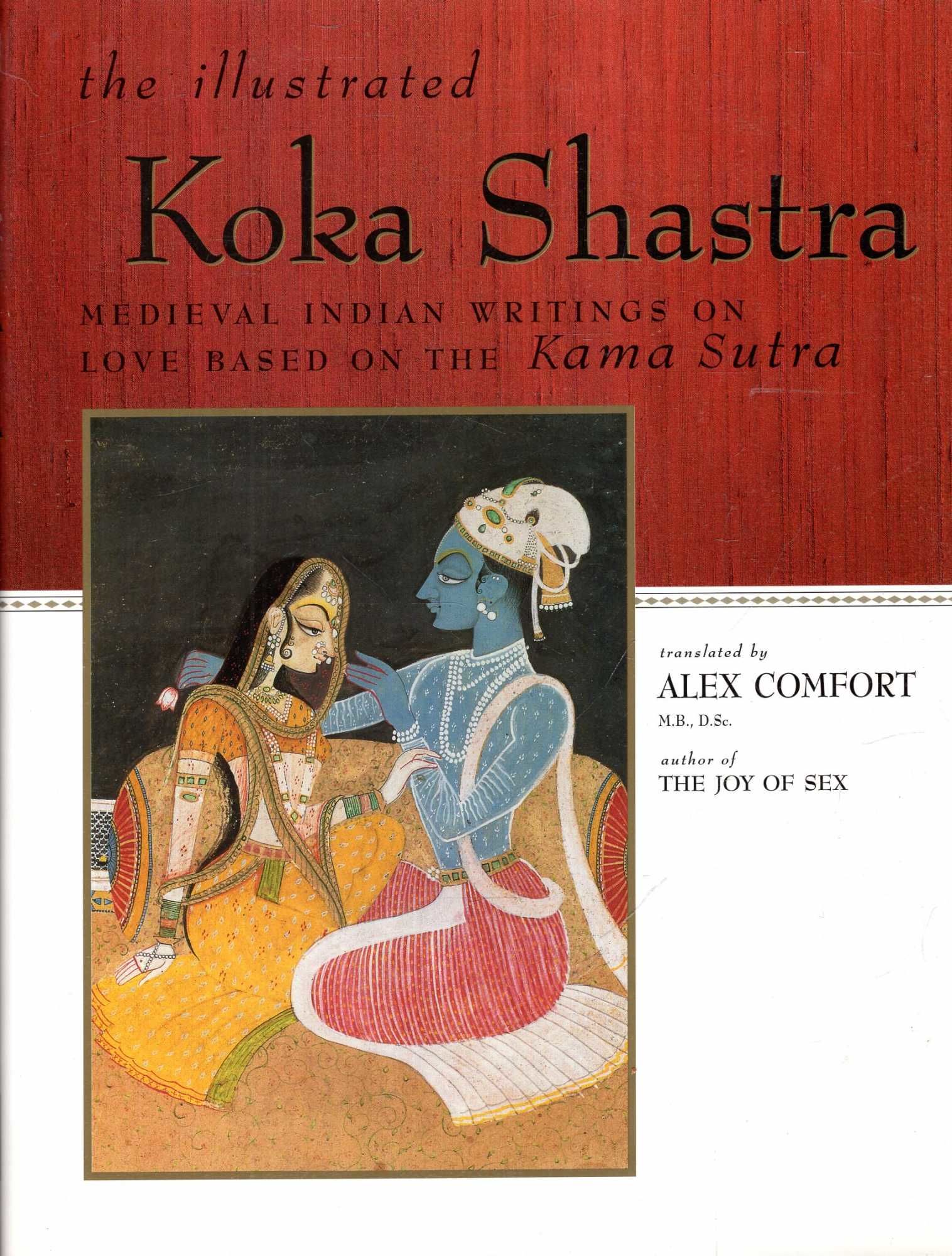 Koka Shastra: Being the Ratirahasya of Kokkoka and Other Medieval Indian Writings on Love
by
ISBN: 9780812822595Publication Date: 1977-06-01The Koka Shastra is to medieval literature whar The Kama Sutra was to ancient. This translation, which preserves the flavor of joy in the original, exposes the reader to a culture which accepted sexuality and its exploration as part of the good life. The Indian works describe the forms of love-play, the multifarious postures for intercourse, and the ways of satisfying a woman's passions.
Koka Shastra: Being the Ratirahasya of Kokkoka and Other Medieval Indian Writings on Love
by
ISBN: 9780812822595Publication Date: 1977-06-01The Koka Shastra is to medieval literature whar The Kama Sutra was to ancient. This translation, which preserves the flavor of joy in the original, exposes the reader to a culture which accepted sexuality and its exploration as part of the good life. The Indian works describe the forms of love-play, the multifarious postures for intercourse, and the ways of satisfying a woman's passions. -
 The Man Who Was a Woman and Other Queer Tales from Hindu Lore
by
ISBN: 1560231807Publication Date: 2002-01-08This book contains a compilation of traditional Hindu stories with a common thread: sexual transformation and gender metamorphosis. It also includes: an examination of the universality of queer narratives, with examples from Greek lore and Irish folklore; a comparison of the Hindu paradigm to the biblical paradigm; a look at how Hindu society and Hindu scripture responds to queer sexuality; a discussion of the Hijras, popularly believed to be the "third gender" in India.
The Man Who Was a Woman and Other Queer Tales from Hindu Lore
by
ISBN: 1560231807Publication Date: 2002-01-08This book contains a compilation of traditional Hindu stories with a common thread: sexual transformation and gender metamorphosis. It also includes: an examination of the universality of queer narratives, with examples from Greek lore and Irish folklore; a comparison of the Hindu paradigm to the biblical paradigm; a look at how Hindu society and Hindu scripture responds to queer sexuality; a discussion of the Hijras, popularly believed to be the "third gender" in India.


Secondary Sources
Books
-
 Gender History in China
by
ISBN: 9781925608090Publication Date: 2021-05-20How have femininity and masculinity been defined and understood in China from prehistoric times to the present day? Gender History in China presents for the first time in English the work of leading Japanese scholars in the fields of archaeology, history, literature, sociology, and law who examine the gender dynamics that have shaped and changed Chinese society over several thousand years. This volume examines the ways gender norms and customary legal practices shaped the family, kinship, and the social order, and how those norms were reflected in work patterns, inheritance, daily life, and literary works.
Gender History in China
by
ISBN: 9781925608090Publication Date: 2021-05-20How have femininity and masculinity been defined and understood in China from prehistoric times to the present day? Gender History in China presents for the first time in English the work of leading Japanese scholars in the fields of archaeology, history, literature, sociology, and law who examine the gender dynamics that have shaped and changed Chinese society over several thousand years. This volume examines the ways gender norms and customary legal practices shaped the family, kinship, and the social order, and how those norms were reflected in work patterns, inheritance, daily life, and literary works. -
 Women, Gender, and Sexuality in China: A Brief History
by
ISBN: 9781315627267Publication Date: 2021-12-30This book serves as a focal textbook for undergraduate courses on women, gender, and sexuality in Chinese history. Thematically structured, it surveys important aspects of gender systems and gender practices throughout Chinese history, from the earliest period to the modern era. Topics include the concept of yin-yang, life course and gender roles, kinship systems and family structure, marriage practices, sexuality, women's work and daily life, as well as gender in Chinese mythology, religions, medicine, art, and literature.
Women, Gender, and Sexuality in China: A Brief History
by
ISBN: 9781315627267Publication Date: 2021-12-30This book serves as a focal textbook for undergraduate courses on women, gender, and sexuality in Chinese history. Thematically structured, it surveys important aspects of gender systems and gender practices throughout Chinese history, from the earliest period to the modern era. Topics include the concept of yin-yang, life course and gender roles, kinship systems and family structure, marriage practices, sexuality, women's work and daily life, as well as gender in Chinese mythology, religions, medicine, art, and literature. -
Women and Religion in the Ancient near East and Asia
by
ISBN: 9781501518614Publication Date: 2023-04-03This volume, which is the result of a Danish-Japanese collaboration, seeks to highlight women as actors within the sphere of the religious. In ancient Mesopotamia and other ancient civilizations, religious beliefs and practices permeated all aspects of society, and for this reason it is not possible to completely dissociate religion from politics, economy, or literature. Thus, the goal is to shift the perspective by highlighting the different ways in which the agency of women can be traced in the historical (and archaeological) record.
-
 Same-Sex Love in India
by
ISBN: 9781349621835Publication Date: 2000Same-Sex Love in India presents an array of writings on same-sex love from over 2000 years of Indian literature. Translated from more than a dozen languages and drawn from Hindu, Buddhist, Muslim, and modern fictional traditions, these writings testify to the presence of same-sex love in various forms since ancient times, without overt persecution. This collection defies both stereotypes of Indian culture and Foucault's definition of homosexuality as a 19th-century invention, uncovering instead complex discourses of Indian homosexuality, rich metaphorical traditions to represent it, and the use of names and terms as early as medieval times to distinguish same-sex from cross-sex love.
Same-Sex Love in India
by
ISBN: 9781349621835Publication Date: 2000Same-Sex Love in India presents an array of writings on same-sex love from over 2000 years of Indian literature. Translated from more than a dozen languages and drawn from Hindu, Buddhist, Muslim, and modern fictional traditions, these writings testify to the presence of same-sex love in various forms since ancient times, without overt persecution. This collection defies both stereotypes of Indian culture and Foucault's definition of homosexuality as a 19th-century invention, uncovering instead complex discourses of Indian homosexuality, rich metaphorical traditions to represent it, and the use of names and terms as early as medieval times to distinguish same-sex from cross-sex love. -
 Buddhism, Sexuality, and Gender
by
ISBN: 0791407586Publication Date: 1991-12-13This book explores historical, textual, and social questions relating to the position and experience of women and gay people in the Buddhist world from India and Tibet to Sri Lanka, China, and Japan. It focuses on four key areas: Buddhist history, contemporary culture, Buddhist symbols, and homosexuality, and it covers Buddhism's entire history, from its origins to the present day. The author offers new perspectives on the history of the attitudes toward, and of the self-perception of, women in both ancient and modern Buddhist societies. He explores key social issues such as abortion, he examines the use of rhetoric and symbols in Buddhist texts and cultures, and he discusses the neglected subject of Buddhism and homosexuality.
Buddhism, Sexuality, and Gender
by
ISBN: 0791407586Publication Date: 1991-12-13This book explores historical, textual, and social questions relating to the position and experience of women and gay people in the Buddhist world from India and Tibet to Sri Lanka, China, and Japan. It focuses on four key areas: Buddhist history, contemporary culture, Buddhist symbols, and homosexuality, and it covers Buddhism's entire history, from its origins to the present day. The author offers new perspectives on the history of the attitudes toward, and of the self-perception of, women in both ancient and modern Buddhist societies. He explores key social issues such as abortion, he examines the use of rhetoric and symbols in Buddhist texts and cultures, and he discusses the neglected subject of Buddhism and homosexuality. -
 The Culture of Sex in Ancient China
by
ISBN: 0824824059Publication Date: 2001-10-31The subject of sex was central to early Chinese thought. Discussed openly and seriously as a fundamental topic of human speculation, it was an important source of imagery and terminology that informed the classical Chinese conception of social and political relationships. This sophisticated and long-standing tradition, however, has been all but neglected by modern historians. In The Culture of Sex in Ancient China, Paul Rakita Goldin addresses central issues in the history of Chinese attitudes toward sex and gender from 500 B.C. to A.D. 400.
The Culture of Sex in Ancient China
by
ISBN: 0824824059Publication Date: 2001-10-31The subject of sex was central to early Chinese thought. Discussed openly and seriously as a fundamental topic of human speculation, it was an important source of imagery and terminology that informed the classical Chinese conception of social and political relationships. This sophisticated and long-standing tradition, however, has been all but neglected by modern historians. In The Culture of Sex in Ancient China, Paul Rakita Goldin addresses central issues in the history of Chinese attitudes toward sex and gender from 500 B.C. to A.D. 400. -
 Women in Ancient China
by
ISBN: 9781538115404Publication Date: 2018-05-14This pioneering book provides a comprehensive survey of ancient Chinese women's history, covering thousands of years from the Neolithic era to China's unification in 221 BCE. For each period--Neolithic, Shang, Western Zhou, and Eastern Zhou--Bret Hinsch explores central aspects of female life: marriage, family life, politics, ritual, and religious roles. This book draws on a wide range of Chinese scholarship and primary sources, including transmitted texts, inscriptions, and archaeological evidence. The result is a comprehensive view of women's history from the beginnings of Chinese civilization up to the beginnings of the imperial era.
Women in Ancient China
by
ISBN: 9781538115404Publication Date: 2018-05-14This pioneering book provides a comprehensive survey of ancient Chinese women's history, covering thousands of years from the Neolithic era to China's unification in 221 BCE. For each period--Neolithic, Shang, Western Zhou, and Eastern Zhou--Bret Hinsch explores central aspects of female life: marriage, family life, politics, ritual, and religious roles. This book draws on a wide range of Chinese scholarship and primary sources, including transmitted texts, inscriptions, and archaeological evidence. The result is a comprehensive view of women's history from the beginnings of Chinese civilization up to the beginnings of the imperial era. -
 Writing Margins: The Textual Construction of Gender in Heian and Kamakura Japan
by
ISBN: 0674005163Publication Date: 2001-09-30In texts from the mid-Heian to the early Kamakura periods, certain figures appear to be "marginal" or removed from "centers" of power. But why do we see these figures in this way? This study first seeks to answer this question by examining the details of the marginalizing discourse found in these texts. Who is portraying whom as marginal? For what reason? Is the discourse consistent? The author next considers these texts in terms of the predilection of modern scholarship, both Japanese and Western, to label certain figures "marginal." She then poses the question: Is this predilection a helpful tool or does it inscribe modern biases and misconceptions onto these texts?
Writing Margins: The Textual Construction of Gender in Heian and Kamakura Japan
by
ISBN: 0674005163Publication Date: 2001-09-30In texts from the mid-Heian to the early Kamakura periods, certain figures appear to be "marginal" or removed from "centers" of power. But why do we see these figures in this way? This study first seeks to answer this question by examining the details of the marginalizing discourse found in these texts. Who is portraying whom as marginal? For what reason? Is the discourse consistent? The author next considers these texts in terms of the predilection of modern scholarship, both Japanese and Western, to label certain figures "marginal." She then poses the question: Is this predilection a helpful tool or does it inscribe modern biases and misconceptions onto these texts? -
 Festivals, Feasts, and Gender Relations in Ancient China and Greece
by
ISBN: 9780521197625Publication Date: 2010-08-16Ancient China and Greece are two classical civilizations that have exerted far-reaching influence and are often invoked as the paradigms in East-West comparison. This book examines gender relations in both ancient societies as reflected in convivial contexts such as family banquets, public festivals, and religious feasts. Two distinct patterns of interpersonal affinity and conflict emerge from the Chinese and Greek sources that show men and women organizing themselves and interacting with each other in social occasions intended for collective pursuit of pleasure. Yiqun Zhou illuminates the different socio-political mechanisms, value systems, and fabrics of human bonds in the two classical traditions.
Festivals, Feasts, and Gender Relations in Ancient China and Greece
by
ISBN: 9780521197625Publication Date: 2010-08-16Ancient China and Greece are two classical civilizations that have exerted far-reaching influence and are often invoked as the paradigms in East-West comparison. This book examines gender relations in both ancient societies as reflected in convivial contexts such as family banquets, public festivals, and religious feasts. Two distinct patterns of interpersonal affinity and conflict emerge from the Chinese and Greek sources that show men and women organizing themselves and interacting with each other in social occasions intended for collective pursuit of pleasure. Yiqun Zhou illuminates the different socio-political mechanisms, value systems, and fabrics of human bonds in the two classical traditions.


Specific Chapters and Scholarly Articles
- Junko, M., & Glassman, H. (1993). Buddhism and the Historical Construction of Sexuality in Japan. U.S.-Japan Women’s Journal. English Supplement, 5, 87–115.
- Kim, Y., & Hahn, S. (2006). Homosexuality in ancient and modern Korea. Culture, Health & Sexuality, 8(1), 59–65.
- Pant, N. (2024). Ancient Indian (Hindu) Sexuality Texts and Psychology. Psychology of Sexuality & Mental Health Vol. 1, . Springer, Singapore.
- Pfister, R. (2012). Gendering Sexual Pleasures in Early and Medieval China. Asian Medicine, 7(1), 34-64.
- Pflugfelder, G. M. (1992). Strange Fates: Sex, Gender, and Sexuality in Torikaebaya Monogatari. Monumenta Nipponica, 47(3), 347–368.
- Tonomura, H. (2007). Women and Sexuality in Premodern Japan. A Companion to Japanese History, 349-371.
- Xiaomingxiong (2002). Chinese Mythology. GLBTQ Encyclopedia. New England Publishing Associate
The continent of Africa has a complex history. Much of North Africa, positioned along the southern Mediterranean coast, was colonized by European powers—most extensively, the Roman empire. Consequently, the region of North Africa is significant in Greek and Roman political and military history, and it was the birthplace of many prominent Greco-Roman writers, including Ptolemy, Saint Augustine, and Apuleius (whose novel, The Golden Ass, we have included in the ‘Greece and Rome’ tab of this feature). Likewise, the study of ancient Egypt, due to the region’s complex linguistic and historical connections to Eastern Mediterranean and West Asian cultures, is generally included in the discipline of Near Eastern Studies, a distinction that is reflected in this guide. Comparatively, the ancient cultures of Saharan and Sub-Saharan Africa have been studied far less, much less the gender and sexuality thereof. Nevertheless, we have provided some secondary sources on gender and sexuality in this under-studied region and temporal frame.
Secondary Sources
Books
-
 Gender in African Prehistory
by
ISBN: 0761989676Publication Date: 1998-01-21Gender in African Prehistory provides methods and theories for delineating and discussing prehistoric gender relations and their change through time. Sites studied range from Egypt to South Africa and Ghana to Tanzania, while time periods span the Stone Age to the period just prior to colonialization.
Gender in African Prehistory
by
ISBN: 0761989676Publication Date: 1998-01-21Gender in African Prehistory provides methods and theories for delineating and discussing prehistoric gender relations and their change through time. Sites studied range from Egypt to South Africa and Ghana to Tanzania, while time periods span the Stone Age to the period just prior to colonialization. -
Bibliography of African Women Writers and Journalists by
ISBN: 0894102273Publication Date: 1985-07-01This work offers references for 30 categories of African literature, including folklore, fiction, poetry, book reviews, journalistic essays, and interviews. More than 4000 entries cover oral and written forms that date from ancient Egypt to the present. -
 African Sexualities
by
ISBN: 9780857490162Publication Date: 2011-06-01A groundbreaking book, accessible but scholarly, by African activists. It uses research, life stories, and artistic expression--including essays, case studies, poetry, news clips, songs, fiction, memoirs, letters, interviews, short film scripts, and photographs--to examine dominant and deviant sexualities and investigate the intersections between sex, power, masculinities, and femininities. It also opens a space, particularly for young people, to think about African sexualities in different ways.
African Sexualities
by
ISBN: 9780857490162Publication Date: 2011-06-01A groundbreaking book, accessible but scholarly, by African activists. It uses research, life stories, and artistic expression--including essays, case studies, poetry, news clips, songs, fiction, memoirs, letters, interviews, short film scripts, and photographs--to examine dominant and deviant sexualities and investigate the intersections between sex, power, masculinities, and femininities. It also opens a space, particularly for young people, to think about African sexualities in different ways. -
 African Gender Studies
by
ISBN: 1403962820Publication Date: 2005-10-01This is the first comprehensive reader that brings African experiences to bear on the ongoing global discussions of women, gender, and society. Bringing together the essential writing on this topic from the last 25 years, these essays discuss gender in Africa from a multi-disciplinary perspective. Can be accessed through the Kinsey Institute.
African Gender Studies
by
ISBN: 1403962820Publication Date: 2005-10-01This is the first comprehensive reader that brings African experiences to bear on the ongoing global discussions of women, gender, and society. Bringing together the essential writing on this topic from the last 25 years, these essays discuss gender in Africa from a multi-disciplinary perspective. Can be accessed through the Kinsey Institute.


Specific Chapters and Scholarly Articles
- Belcher, W.L. (2016). Same-Sex Intimacies in the Early African Text Gädlä Wälättä eṭros (1672): Queer Reading an Ethiopian Woman Saint. Research in African Literatures 47(2), 20-45.
- Jimenez, R. (2020). Gendered Themes in Early African History. A Companion to Global Gender History, 205-219.
- Lyons, D. (2006). “A Critical Appraisal of Gender Research in African Archaeology.” The Handbook of Gender in Archaeology, edited by Sarah M. Nelson. Lanham, MD: Altamira.
- Saidi, C. (2020). Women in Precolonial Africa. Oxford Research Encyclopedia of African History.
- Van Niekerk, G. (2000). Stereotyping Women in Ancient Roman and African Societies: A Dissimilarity in Culture. Revue Internationale des droits de l’Antiquité, 365-79.
Because literary sources from the ancient Americas are sparse, most of our current knowledge on gender and sexuality in this region comes from archaeological evidence. With that in mind, below are some secondary sources that explore gender and sexuality in the ancient Americas.
Secondary Sources
Books
-
 Women in Ancient America
by
ISBN: 9780806131696Publication Date: 1999-11-15This first comprehensive work on women in precolumbian American cultures describes gender roles and relationships in North, Central, and South America from 12,000 B.C. to the 1500s A.D. Utilizing many key archaeological works, Karen Olsen Bruhns and Karen E. Stothert redress some of the long-standing male bias in writing about ancient Native American lifeways. Bruhns and Stothert focus on several of the most thought-provoking areas of study in the Americas: the origins of agriculture, the development of complex societies, the evolution of religious systems, and the interpretation of art and mortuary materials.
Women in Ancient America
by
ISBN: 9780806131696Publication Date: 1999-11-15This first comprehensive work on women in precolumbian American cultures describes gender roles and relationships in North, Central, and South America from 12,000 B.C. to the 1500s A.D. Utilizing many key archaeological works, Karen Olsen Bruhns and Karen E. Stothert redress some of the long-standing male bias in writing about ancient Native American lifeways. Bruhns and Stothert focus on several of the most thought-provoking areas of study in the Americas: the origins of agriculture, the development of complex societies, the evolution of religious systems, and the interpretation of art and mortuary materials. -
 Moon, Sun, and Witches
by
ISBN: 0691077266Publication Date: 1987-05-21When the Spanish arrived in Peru in 1532, men of the Inca Umpire worshiped the Sun as Father and their dead kings as ancestor heroes, while women venerated the Moon and her daughters, the Inca queens, as founders of female dynasties. In the pre-Inca period such notions of parallel descent were expressions of complementarity between men and women. Examining the interplay between gender ideologies and political hierarchy, Irene Silverblatt shows how Inca rulers used their Sun and Moon traditions as methods of controlling women and the Andean peoples the Incas conquered.
Moon, Sun, and Witches
by
ISBN: 0691077266Publication Date: 1987-05-21When the Spanish arrived in Peru in 1532, men of the Inca Umpire worshiped the Sun as Father and their dead kings as ancestor heroes, while women venerated the Moon and her daughters, the Inca queens, as founders of female dynasties. In the pre-Inca period such notions of parallel descent were expressions of complementarity between men and women. Examining the interplay between gender ideologies and political hierarchy, Irene Silverblatt shows how Inca rulers used their Sun and Moon traditions as methods of controlling women and the Andean peoples the Incas conquered. -
 Ancient Maya Women
by
ISBN: 0759100098Publication Date: 2001-12-20This book, mostly based upon fieldwork in Central America, examine the role of women in Maya society, their place in the political hierarchy and lineage structures, the gendered division of labor, and the discrepancy between idealized Mayan womanhood and the daily reality, among other topics. In each case, the complexities and nuances of gender relations is highlighted and the limitations of our knowledge acknowledged. These pieces represent an important advance in the understanding of Maya socioeconomic, political, and cultural life--and the archaeology of gender--and will be of great interest to scholars and students.
Ancient Maya Women
by
ISBN: 0759100098Publication Date: 2001-12-20This book, mostly based upon fieldwork in Central America, examine the role of women in Maya society, their place in the political hierarchy and lineage structures, the gendered division of labor, and the discrepancy between idealized Mayan womanhood and the daily reality, among other topics. In each case, the complexities and nuances of gender relations is highlighted and the limitations of our knowledge acknowledged. These pieces represent an important advance in the understanding of Maya socioeconomic, political, and cultural life--and the archaeology of gender--and will be of great interest to scholars and students. -
 Gender in Pre-Hispanic America: A Symposium at Dumbarton Oaks, 12 and 13 October 1996
by
ISBN: 9780884022794Publication Date: 2001-01-01Gender in Pre-Hispanic America offers rich opportunities for comprehending current trends and considering future directions in research. it is unique in that it puts social theory at the forefront of the discussion. The consideration of the role of gender in our daily lives, including in our professions, is not simply a question of men's roles having been possibly overemphasized and overstudied to the detriment of women's. The fact that genders, as opposed to sexes, are socially constructed categories focuses our attention on the ways in which these and other social constructs have shaped our present understanding of the past and informed past peoples' understand of their present.
Gender in Pre-Hispanic America: A Symposium at Dumbarton Oaks, 12 and 13 October 1996
by
ISBN: 9780884022794Publication Date: 2001-01-01Gender in Pre-Hispanic America offers rich opportunities for comprehending current trends and considering future directions in research. it is unique in that it puts social theory at the forefront of the discussion. The consideration of the role of gender in our daily lives, including in our professions, is not simply a question of men's roles having been possibly overemphasized and overstudied to the detriment of women's. The fact that genders, as opposed to sexes, are socially constructed categories focuses our attention on the ways in which these and other social constructs have shaped our present understanding of the past and informed past peoples' understand of their present.


Specific Chapters and Scholarly Articles
- Bardolph, D. N., & Gamble, L. H. (2015). "Sexuality: ancient North America." In The International Encyclopedia of Human Sexuality, 1-6. Edited by Patricia Whelehan and Anne Bolin. Wiley‐Blackwell, Malden, MA.
- Gebhard, Paul H. (1970). “Sexual Motifs in Prehistoric Peruvian Ceramics.” In Studies in Erotic Art, edited by Theodore Bowie and Cornelia V. Christenson, 109–144. New York: Basic Books.
- Hill, E. (2015). "Sexuality: Ancient Andean South America." In The International Encyclopedia of Human Sexuality, edited by Patricia Whelehan and Anne Bolin. Wiley‐Blackwell, Malden, MA.
- Hollimon, Sandra. (2006). “The Archaeology of Nonbinary Genders in Native North American Societies.” In The Handbook of Gender in Archaeology, edited by Sarah M. Nelson, 435–450. Lanham, MD: Altamira.
- Munson, M. K. (2000). Sex, Gender, and Status: Human Images from the Classic Mimbres. American Antiquity, 65(1), 127–143.
- Prine, Elizabeth. (2000). "Searching for Third Genders: Towards a Prehistory of Domestic Space in Middle Missouri Villages." In Archaeologies of Sexuality edited by Schmidt, R. A., & Voss, B. L, 197–219. London: Routledge.
- Stockett, M. K. (2005). On the Importance of Difference: Re-Envisioning Sex and Gender in Ancient Mesoamerica. World Archaeology, 37(4), 566–578.
- Weismantel, Mary. (2004). “Moche Sex Pots: Reproduction and Temporality in Ancient South America.” American Anthropologist, 106(3): 495–505.